
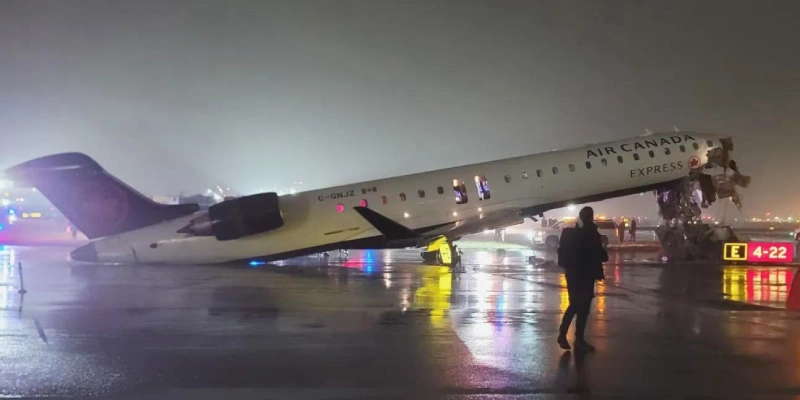
The collision between an Air Canada aircraft and a fire truck at New York’s LaGuardia Airport has placed staffing protocols under intense scrutiny. According to internal documents, the control tower may have violated its own Standard Operating Procedures (SOPs) by consolidating critical functions before the permitted time on a night characterized by high traffic volume and weather-related delays.
Non-compliance with Standard Operating Procedures
According to a LaGuardia Tower SOP document reviewed by Reuters, there is a strict rule regarding the consolidation of operational positions. The regulations state that control positions must not be combined into a single station before midnight or until 90 minutes after the start of the shift, whichever occurs later.
On the night of the accident, which took place at approximately 11:37 p.m. on March 22, these functions may have been combined prematurely. Although the SOP document dates back to 2023, sources close to the investigation confirm that these guidelines remain in effect as of 2026.
Traffic Volume and Workload Factors
An analysis of flight data from that evening reveals an operational complexity significantly higher than usual:
- Traffic Volume: 70 commercial flights (takeoffs or landings) were recorded between 10:00 p.m. and 11:37 p.m.
- Comparative Data: The average for this same time block since 2022 is just 53 flights.
- Conditions: Weather-related delays increased the pressure on tower personnel.
NTSB Investigation and Lack of Clarity
The National Transportation Safety Board (NTSB), led by Chair Jennifer Homendy, is currently investigating the specific tasks performed by each controller at the time of the crash, which resulted in the deaths of both pilots.
According to preliminary information provided by the NTSB:
- There were two controllers present in the tower cab.
- A Local Controller was managing the active runways and immediate airspace.
- A Controller-in-Charge was providing departure clearances to pilots.
However, Homendy noted that there is conflicting information regarding who was performing the duties of the Ground Controller, the individual responsible for managing the movement of aircraft and vehicles on the taxiways. Audio from LiveATC.net suggests that the Local Controller may have been handling ground traffic simultaneously—a practice that contravenes tower manuals for operations prior to midnight.
Staffing Crisis in Air Traffic Control
This incident has reignited alarms regarding the ongoing staffing shortage within the Federal Aviation Administration (FAA). Controllers nationwide have reported that a lack of supervisors and operational staff is forcing the consolidation of Local and Ground control roles with alarming frequency.
Several industry professionals indicated that, given the complexity and traffic volume at LaGuardia that night, the standard procedure should have been to reinforce the shift with additional personnel rather than consolidating positions.
The FAA has expressed its support for the NTSB in the investigation and asserts that it will take necessary safety measures based on the evidence collected. The NTSB’s final report will be crucial in determining whether fatigue, excessive workload, or a direct violation of tower procedures were determining factors in this commercial aviation tragedy.
Related Topics

LATAM Airlines Announces Nonstop Flights Between Santiago de Chile and Caracas Starting in January

Satena to Launch Direct Flights Between Montería and Panama City in October

LATAM Airlines Dismisses Rumors Regarding the Creation of a Venezuelan Subsidiary

Avianca Bolsters Argentina Connectivity: Daily Service to Cordoba and Revamped In-Flight Experience


Plataforma Informativa de Aviación Comercial con 13 años de trayectoria.