Lufthansa and Munich Airport Extend Partnership: Terminal 2 Expansion Planned with New “T-Pier”
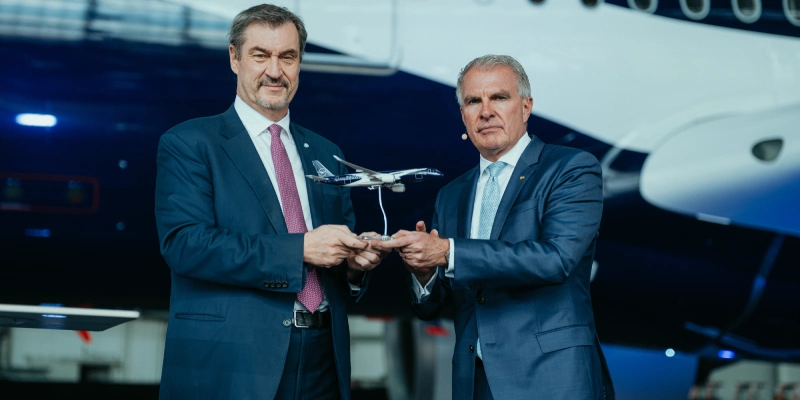




Lufthansa Group and Munich Airport have reaffirmed their strategic commitment by extending their joint venture agreement through 2056. The central pillar of this agreement is the construction of the “T-Pier,” an expansion of the Terminal 2 satellite building designed to allow Germany’s second-largest hub to absorb projected growth in international air traffic.
Infrastructure Expansion: The Future T-Pier
The cornerstone of this new phase is the development of the T-Pier, an extension that will connect at a right angle to the east of the existing Terminal 2 satellite facility. This project is engineered to bolster operational efficiency and enhance the passenger experience at the Bavarian hub.
- Additional Capacity: The T-Pier is estimated to increase Terminal 2’s processing capacity by 10 million passengers annually.
- Opening Date: Operations at this new infrastructure are scheduled to commence in 2035.
- Planning Phase: The current agreement formally greenlights the concrete planning phase of the construction project.
- Fleet Growth: Physical expansion will be synchronized with an increase in Lufthansa’s long-haul fleet based in Munich, optimizing global connectivity from Bavaria.
→ Lufthansa Receives Certification for Allegris Business Class Seats on Boeing 787-9 Fleet
A Unique Shared Management Model in Europe
The partnership between Lufthansa and Munich Airport dates back to the 1990s and was formalized with the inauguration of Terminal 2 in 2003. This collaboration is exceptional within the continent, as both entities share operational responsibility for the infrastructure they utilize.
Currently, the Terminal 2 operating company consists of a 60% stake held by FMG (Flughafen München GmbH) and a 40% stake by Lufthansa Group. This model has enabled Munich to consolidate its status as a 5-star hub, globally recognized for its efficiency and service quality.
In 2025, Terminal 2—used exclusively by Lufthansa Group airlines and its alliance partners—surpassed 32 million passengers. This milestone underscores the urgent need to expand facilities after having reached previous capacity limits in 2011 and 2019.
Leadership Visions: Commitment to Competitiveness
Carsten Spohr, Chairman of the Executive Board and CEO of Deutsche Lufthansa AG, emphasized that this investment is “a clear commitment to Bavaria as a gateway to the world and to the global competitiveness of European hubs.” According to Spohr, state-of-the-art infrastructure is vital for maintaining independent global connectivity during times of geopolitical crisis.
For his part, Dr. Markus Söder, Minister-President of Bavaria, celebrated Lufthansa’s centenary and described the agreement as a “milestone for the aviation hub.” Söder highlighted the importance of the aviation industry for an export-oriented nation and reiterated the Bavarian government’s support through capacity expansion and the promotion of a reduction in aviation taxes.
Frankfurt: Parallel Development at Germany’s Primary Hub
Growth in Munich does not stall Lufthansa Group’s plans for its primary hub in Frankfurt. The company aims to optimize its intercontinental operations at Terminal 1 and strengthen its logistics division.
- Lufthansa Cargo: More than €600 million is being invested in a new cargo handling center in Frankfurt.
- Campus North: Following the opening of Terminal 3 in April 2026, the “Campus North” project—launched this month alongside Fraport and FraAlliance—will focus on improving operational efficiency and the travel experience in the northern section of the airport.
The extension of the alliance between Lufthansa and Munich Airport ensures the operational stability of the Bavarian hub for the next three decades.
Related Topics

Delta Strengthens Transatlantic Network for Summer 2027 with New Routes from Detroit and Boston to Europe
Qantas Confirms Nonstop Sydney–New York Flights to Launch in 2028

Breeze Airways Retires Its Final Embraer 190, Consolidates an All-Airbus A220 Fleet

US to Seek Additional $30 Billion to Modernize Air Traffic Control System and Airports

Plataforma Informativa de Aviación Comercial con 13 años de trayectoria.