SUM Air Takes Off in South Korea: A New Era of Regional Connectivity with ATR Aircraft
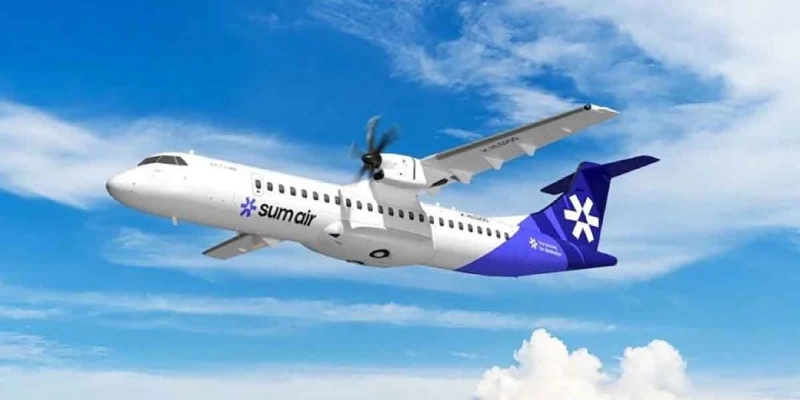




This Monday, March 30, marks the beginning of a new chapter in South Korea’s aviation sector with the launch of SUM Air. The airline officially commences commercial flight operations with the objective of transforming regional mobility—connecting communities, islands, and underserved regions through efficient and sustainable operations.
From Vision to Air Operator Certification
SUM Air’s journey began in November 2022, driven by a mission to restore aerial access to locations where major carriers and narrow-body jet aircraft typically do not operate. Following more than three years of rigorous preparation, the company has surpassed fundamental milestones to ensure the highest safety standards:
- February 2025: Obtained the Air Carrier License (ACL), the first legal step toward commercial operations.
- Preparation Phase: During this period, the company recruited experienced personnel, conducted crew training, established safety procedures, and executed proving flights.
- Final Milestone: The airline recently received its Air Operator Certificate (AOC), the final certification validating that its operations comply with the most demanding operational and safety regulations.
→ Avation Bolsters Regional Portfolio with Order for Five Additional ATR 72-600s
ATR 72-600: The Pillar of Regional Efficiency
To fulfill its mission, SUM Air has selected the ATR 72-600, a latest-generation turboprop that offers critical competitive advantages for the Korean market. The choice of this model is not incidental but responds to specific technical and operational requirements:
Access to Limited Infrastructure
The ATR’s design allows for STOL (Short Take-Off and Landing) operations on short runways and at small airports. This enables future connectivity with island airports where jet aircraft operations are either prohibited or severely restricted.
Profitability on Low-Density Routes
This aircraft allows routes that would not be viable with larger airframes to become profitable, enabling the airline to launch new services in regions with moderate but steady demand.
Environmental Sustainability
In a global environment focused on decarbonization, ATR’s turboprop technology stands out for its efficiency:
- It consumes 45% less fuel than regional jets of similar size.
- It emits 45% less CO₂ per segment, positioning itself as a key tool for low-emission regional connectivity.
Expansion and Strategic Routes
The inaugural flight took off on the Gimpo–Sacheon route, providing an essential service to a region that has historically lacked convenient connectivity. However, SUM Air’s plans extend far beyond the immediate domestic market.
The airline’s roadmap includes expansion toward international connections in Japan and China, as well as providing service to Ulleungdo Island once the construction of its airport is complete. With these projections, SUM Air seeks not only to transport passengers but to consolidate a “continental” network model that effectively integrates the entire country and its close neighbors.
The start of SUM Air’s operations symbolizes more than the birth of a company; it is a commitment to redefining mobility in Korea, proving that regional aviation is the fundamental piece for the development of communities that, until today, saw the aerial horizon as a distant possibility.
Related Topics
LATAM Airlines Strengthens Regional Leadership with Five Honors at the 2026 World Travel Awards

Copa Airlines Restores Operations Following Seismic Activity in Panama and Expands Commercial Flexibility Policies

Arajet Resumes Direct Flights Between Punta Cana and Guayaquil

LATAM Airlines Announces Nonstop Flights Between Santiago de Chile and Caracas Starting in January
Plataforma Informativa de Aviación Comercial con 13 años de trayectoria.