Boeing Accelerates Hiring Pace: Adding Over 100 Weekly Workers to Boost Production
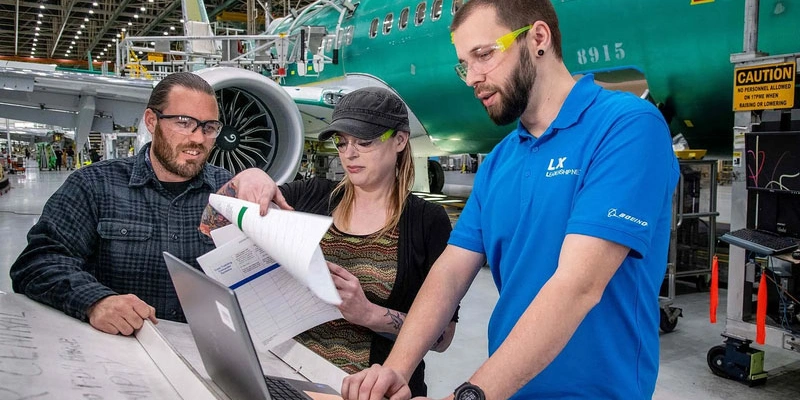




Boeing has intensified its recruitment strategy in the U.S. Pacific Northwest, adding between 100 and 140 factory operators per week. This move seeks to address rising production rates, the launch of new models, and the critical need to fill vacancies left by a growing wave of retirements.
Workforce Expansion and Production Targets
The company’s unionized workforce in the Pacific Northwest region already exceeds 34,000 employees, and the upward trend continues. According to Jon Holden, Vice President of Training and Apprenticeship for the International Association of Machinists and Aerospace Workers (IAM), this hiring pace is the highest recorded since 2024.
This personnel expansion is designated for strategic operational objectives:
- 737 MAX North Line: Boeing needs to staff a fourth production line in the Seattle area for its best-selling narrow-body model.
- 777X Program: Necessary support for the development and production of the new wide-body model, which is currently undergoing certification.
- Support Infrastructure: Hiring is not limited to assembly lines; it covers critical areas such as logistics, warehousing, tooling, and transportation.
→ Boeing Outpaces Airbus in Aircraft Deliveries During First Quarter
A Global Industry Boom
The increase in Boeing’s headcount is not an isolated phenomenon but rather responds to a global dynamic within the aerospace industry. Companies in the sector are increasing capacity to meet airline demand for more fuel-efficient aircraft, while also capitalizing on the surge in space exploration and increased defense spending due to geopolitical tensions and active conflicts in Ukraine and the Middle East.
An example of this trend is Honeywell Aerospace, which expects to add more than 1,200 positions this year in engineering and manufacturing, driven by growth in the commercial aftermarket and the defense sector. In Washington State, aerospace manufacturing jobs have risen from 79,000 last August to 81,800 in February.
Technical Talent Challenge and Training Programs
The industry has faced a shortage of skilled labor since the end of the COVID-19 pandemic. Data from the Aviation Technician Education Council (ATEC) indicates that only 75% of FAA-licensed mechanics come from specialized schools, forcing companies to rely on apprenticeship programs and recruit workers from other industrial sectors.
To mitigate this gap, Boeing has reinforced its training programs:
- Apprenticeship Programs: These are expanding beyond the 125 apprentices agreed upon in the 2024 contract, focusing on specialized skills such as composite material repairs.
- Sustainability of Growth: Although the current pace is high, it remains below the aggressive hiring levels seen in 2023-2024, when the company sought to recover following the pandemic and the 737 MAX crisis.
This sustained increase in the workforce reflects a phase of production stabilization for Boeing. The success of this strategy will depend on global economic stability and airlines maintaining their current order books in the face of delivery challenges and the certification of new models.
Related Topics
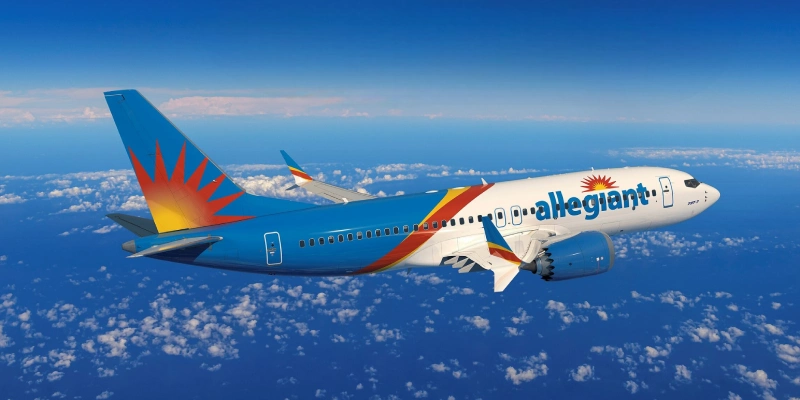
Allegiant Air Orders Six Additional Boeing 737 MAX Jets
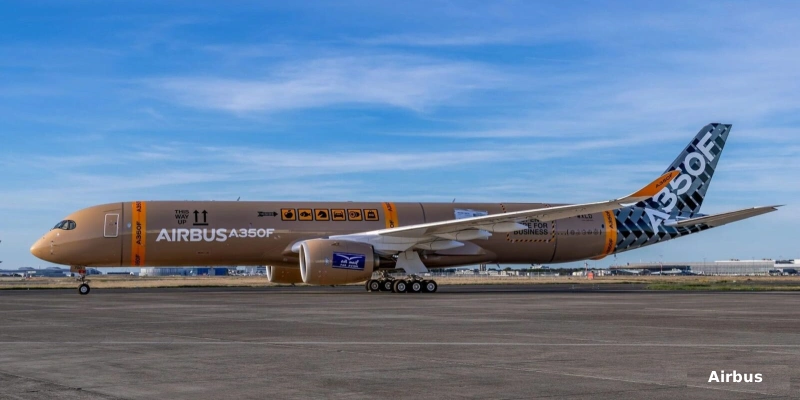
Airbus Projects Global Freighter Fleet to Reach 3,460 Aircraft by 2045
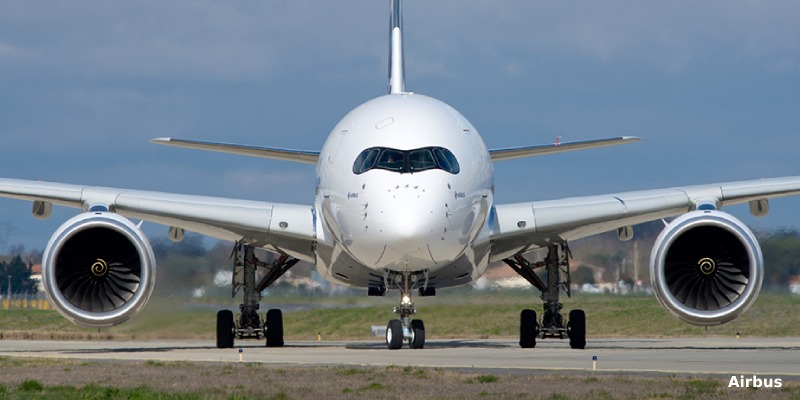
Airbus Projects Demand for 2,720 New Passenger Aircraft in Latin America Over Next 20 Years
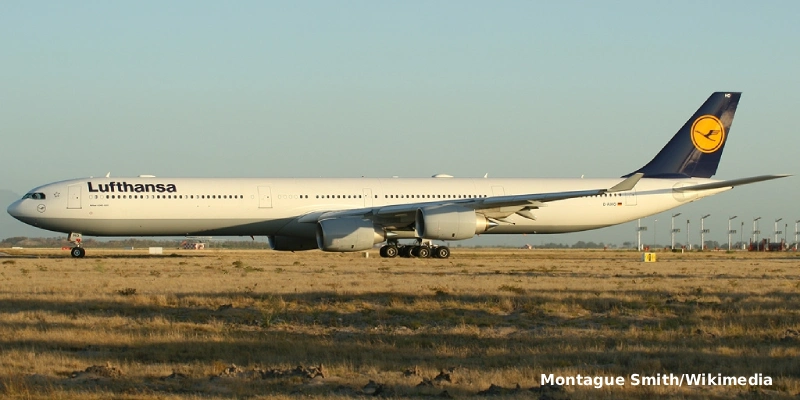
End of an Era: Lufthansa Retires Airbus A340-600 Fleet After 23 Years of Service
Plataforma Informativa de Aviación Comercial con 13 años de trayectoria.