
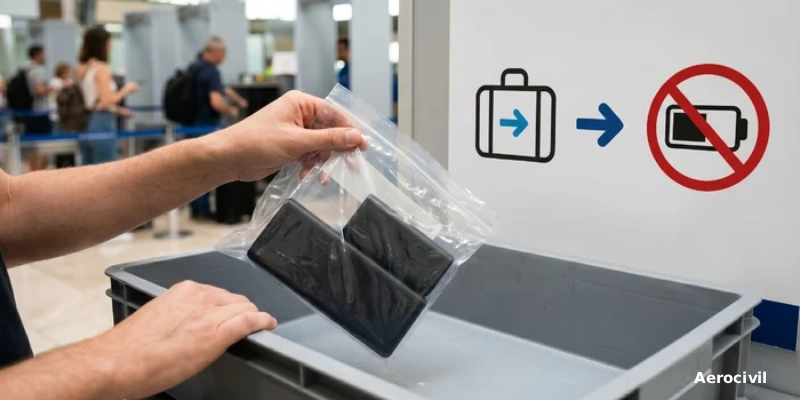
The Civil Aviation Authority of Colombia (Aerocivil) has issued new mandatory directives for the transport of lithium-ion batteries and power banks. This measure aims to align the country’s operational safety with the latest international standards to mitigate in-flight risks.
Harmonization with International Standards
Effective March 27, 2026, technical provisions based on Addendum I to Document 9284 of the International Civil Aviation Organization (ICAO) have entered into force. This document corresponds to the 2025-2026 edition of the “Technical Instructions for the Safe Transport of Dangerous Goods by Air”.
The primary objective of this update is to strengthen operational safety and ensure that air operations within Colombian territory follow the same safety protocols governing global aviation.
New Rules for Baggage and Onboard Use
The new directives establish specific restrictions on where and how these devices may be transported]:
- Exclusive Location: Power banks are permitted only in carry-on baggage.
- Prohibition in Checked Baggage: The transport of these devices in checked or hold baggage is strictly prohibited.
- Unit Limit: A maximum of two (2) spare batteries or two (2) power banks per passenger is authorized.
- Usage Restriction: It is established that power banks should not be used to recharge electronic devices while on board the aircraft.
- Individual Protection: Each unit must be individually protected to prevent short circuits or accidental activation, complying with the United Nations (UN) Manual of Tests and Criteria.
Classification by Capacity
The regulations differentiate transport requirements based on the energy capacity of the devices, measured in Watt-hours (Wh):
- Up to 100 Wh: Standard transport is permitted under general protection conditions and placement in carry-on baggage.
- Between 100 Wh and 160 Wh: For devices within this capacity range, the passenger must obtain prior approval from the air operator (airline) to transport them.
Implementation and Compliance
Aerocivil has recommended that airlines and airport operators immediately update their operating procedures, safety manuals, and training programs. This transition is essential to ensure that all industry personnel are trained to apply the new directives and safeguard the integrity of users within the air transport system.
Related Topics
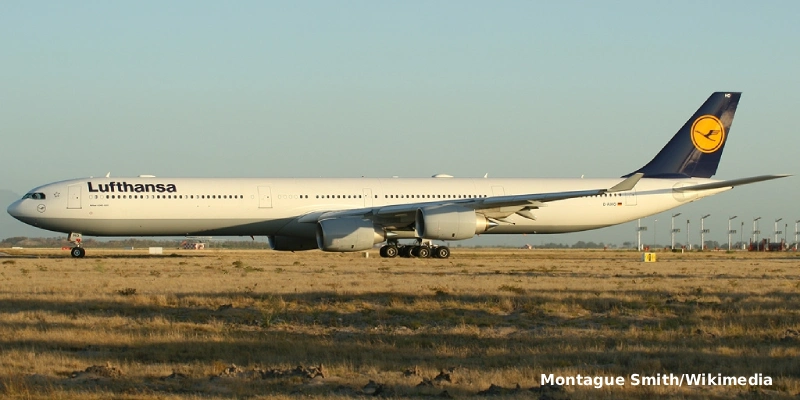
End of an Era: Lufthansa Retires Airbus A340-600 Fleet After 23 Years of Service

ITA Airways Celebrates Its Fifth Anniversary
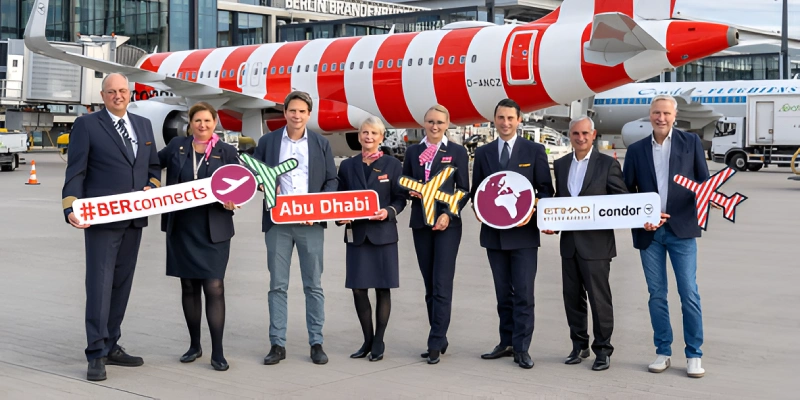
Condor Launches Daily Flights Between Berlin and Abu Dhabi

Lufthansa in Talks to Acquire Remaining 50.1% Stake in TAP Air Portugal Following Initial Entry


Plataforma Informativa de Aviación Comercial con 13 años de trayectoria.