

By the close of the first quarter of 2026, LATAM Airlines has consolidated its position as the leading airline group in Argentina, transporting thousands of passengers and strengthening the network that connects the country’s interior with strategic global hubs. With a 25% share in the regional segment, the company reaffirms its dominance in the Southern Cone.
Market Dominance and Operational Capacity in 2026
According to the latest report published by the National Civil Aviation Administration (ANAC), LATAM has successfully positioned itself at the top of the international market in Argentina, sharing the first-place spot with a 17% market share based on passenger traffic. However, its leadership is even more pronounced in the regional segment, where it holds a 25% share.
This positioning is no coincidence; the company has maintained this leadership for several consecutive quarters, supported by a route network that connects the region’s main business and tourist centers with the rest of the world. During the first three months of the year, the airline’s operational capacity enabled the transport of 852,000 passengers, solidifying its contribution to the country’s international connectivity.
→ LATAM Airlines to Become South America’s First to Offer “Lie-Flat” Seats on Airbus A321XLR
Network Expansion: 10 New Strategic Routes
Over the past year, LATAM has executed an expansion plan that incorporated 10 key routes, significantly broadening the options available to Argentine travelers:
- Buenos Aires – Recife
- Buenos Aires – Porto Alegre
- Buenos Aires – Florianópolis (Seasonal operation)
- Buenos Aires – Rio de Janeiro
- Buenos Aires – Miami
- Rosario – São Paulo
- Córdoba – São Paulo
- Neuquén – Santiago
- Ushuaia – São Paulo (Seasonal, scheduled to begin July 1st)
Federalization of International Connectivity
The airline’s strategy has placed a special emphasis on decentralization, strengthening the integration of destinations in the interior such as Rosario, Córdoba, Neuquén, and Ushuaia. These cities join established operations in Bariloche, Salta, and Mendoza, allowing regional economies direct access to more than 160 destinations in 26 countries through its primary hubs in Santiago (Chile), São Paulo (Brazil), and Lima (Peru).
Impact on Economic Development and Tourism
LATAM’s presence in the country acts as a catalyst for inbound tourism development and facilitates commercial exchange with strategic partners such as Brazil, Chile, the United States, and Peru.
“Leading the regional market in Argentina is the result of a sustained commitment to the country’s connectivity. Every new route we introduce is a concrete commitment to bringing Argentines closer to the world and boosting the development of regional economies,” stated Florencia Scardaccione, Commercial Manager for LATAM in Argentina.
This expansion translates into tangible benefits for the local economy, including the generation of direct and indirect jobs and an increase in activity at regional airports. With a commitment to further expanding its network, LATAM aims to offer more options for Argentines to travel, work, and connect globally.
Related Topics

Allegiant Air Orders Six Additional Boeing 737 MAX Jets

Airbus Projects Global Freighter Fleet to Reach 3,460 Aircraft by 2045

Airbus Projects Demand for 2,720 New Passenger Aircraft in Latin America Over Next 20 Years
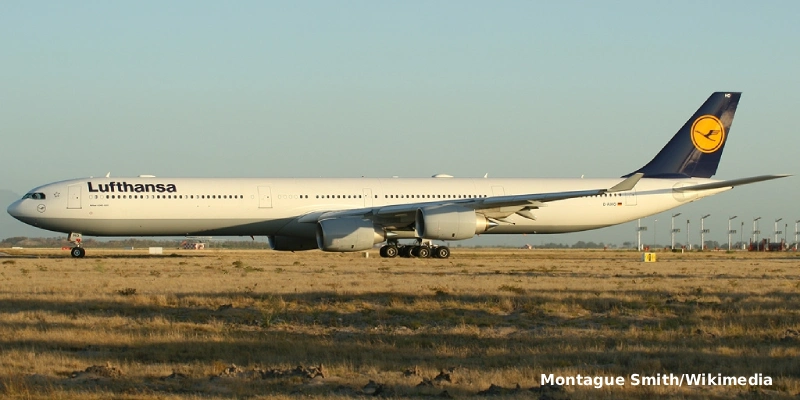
End of an Era: Lufthansa Retires Airbus A340-600 Fleet After 23 Years of Service


Un apasionado por la aviación, Fundador y CEO de Aviación al Día.