
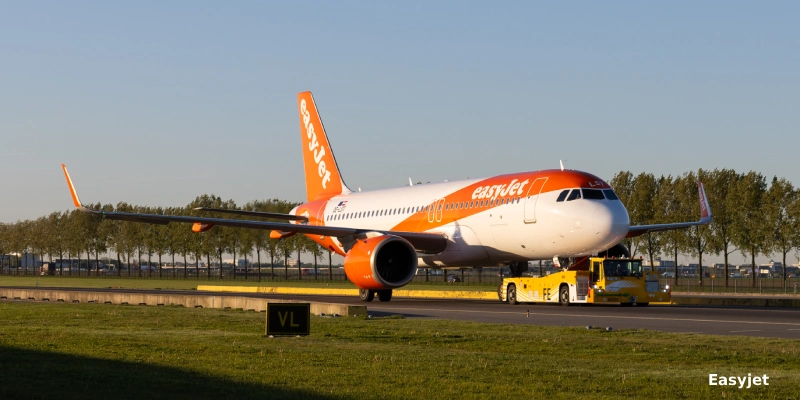
The airline easyJet and Amsterdam Airport Schiphol have announced the deployment of TaxiBot technology for their Airbus aircraft operations, marking a key milestone in airport ground efficiency.
Taxiing Innovation: What is TaxiBot and How Does It Work?
The TaxiBot is a semi-robotic aircraft tug that eliminates the need for traditional pushback and towing methods. Its primary function is to allow aircraft to taxi from the boarding gate to the runway without utilizing their main engines, leveraging autonomous traction instead.
During this procedure, the aircraft operates solely on its Auxiliary Power Unit (APU). This operational shift delivers immediate improvements in surface maneuvers:
- Significant reduction in taxi fuel burn.
- Direct decrease in carbon dioxide ($\text{CO}_2$) emissions within the airport environment.
- Noise mitigation across the ramp and apron areas.
This modernization program is funded by the HERON project, developed under the framework of the SESAR (Single European Sky ATM Research) program.
→ easyJet Expands UK Network with Nine Strategic New Routes for Winter
Fleet Implementation and Environmental Benefits at Schiphol
Amsterdam Airport Schiphol has established itself as the first airport terminal in Europe to implement electric TaxiBot technology for dedicated Airbus aircraft operations.
Test Results and Fleet Expansion
Following a successful initial testing phase that concluded in March, the first commercial flight with passengers utilizing this system took place on April 30. As a result of this milestone, three of easyJet’s Airbus A320neo aircraft are being permanently equipped with TaxiBot systems to formally join the scheduled operational program.
Emissions Reduction Projections
According to estimates by easyJet and data from Schiphol, the use of TaxiBot will yield a large-scale ecological impact:
- Savings per flight: easyJet estimates an average savings of 95 kg of fuel and 299 kg of $\text{CO}_2$ per leg, while additionally reducing noise pollution on the apron.
- Large-scale deployment: Schiphol projects that a mass rollout of this technology could cut global taxi fuel burn by up to 65%.
- Reduction of pollutants: Aside from $\text{CO}_2$, a substantial drop in nitrogen oxide ($\text{NO}_x$) emissions and ultrafine particles is expected.
Strategic Partnerships
The day-to-day development and integration of this technology have been made possible through a joint effort among multiple industry stakeholders, including Amsterdam Airport Schiphol, easyJet, Menzies Aviation, Airbus, SAS, Air Traffic Control the Netherlands (LVNL), and Smart Airport Systems.
David Morgan, Chief Operating Officer at easyJet, highlighted the value of this innovation:
“TaxiBot is another major step forward in our mission to operate as efficiently as possible. This technology delivers immediate reductions in fuel burn, carbon emissions, and noise, while supporting more efficient ground operations at one of Europe’s busiest hubs.”
For her part, Esmé Valk, Chief People & Transformation Officer at Amsterdam Airport Schiphol, emphasized the workplace and environmental impact:
“By deploying the TaxiBot, we are taking another practical step toward reducing emissions and noise on the apron. This is how we are creating a healthier, cleaner workplace, and an increasingly sustainable, modern airport that is ready for the future.”
The incorporation of the TaxiBot system represents a fundamental pillar in easyJet’s roadmap to net-zero emissions. Through these efficiency optimizations both on the ground and in the air, the airline ratifies its commitment to fleet decarbonization, remaining firmly on track to meet its ambitious goal of reducing its carbon emissions intensity by 35% by 2035.
Related Topics
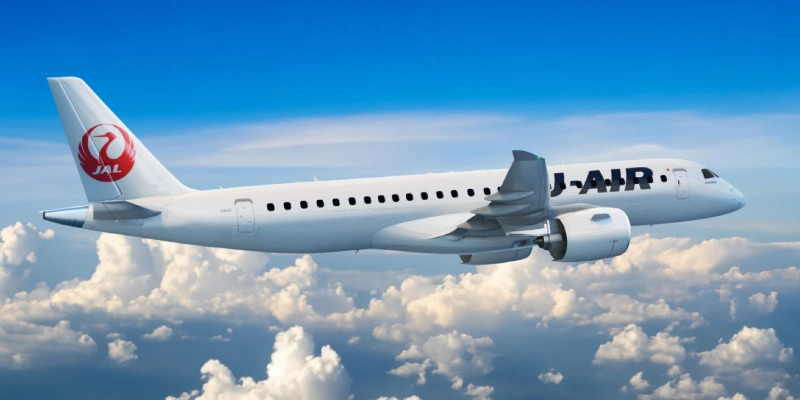
Japan Airlines Selects Embraer E190-E2 to Renew J-AIR Regional Fleet
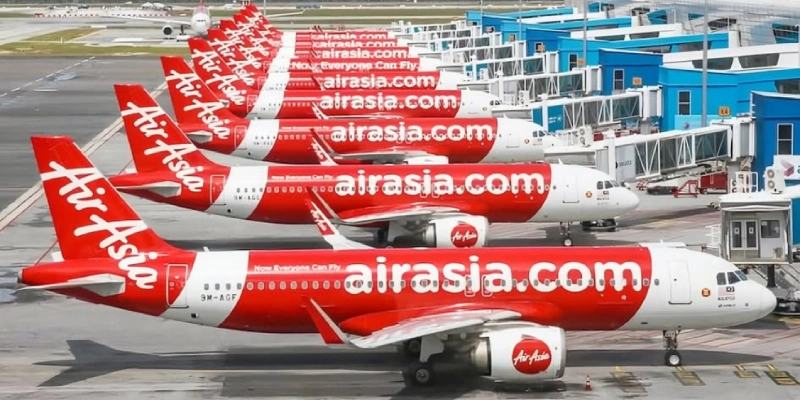
AirAsia in Talks with Malaysian Government Over Potential Financial Support Amid Economic Headwinds and Soaring Fuel Costs
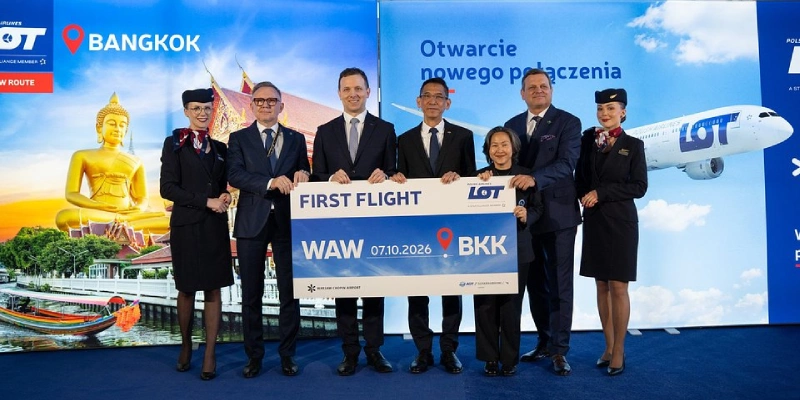
LOT Polish Airlines Launches Direct Flights Between Warsaw and Bangkok
Lufthansa Group Boosts Connectivity to Japan, Reaching Up to 50 Weekly Flights in Summer 2027

Plataforma Informativa de Aviación Comercial con 13 años de trayectoria.