Airbus Powers Cockpits of Future: Computer Vision and Artificial Intelligence for Autonomous Landings
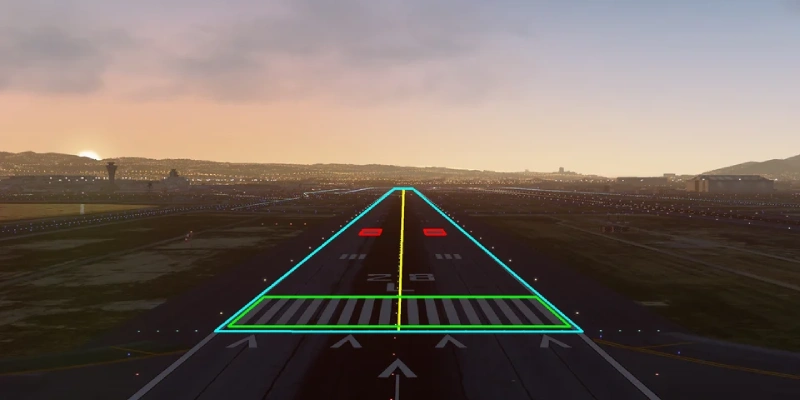




Airbus will showcase an innovative technology demonstration at the VivaTech forum in Paris, utilizing computer vision powered by artificial intelligence to guide autonomous landings. This application aims to bring automated landing capabilities to airports lacking advanced ground infrastructure, ushering in a new era of resilience and efficiency in global aviation.
Computer Vision: Moving Toward Infrastructure-Independent Landings
The so-called Vision Landing Application uses Artificial Intelligence (AI) to analyze runway features in real time through onboard cameras. The primary objective of this research is to establish an additional, independent positioning source to reliably guide pilots and their aircraft.
This development opens up the prospect of bringing autoland capabilities (fully automated landing procedures) to airports that lack advanced surface technological support. In doing so, it proposes a transition toward purely airborne systems, overcoming historical reliance on heavy ground-based infrastructure or satellite support, such as Instrument Landing Systems (ILS), Satellite-Based Augmentation Systems (SBAS), or Ground Based Augmentation Systems (GBAS).
Although the technology is currently in the research phase and far from commercial certification, this technical exploration aligns directly with Airbus’s global roadmap for intelligent automation.
Airbus’s Roadmap to Intelligent Automation
The European manufacturer builds on a solid foundation thanks to various research projects developed over the last decade, which serve as the “technological building blocks” for the current demonstrator:
Launch with ATTOL (2018)
Formal research began on June 1, 2018, with the launch of the Autonomous Taxi, Take-Off & Landing (ATTOL) project. Designed as a rapid risk-reduction demonstrator, ATTOL tested the physical feasibility of an aircraft safely navigating airport environments using image recognition technology alone, completely independent of conventional ground infrastructure signals.
Operational Evolution with DragonFly (2020)
In November 2020, the Airbus UpNext DragonFly demonstrator was launched. The objective of this second phase was to verify operational relevance and scale data processing against real-world complexities, such as adverse weather, late runway alignments, and unequipped airfields. Its key goals included automated emergency operations, enhanced pilot assistance, workload reduction during taxiing, and leveraging global data.
Synergies with the Auto’Mate Project
In parallel, Airbus UpNext developed the Auto’Mate project in collaboration with Airbus Defence and Space. Although its autonomy goal was geared toward air-to-air refueling, it utilized very similar technological components: various types of cameras, high-precision satellite positioning, and Light Detection And Ranging (LiDAR) sensors combined with AI algorithms. All of these technologies are applied today in vision-based landing.
Optimate: Integration into an A350 (2023)
Building on the legacy of previous projects, the Airbus UpNext Optimate demonstrator was launched in 2023, conceived as an “A350 cockpit on wheels” and physically exhibited at VivaTech in 2024. Optimate synthesizes previous technologies into a single, unified mission profile to explore strategic gate-to-gate automation.
This three-year project introduces:
- Advanced trajectory protection models.
- Automatic anti-collision functions.
- Runway incursion safeguards.
- A digital and virtual flight assistant designed to interpret Air Traffic Control (ATC) clearances and optimize ground communications.
The research will culminate in a full gate-to-gate mission profile on a real A350 test aircraft, representing the final step before industrialization and certification decisions.
“Edge-AI” for Maximum In-Flight Resilience
To complement computer vision, Airbus is designing the evolution of its future cockpits into a more intuitive environment, created to enhance situational awareness and crew alertness. Intelligent automation relieves pilots of repetitive tactical tasks so they can focus entirely on strategic flight management and safety.
To ensure critical functions such as trajectory management, navigation, surveillance, and decision-making support, the aircraft’s systems must perceive their environment autonomously. This is where Edge-AI comes into play, enabling real-time processing of high-resolution video streams to identify runways, taxiways, and mobile obstacles. This guarantees high-fidelity landings even in environments without access to Global Navigation Satellite System (GNSS) signals or at remote airfields with zero ground infrastructure.
Strict Industrial Criteria for the Aerospace Environment
Integrating AI onboard an aircraft demands industrial criteria radically opposed to cloud-based consumer applications. In the aerospace context, the technology is restricted by a strictly limited computing and power environment within the aircraft hardware.
To design certifiable functions, engineers must fully master hardware behavior and maintain absolute visibility over every line of software code. This strict framework defines Airbus’s embedded AI by combining three fundamental capabilities:
- Machine Learning for environmental recognition.
- Agentic AI for reasoning.
- Generative AI for creation processes.
Path to Next-Generation Flight Systems
In order to centralize and accelerate these complex research efforts, Airbus has focused its primary development activities within a multidisciplinary research organization and center of excellence located in Europe. This facility aggregates the technical expertise necessary to overcome the unique technological and regulatory barriers of aviation.
By merging the characteristic rigor of aerospace engineering with the potential of computer vision and AI, the manufacturer is moving steadily toward next-generation flight systems, providing advanced support tools for crews to elevate the efficiency and safety of airline operations.
Related Topics
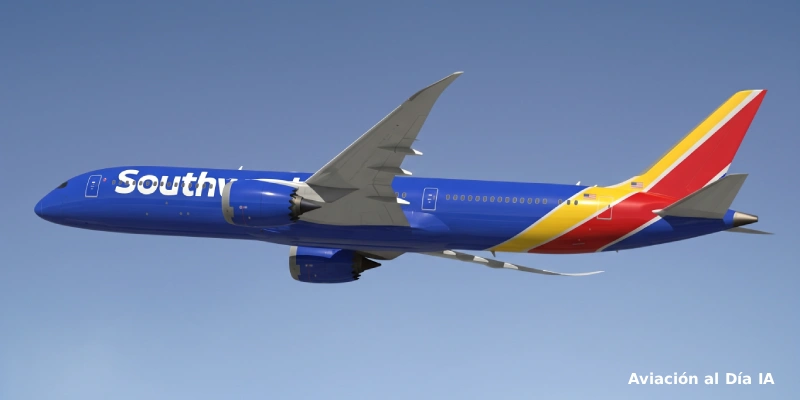
Southwest Airlines Evaluates Widebody Aircraft, Eyes Boeing 787
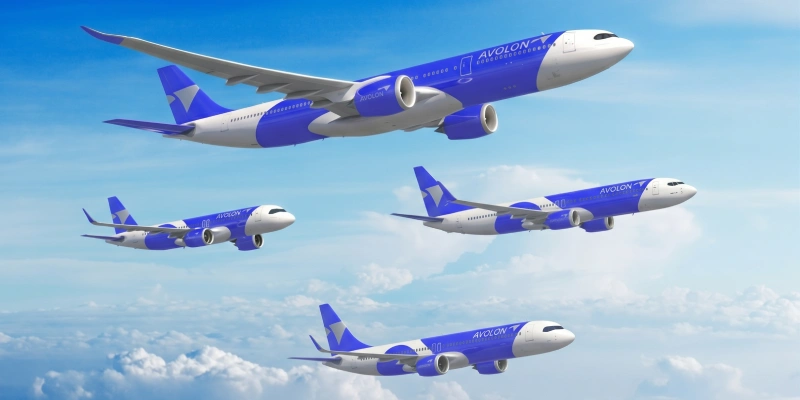
Avolon Orders 250 Aircraft from Airbus and Boeing

FAA Clears Path for Boeing 737 MAX 10 Certification After Dismissing Flight Software Safety Risks
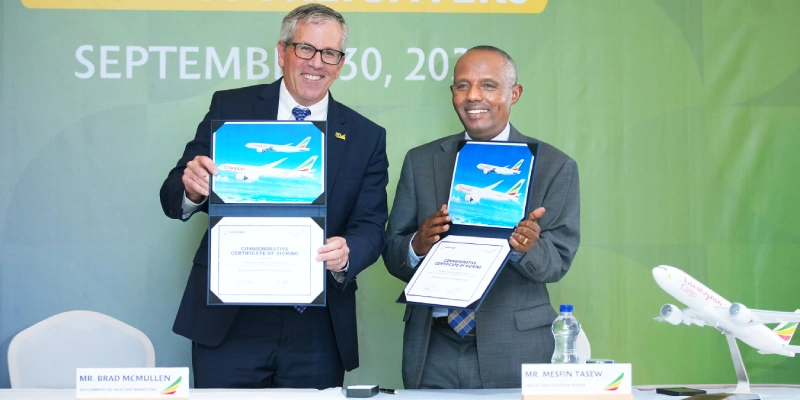
Ethiopian Airlines Orders Ten Boeing Freighters: Eight 777-8Fs and Two 777Fs to Boost Global Logistics Network

Un apasionado por la aviación, Fundador y CEO de Aviación al Día.