
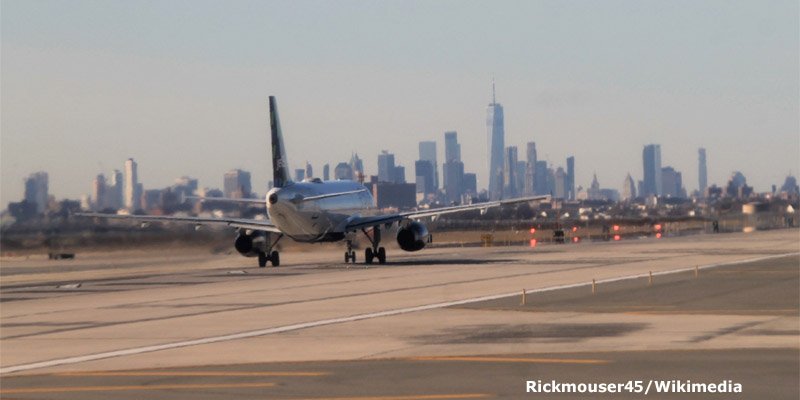
The Federal Aviation Administration (FAA) announced Thursday the extension of flight cap restrictions at the three major New York area airports. The measure aims to mitigate severe operational congestion stemming from a persistent air traffic control staffing crisis, which continues to impact capacity in the busiest airspace in the United States.
Restrictions Schedule and Slot Relief
The federal agency detailed that the operating limits will remain in effect under a staggered temporary timeline based on each airport:
- Newark Liberty International Airport: Restrictions will be extended through the summer of 2027.
- John F. Kennedy International Airport (JFK) and LaGuardia Airport: Flight caps will be prolonged until late October 2028.
Additionally, the FAA will grant an extension until the end of 2027 for the regulatory waiver on minimum slot usage requirements at JFK, LaGuardia, and Ronald Reagan Washington National Airport. This exceptional measure has been applied consecutively by the agency for several years to manage congestion at New York gateways.
How does slot relief work? Under standard industry rules, airlines risk losing their takeoff and landing slots at congested airports if they do not utilize them at least 80% of the time. The latest waiver approved by the FAA relaxes this “use-it-or-lose-it” rule, allowing carriers to operate 10% fewer scheduled flights without facing penalties or losing their slot allocation rights.
Capacity Pushed to the Limit and the Domino Effect Impact
The FAA’s technical justification for maintaining these restrictive measures is based on current infrastructure saturation and the risk of systemic collapse:
- LaGuardia: Physical runway capacity remains strictly limited, while operator demand for access stays at extremely high levels.
- JFK: The agency warned that without these caps in place, the airport would experience severe congestion delays, triggering a negative domino effect across the rest of the nation’s airport network.
- Newark: In May 2025, the FAA had already imposed significant cuts following a series of massive operational disruptions at United Airlines that affected hundreds of flights and raised alarms about the aging US air traffic control system. These specific restrictions will remain in place until October 2027, given that staffing deficiencies at this facility are not expected to see significant improvement before that date.
Root of the Problem: A Critical Controller Shortage
The core of the operational crisis lies in the lack of certified personnel at key facilities. Currently, the number of fully certified air traffic controllers at the New York Terminal Radar Approach Control (TRACON) stands at just 57% of target levels.
This structural staffing shortage has had a direct impact on the aviation ecosystem:
- Systemic delays in commercial flight schedules.
- Mandatory overtime shifts for the active workforce.
- Forced six-day workweeks at multiple air traffic control facilities.
According to a National Academies of Sciences report published last year, air traffic controller overtime costs have skyrocketed by more than 300% since 2013, exceeding $200 million. The report attributed this financial spike to inefficient workforce allocation and deficient shift-scheduling systems.
Downward Adjustment in Staffing Targets
Faced with this situation, the FAA drastically reduced its global air traffic control staffing goal last month, lowering the target from 14,633 to 12,563 certified controllers. With this adjustment, the agency committed to implementing modernized scheduling systems and increasing the effective time employees spend exclusively managing traffic on radar screens.
The extension of flight caps confirms that air traffic management in the US Northeast will continue to operate under a contingency model for years to come. As the FAA seeks to stabilize its workforce and optimize internal processes, controlled capacity reductions have established themselves as the only viable alternative to prevent operational paralysis in New York’s skies.
Related Topics
ITA Airways Opens Ticket Sales for New Rome–Caracas Route

Lufthansa Group Unveils Largest Route Expansion Since 2020: 10 New Long-Haul Destinations for Summer 2027

Ryanair CEO Warns of Steepest Airfare Hike in European History: Ticket Prices Could Surge by up to 20%

Icelandair Completes Acquisition of 49% Stake in Fly Play Europe to Secure Maltese Air Operator Certificate


Plataforma Informativa de Aviación Comercial con 13 años de trayectoria.