KLM Suspends Flights to Uganda Amid Ebola Outbreak Travel Restrictions
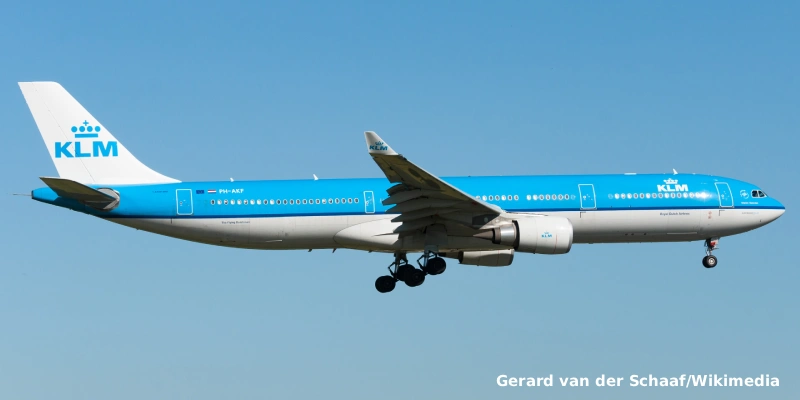




The Dutch flag carrier KLM has suspended its scheduled operations to and from Entebbe International Airport, which serves Uganda’s capital, Kampala. This drastic measure comes in response to strict travel and entry regulations imposed by several countries following the Ebola outbreak in Central Africa.
Impact of Health Measures on KLM’s Operations
Although the Entebbe area is not currently classified as an active risk zone, the Netherlands-based airline has found it impossible to maintain its planned routes. The primary reason stems from severe travel restrictions introduced by multiple governments for individuals who have recently transited through Uganda—a condition that directly impacts flight and cabin crews.
As an immediate consequence of this situation, Flightradar24 data monitoring systems confirmed the cancellation of two flights between Amsterdam Airport Schiphol and Entebbe, which included a scheduled stopover in Kigali, the capital of Rwanda.
In an official travel advisory, the airline stated: “We continue to monitor the situation and analyze the available options.”
Global Alert and International Regulations
The World Health Organization (WHO) has classified this Ebola outbreak—caused by the rare Bundibugyo variant in Uganda and the Democratic Republic of the Congo—as a Public Health Emergency of International Concern. However, the organization clarified that the current situation does not yet meet the technical criteria to be declared a pandemic emergency.
→ KLM’s First Airbus A350 Enters Final Assembly Line in Toulouse
In light of this scenario, several governments have taken drastic preventive actions:
- United States: Implemented enhanced travel screening, public health measures, and entry restrictions aimed at containing the spread of the disease.
- Crew Restrictions: Airlines such as Brussels Airlines reported that US regulations strictly prohibit entry into the United States for any crew member who has been to the Congo or Uganda within the previous 21 days.
- Global Alerts: For its part, Emirates has formally urged passengers to meticulously verify the entry requirements of their destinations before flying, due to the proliferation of Ebola-related regulations across multiple borders.
Logistics Challenge for European Carriers
Compliance with these quarantines and crew eligibility restrictions presents a complex operational puzzle for the commercial aviation sector.
Adjustments at Brussels Airlines
Unlike KLM, Belgian carrier Brussels Airlines has chosen to maintain its flight schedules as much as possible. To achieve this, the company confirmed it is making “significant adjustments” to its crew scheduling and rotations. In doing so, it aims to ensure the continuity of its connections to Entebbe, Kinshasa, New York, and Washington.
Operational Incidents
The rigidity of these controls has already caused notable mid-flight disruptions. A clear example occurred when an Air France flight operating between Paris and Detroit had to divert to Montreal. The maneuver was executed after it was detected that a passenger originating from the Congo had boarded the aircraft “by mistake.”
Central African Air Market Outlook
The suspension of routes by global operators like KLM underscores the fragility of air connectivity networks during public health crises. The future of airline operations in the region will depend directly on the epidemiological evolution of the virus and the flexibility of Western governments to mitigate the impact of these restrictions on essential airline personnel.
Related Topics

Qantas Confirms Nonstop Sydney–New York Flights to Launch in 2028

Breeze Airways Retires Its Final Embraer 190, Consolidates an All-Airbus A220 Fleet

US to Seek Additional $30 Billion to Modernize Air Traffic Control System and Airports
Telecoms Outage Paralyzes Thousands of US Flights

Plataforma Informativa de Aviación Comercial con 13 años de trayectoria.