“Save a Life, Not a Bag”: IATA Launches Global Passenger Safety Campaign
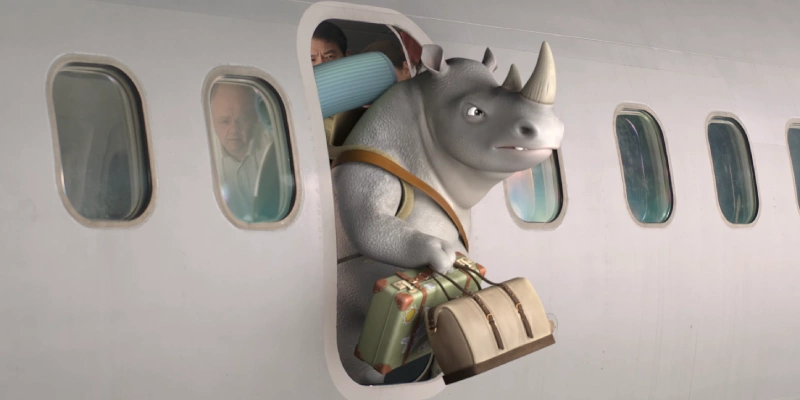




The International Air Transport Association (IATA) announced the launch of its “Save a Life, Not a Bag” passenger safety campaign, which urges travelers to leave all cabin baggage behind in the event of an emergency evacuation. This initiative aims to mitigate a rising trend that severely jeopardizes the survival of occupants onboard.
Regulatory Cooperation Ahead of a Growing Threat
The campaign is backed by the world’s leading aviation regulatory bodies, including the European Union Aviation Safety Agency (EASA) and the Federal Aviation Administration (FAA) of the United States. The program reinforces the mandatory actions passengers must execute when an evacuation order is given: comply with crew instructions, leave all belongings behind, and quickly proceed to the nearest usable exit.
IATA Director General Willie Walsh emphasized the critical impact of this behavior, noting that taking carry-on baggage during an emergency is no minor matter, as every second is vital and a single suitcase can compromise the safe evacuation of everyone onboard. The campaign directly responds to the growing number of incidents where travelers stop to retrieve their belongings or film videos and take photographs during evacuations—a behavior that has been widely documented on social media.
For his part, Florian Guillermet, Executive Director of EASA, recalled that commercial aircraft are certified under strict evacuation standards and that crews undergo exhaustive training to guarantee survival in acute situations. However, he stressed that for these protocols to work, passengers must do their part simply and effectively. Likewise, FAA Administrator Bryan Bedford warned about the increase in passengers disobeying cabin crew instructions at critical moments, reminding everyone that aviation safety is a shared responsibility.
→ IATA Launches Baggage Community System to Modernize Global Baggage Messaging
Technical and Physical Risks of Retrieving Baggage
Carrying bags or personal items during an evacuation introduces multiple technical and operational risk factors inside the cabin:
- Loss of Critical Time: Invaluable seconds are wasted attempting to extract baggage from overhead bins.
- Aisle Obstruction: Belongings slow down the flow of people in the cabin and can block aisles and emergency exits.
- Disabling of Escape Systems: Bulky and sharp objects can puncture or damage the inflatable evacuation slides that all passengers need to use.
- Physical Injuries: Carrying luggage can cause direct falls or strike other passengers along the way.
- Loss of Visibility: Loose bags can obstruct the floor-level emergency escape path lighting systems.
- Mechanical Risks: Objects can become snagged on seats or internal aircraft fixtures, hindering the efforts of rescue personnel and crew both inside and outside the aircraft.
The most alarming documented risk includes passengers attempting to evacuate while simultaneously holding infants and suitcases, gravely compromising safety at a high-priority moment. The impact of these actions is not limited to the individual carrying the luggage; a single person delaying the flow disrupts crew commands and affects the availability of escape exits.
Knowledge Gaps: The IATA Market Study
To ground the development of the campaign, IATA commissioned a survey targeting frequent flyers across four representative global markets (the United States, the United Kingdom, the United Arab Emirates, and Singapore), complemented by an analysis from human behavior experts. The study identified critical gaps in passenger knowledge:
- Overconfidence: Although 80% of respondents claimed to know what to do in an evacuation, only 61% correctly answered that the right course of action is to leave all personal items behind.
- Imitation Effect via Media Reports: 33% stated they had seen news or reports of people taking their bags during emergencies, and within this group, 22% indicated they would likely act the same way.
- Misperception of Time: Only 18% of passengers know that evacuation procedures are designed under a 90-second safety technical benchmark; conversely, 38% estimate that the process could take three minutes or more.
- Conscious Indiscipline: One in ten travelers admitted they might attempt to take their luggage or follow others who do so, even when explicit instructions not to have been given.
As a mitigation data point, 60% of respondents stated they would be less prone to retrieve their luggage if they had their small essential items secured on their person. Nick Careen, IATA Senior Vice President of Operations, Safety and Security, pointed out that the campaign functions as a direct reminder of what is at stake, urging travelers to adopt the habit of always keeping their documents, money, and medication on themselves.
Strategy and Pillars of the Safety Message
The campaign’s flagship video was structured alongside human behavior specialists to ensure a clear and memorable message. The material deliberately utilizes surreal imagery and exaggerated scenarios to generate a lasting impact on viewers. The campaign actively promotes that passengers plan ahead, securing their passport, money, and medication on their clothing prior to takeoff and landing.
The core messages directed at passengers are:
- Pay attention to the crew.
- Leave all luggage behind.
- Do not film or take photographs.
- Keep moving.
- Exit quickly.
Global Deployment Across the Industry
The digital assets for “Save a Life, Not a Bag” are available for airlines and strategic sector partners to implement in direct communication with passengers or through their social media channels. Furthermore, the educational material has been made available to media outlets and other entities within the air transport value chain to maximize awareness regarding safe evacuations.
Related Topics

Copa Airlines Restores Operations Following Seismic Activity in Panama and Expands Commercial Flexibility Policies

Arajet Resumes Direct Flights Between Punta Cana and Guayaquil

LATAM Airlines Announces Nonstop Flights Between Santiago de Chile and Caracas Starting in January

Satena to Launch Direct Flights Between Montería and Panama City in October

Un apasionado por la aviación, Fundador y CEO de Aviación al Día.