

During 2025, scheduled commercial aviation transported approximately 5 billion passengers across 38 million flights worldwide, surpassing the records established in 2024. Published in the latest safety report by the International Civil Aviation Organization (ICAO), this analysis covers scheduled passenger and cargo air transport operations conducted by aircraft with a Maximum Take-Off Mass (MTOM) exceeding 5,700 kg.
Despite the sustained increase in operational volume, the total number of accidents decreased from 95 in 2024 to 85 in 2025. This improvement translated into a 13% reduction in the global accident rate, reaching 2.2 accidents per million departures (compared to 2.6 the previous year).
The most notable progress occurred in fatal accidents—those in which at least one person loses their life—which fell from 10 in 2024 to just 4 in 2025. The fatal accident rate experienced a 60% decline, dropping from 0.27 to 0.11 events per million departures.
“These results demonstrate that aviation can and must continue to become safer even as more people fly. They reflect ICAO’s leadership over decades of collaboration between States and industry to identify risks, learn from accidents, strengthen oversight, and improve operational safety worldwide.”
— Toshiyuki Onuma, President of the ICAO Council
Fatality Paradox: The Impact of Rare Catastrophic Events
Despite the sharp drop in the number of fatal accidents, the absolute number of fatalities rose from 296 in 2024 to 387 in 2025. Correspondingly, the fatality rate—calculated as the number of deaths per billion passengers carried—increased from 65 to 78.
The technical cause behind this discrepancy lies in the high concentration of casualties in rare, large-scale single events. In 2025, a single accident alone accounted for 260 fatalities, disproportionately skewing the annual statistical balance. This phenomenon highlights one of modern aviation safety’s central challenges: while general accident prevention mechanisms have proven highly effective, the complete eradication of rare catastrophic crashes remains a critical priority for the industry.
High-Risk Categories and ICAO Global Plan Priorities
Under the Global Aviation Safety Plan (GASP), ICAO focuses its safety efforts on Global High-Risk Categories of Occurrences (HRCs), classified as such because they have historically caused the majority of human losses in the industry. In 2025, these five categories accounted for more than half of all fatal accidents:
Loss of Control in Flight (LOC-I) and Controlled Flight into Terrain (CFIT)
- Loss of Control in Flight (LOC-I): This category demands the greatest continuous attention, accounting for nearly one-third of the fatal accidents recorded within high-risk events. Given the rapid onset of these occurrences and the limited windows for recovery, ongoing investment in flight crew training, aircraft systems, safety management, and human performance initiatives remains vital.
- Controlled Flight into Terrain (CFIT): Although only one CFIT accident was recorded in 2025, it accounted for over 10% of all global aviation fatalities. ICAO emphasizes that maintaining terrain awareness and warning systems (TAWS), flight crew situational awareness, and operational safeguards remains essential.
Mid-Air Collisions (MAC) and Integration of New Entrants
- Mid-Air Collision (MAC): The 4 accidents classified under this category caused nearly 15% of total fatalities in 2025. Maintaining safe separation through Airborne Collision Avoidance Systems (ACAS) and Air Traffic Management (ATM) is a top priority, particularly given the growth in conventional traffic and the integration of new airspace users, such as drones and Advanced Air Mobility (AAM) vehicles.
Runway Safety: Progress in Incursions, Challenges in Excursions
- Runway Incursion (RI): No runway incursion accidents were recorded in commercial air transport during 2025—an achievement attributed to the implementation of the ICAO Global Runway Safety Action Plan and advancements in aerodrome procedures, technology, communications, and pilot situational awareness.
- Runway Excursion (RE): Despite progress on incursions, 7 runway excursion accidents occurred during the year (aircraft veering off or overrunning the runway during takeoff or landing), one of which resulted in fatal injuries.
State Oversight and Regulatory Challenges
The assessment of State safety oversight effectiveness, measured through ICAO’s Universal Safety Oversight Audit Programme (USOAP), showed widespread improvement in 2025, reaching a global average score of 69.8%, with an increasing number of States reaching the targeted oversight level.
Nevertheless, the analysis identified three persistent deficiencies among national regulatory authorities:
- Resolution of identified safety concerns.
- Retention and maintenance of sufficient qualified technical staff.
- Execution of continuous surveillance and effective safety inspections.
“Data-driven findings are effective in prompting States to step up their focus where evidence shows the greatest risks or deficiencies. ICAO is fully committed to delivering targeted capacity-building, technical assistance, and implementation support to help States achieve measurable improvements.”
— Juan Carlos Salazar, ICAO Secretary General
Path Toward the Target of Zero Fatalities
ICAO’s aspirational goal includes zero fatalities in international commercial aviation resulting from accidents or acts of unlawful interference. The metrics published in this report will enable Member States to tailor their national and regional aviation safety plans. Through a continuous cycle of reporting, analysis, monitoring, and direct action, the aviation sector aims to close the gap toward the total eradication of fatal accidents.
Related Topics
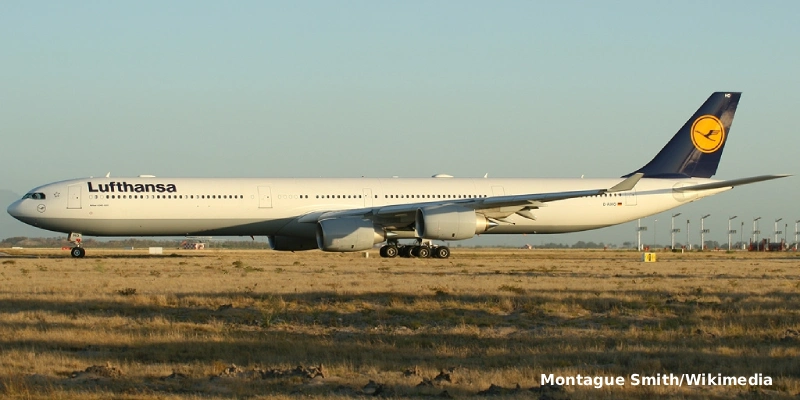
End of an Era: Lufthansa Retires Airbus A340-600 Fleet After 23 Years of Service

ITA Airways Celebrates Its Fifth Anniversary

Condor Launches Daily Flights Between Berlin and Abu Dhabi

Lufthansa in Talks to Acquire Remaining 50.1% Stake in TAP Air Portugal Following Initial Entry


Un apasionado por la aviación, Fundador y CEO de Aviación al Día.