
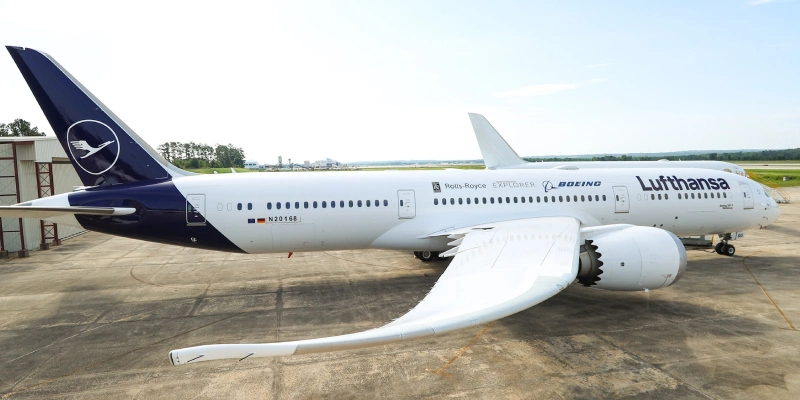
The quest for maximum operational efficiency and noise mitigation has brought together three of the world’s largest global aviation corporations. Boeing, Lufthansa, and Rolls-Royce will soon begin a series of test flights to evaluate innovations designed to improve fuel efficiency and reduce noise emissions in airport vicinities.
Operational evaluations will be conducted at Boeing’s facilities in Glasgow, Montana, using a Boeing 787-9 Dreamliner. This aircraft, temporarily operating as Boeing’s 2026 ecoDemonstrator Explorer, is powered by Rolls-Royce Trent 1000 engines and will be formally delivered to Lufthansa at a later date following the test program, which is scheduled to run from late this month through mid-August 2026.
“Boeing is working tirelessly to deliver the aerospace innovations of today and tomorrow. The more efficient engine inlet and smart operational flight paths we are evaluating on this year’s ecoDemonstrator Explorer are among the many promising concepts we are working on. These improvements have the potential to make our airplanes even more valuable to our partners, including customers like Lufthansa and suppliers like Rolls-Royce,” said Lane Ballard, Boeing’s Chief Technology Officer (CTO).
Technological Innovations Under Evaluation
The flight test program will focus on two main technological pillars addressing both hardware design and navigation procedure optimization:
1. Next-Generation Engine Inlet
A short-duct engine inlet demonstrator with advanced acoustic treatments will be evaluated. This key component enables the future integration of even more efficient engines on new aircraft platforms. By reducing the physical footprint of the inlet, it achieves a direct reduction in weight and aerodynamic drag, while successfully maintaining the rigorous acoustic absorption capabilities required to mitigate engine noise.
2. Smart Operations Procedures
The testing will encompass modifications to traditional departure and arrival procedures through smart flight paths. These trajectories are algorithmically generated using multiple real-time meteorological and operational data sources. Their primary goal is to identify precise opportunities to optimize fuel consumption and significantly reduce perceived noise for communities surrounding airport terminals.
→ Airbus and Boeing Turn to Giant Antonov An-124 to Unclog Supply Chain
Funding Framework and Public-Private Development
The technologies under evaluation are part of Phase III of the US Federal Aviation Administration’s (FAA) Continuous Lower Energy, Emissions, and Noise (CLEEN) program. Through this public-private partnership model, the FAA and industry stakeholders accelerate the development of systems that enable manufacturers to integrate lower-energy and acoustically improved solutions into aircraft for decades to come.
“These trials demonstrate how the CLEEN program’s public-private partnership supports the development and integration of advanced technologies into current and future aircraft,” highlighted Julie Marks, Executive Director of the FAA’s Office of Environment and Energy.
A Decade of Future-Oriented Synergies
This joint effort represents the consolidation of a ten-year active research and development collaboration between Boeing and Rolls-Royce, focused on unlocking more sustainable commercial aviation. Rolls-Royce has provided the engineering support and technical oversight necessary to operate the Trent 1000 engine with the Next-Generation Inlet installed.
“With Boeing and Lufthansa, we are building on our extensive research to test technologies in real-world conditions and see how they perform where it matters most: in service,” stated Alan Newby, Director of Research and Technology at Rolls-Royce.
On behalf of the launch operator, Lufthansa Group reaffirms its commitment to industry transformation through empirical validation in real-world environments.
“Lufthansa Group and Boeing share a long-standing partnership in aviation. We are pleased to support this year’s ecoDemonstrator Explorer program alongside Rolls-Royce, advancing the industry’s transformation by testing technologies with real potential for operational optimization,” added Grazia Vittadini, Chief Technology Officer of Lufthansa Group.
Outlook and Fleet Maturation
Since its inception in 2012, Boeing’s ecoDemonstrator program has acted as a technology accelerator, taking complex concepts out of the lab and actively testing them in day-to-day operational environments. To date, the initiative has successfully evaluated more than 260 technologies focused on increasing operational safety, reducing fuel consumption, lowering $\text{CO}_2$ and noise emissions, and improving the onboard passenger experience.
The data obtained during this summer test campaign in Montana will provide all three companies with critical insights to advance their respective fleet modernization strategies and global environmental sustainability goals, facilitating resilient, long-term aviation growth in line with projections indicated by Allison Melia, Boeing’s Vice President of Sustainability.
Related Topics
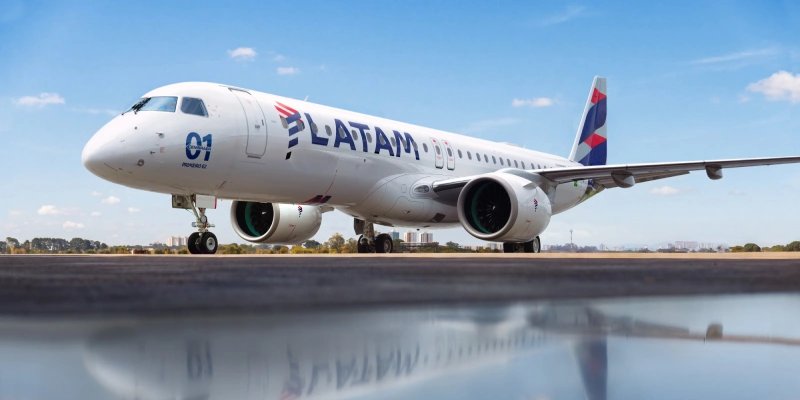
LATAM Airlines Brazil Takes Delivery of Its First Embraer E195-E2
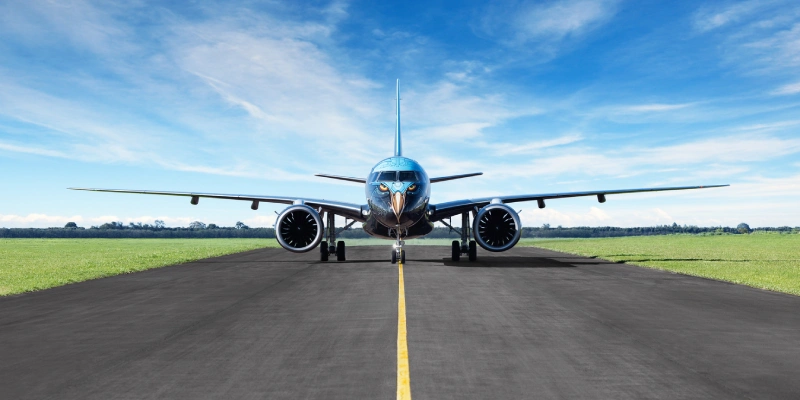
Embraer Reports Record Third-Quarter Performance With 66 Aircraft Delivered
Embraer Nears Key Regional Jet Order from Japan Airlines
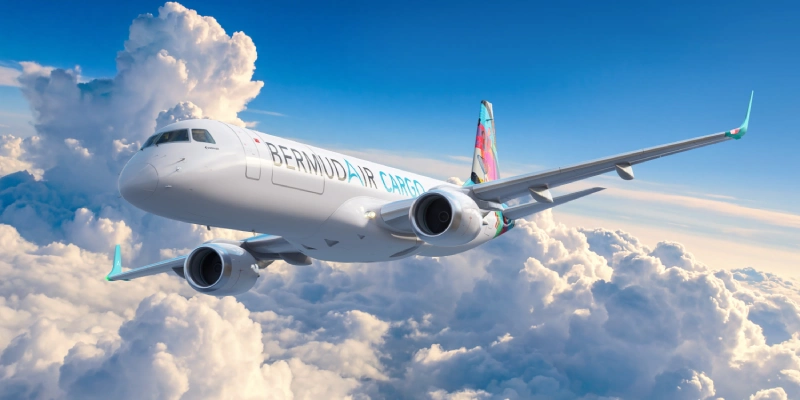
BermudAir Becomes Second Global Operator of Embraer E-Freighter


Un apasionado por la aviación, Fundador y CEO de Aviación al Día.