
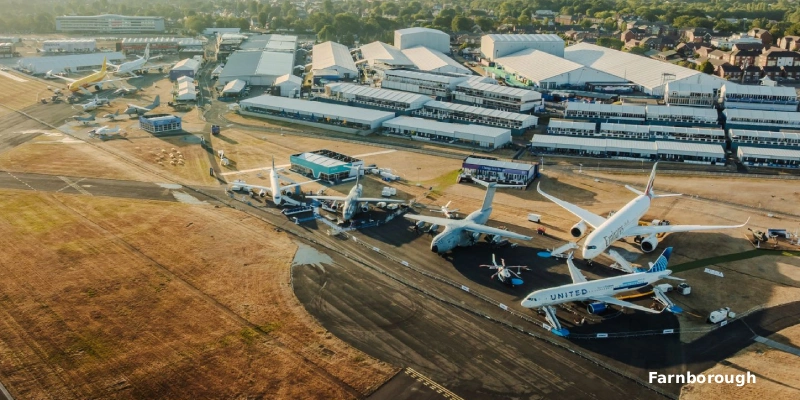
In an event marked by industrial caution and a primary focus on fulfilling existing backlogs, Boeing narrowly surpassed Airbus in order announcements at the Farnborough International Airshow. The global aerospace sector is strategically pivoting away from mega-orders to concentrate on resolving persistent supply chain bottlenecks and managing record-high order backlogs.
Shift in Expectations and Market Dynamics
Commercial deals announced during the show reached a combined value of tens of billions of dollars, yielding a total volume aligned with earlier industry forecasts that anticipated just over 300 aircraft. This final tally fell significantly short of more optimistic projections, which had predicted commitments for up to 800 aircraft.
The traditionally bustling pace of order announcements characteristic of major airshows has experienced a steady slowdown in recent years. Aircraft manufacturers are avoiding mixed messaging at a time when they face complex operational headwinds, while airlines continue to evaluate and absorb a record volume of aircraft on order.
Comparative Order Breakdown
According to the tally of commercial transactions made during the show:
- Boeing: Announced commitments for a total of 173 aircraft, combining firm and preliminary agreements driven by a mix of narrowbody and widebody models.
- Airbus: Accumulated a total of 154 firm and provisional orders.
- Combined OEM Total: Reached 327 aircraft.
When factoring out transactions previously logged on manufacturer order books without public buyer identification—including half awarded to the US OEM by a lessor—the net total stood at 218 aircraft. Although this figure represents a slight increase compared to the previous edition of Farnborough in 2024, it remains far below the cyclical peak reached in 2018, when both manufacturers logged a combined 1,109 orders.
→ Emirates President Launches Scathing Criticism Against Boeing and Engine Manufacturers
Meanwhile, Brazilian airframer Embraer reported orders for 50 aircraft, including 20 units in a freighter configuration.
Operational Execution and Product Strategy
Accumulated order backlogs stretching well into the next decade—the result of years of supply chain disruptions, skilled labor shortages, and manufacturing setbacks—have shifted the industry’s priorities. With OEMs focused on ramping up production rates and customers facing extended delivery lead times, static displays and flight demonstrations no longer command the spotlight they once did.
On the product display front, Airbus showcased its flagship A350-1000. Boeing, by contrast, did not bring any of its primary commercial variants to the show, as three of its key aircraft models are currently undergoing active certification processes.
Propulsion Sector and Supply Chain
In the propulsion segment, a highlight was a record order placed by Indian carrier IndiGo for over 1,000 CFM International LEAP-1A engines to power 500 previously ordered Airbus narrowbody aircraft.
The previous wave of aggressive aircraft buying, spurred by low interest rates, placed extreme operational pressure on the engine manufacturing sector, triggering severe component shortages and MRO (Maintenance, Repair, and Overhaul) delays. Nevertheless, both CFM International and Pratt & Whitney—the primary supplier impacted by these disruptions—reported that the supply chain environment is showing signs of steady normalization and sustained improvement.
The outcome of the Farnborough Airshow confirms a fundamental paradigm shift in commercial aviation: the industry’s strategic priority has migrated from securing massive new contracts to the efficient execution of existing commitments. In an environment where demand remains robust but constrained by industrial capacity, supplier stability and accelerated delivery schedules will define airframer competitiveness in the years ahead.
Related Topics

Delta Air Lines Unveils Next Era of Its Delta One Cabin

US Lawmakers Demand FAA Halt Use of New AI Tool in Washington Airspace
Delta Postpones Launch of Direct Atlanta–Riyadh Flights to March 2027

Avianca Flight from Medellin to New York Diverts to Miami Due to Severe Turbulence; At Least Eight Hospitalized


Plataforma Informativa de Aviación Comercial con 13 años de trayectoria.