United Airlines Explored Possible Delta Merger Prior to American Airlines Bid
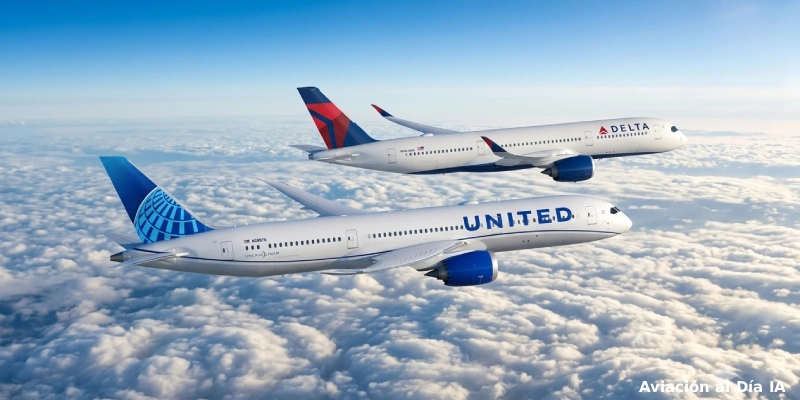




In pursuit of a commercial aviation mega-deal, United Airlines sounded out Delta Air Lines last year to explore a potential merger that would have combined the two highest market-cap carriers in the United States, according to a report by The Wall Street Journal.
As part of the initial approach, United CEO Scott Kirby placed a direct call to Delta CEO Ed Bastian. Following the proposal, Delta’s executive leadership evaluated the merits of the potential transaction during a preliminary due diligence phase. However, talks failed to gain traction, and both organizations terminated discussions without reaching a consensus.
The overture highlights Kirby’s appetite for high-stakes strategic moves within global commercial aviation, pre-dating a subsequent merger approach to American Airlines that was likewise rebuffed earlier this year.
Regulatory Assessment and the Political Landscape
Both United and Delta are members of the “Big Four” legacy and mainline operators that have come to dominate the US airline sector following two decades of consolidation.
- Antitrust Concerns: Industry analysts and executives traditionally considered a merger between carriers of this scale non-viable due to intense scrutiny from antitrust regulators and state attorneys general.
- The Political Context: Corporate leaders across multiple sectors weighed the possibility that large-scale transactions—previously deemed unthinkable—might gain traction during President Donald Trump’s second administration.
- Market Impact: A deal of this magnitude between two of the world’s largest airlines would have sent shockwaves through commercial aviation competition and significantly altered consumer choice.
→ United Airlines Unveils New Economy Plus Seats with Extra Lateral Space on its Airbus A321XLR
Commercial Strategy and Financial Rationale
Revenue Superiority and Business Model
Kirby has publicly expressed respect for Delta’s operational strategy. The Atlanta-based carrier has reshaped the conventional industry belief that passengers select flights purely on price. Its focus on the premium passenger experience has built strong brand loyalty, positioning Delta as the most profitable airline in the United States.
This business model served as a blueprint for United’s own transformation in recent years. Underscoring their market dominance, United and Delta accounted for over 90% of total US airline industry profits last year.
Comparative Market Valuation
As of last Friday, the market capitalizations of both legacy carriers reflected a clear divergence:
| Carrier | Market Capitalization |
|---|---|
| Delta Air Lines | Approximately $56 billion |
| United Airlines | Around $38 billion |
Rejection of Legacy Consolidation and Future Outlook
Backlash Over the American Airlines Proposal
United’s drive to secure a mega-merger triggered significant backlash when it leaked that Kirby had floated the idea of combining United and American during a meeting with President Trump.
- Lawmakers strongly opposed the proposal, citing potential harm to consumers.
- President Trump voiced his disapproval of the plan.
- American Airlines CEO Robert Isom flatly rejected the idea, labeling the proposal “anti-competitive.”
Shunning Mid-Tier Acquisitions and Fuel Price Pressures
The current macroeconomic environment—marked by surging jet fuel prices that heavily weigh on airline operating costs—has historically served as a catalyst for industry restructuring.
However, leadership remains divided on how to navigate the current landscape:
- Delta’s Perspective: Ed Bastian noted that further consolidation might occur among smaller, financially distressed competitors, while clarifying that Delta has no intention of pursuing such a path.
- United’s Perspective: Scott Kirby has explicitly ruled out smaller-scale acquisitions. Addressing the American Airlines proposal in April, he stated: “Historically, airline mergers were about combining two struggling companies to cut costs, routes, and headcount. My aspirations could not be more different.”
- Ruling Out JetBlue: Kirby confirmed in May that United has no interest in acquiring the New York-based carrier JetBlue, reiterating to analysts and investors that only a large-scale transaction would align with United’s corporate strategy.
With no willing partner for a mega-deal, United has ruled out participating in further industry consolidation for the foreseeable future.
Related Topics
British Airways Expands Network for Summer 2027: Touches Down in Tanzania and Boosts Latin American Capacity by 25%

Copa Airlines Restores Second Daily Flight to Caracas, Venezuela

Avianca Strengthens Cross-Border Network: Launches Daily Flights Between Bogotá and Maracaibo, Venezuela

LATAM to Expand International Connectivity With New Direct Route Between Santiago de Chile and Salvador de Bahia

Plataforma Informativa de Aviación Comercial con 13 años de trayectoria.