Finnair Adapts Pilot Training to Counter Daily GPS Jamming in the Baltic Region
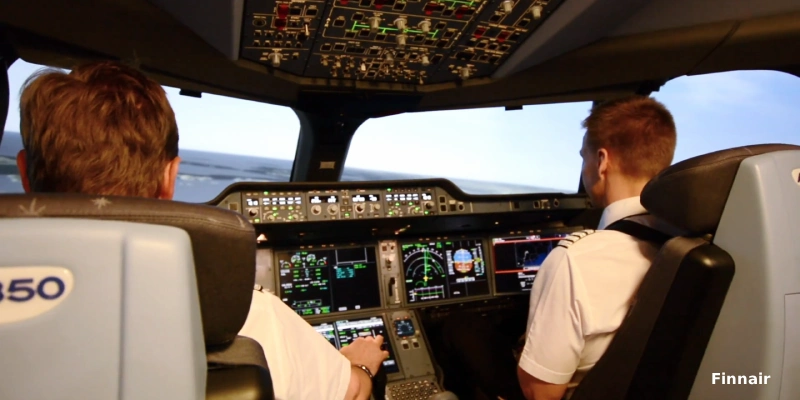




Finnair has modified its flight operations and crew training to manage daily Global Positioning System (GPS) jamming across the Baltic Sea. This operational experience in an electronic warfare environment is now drawing keen interest from airlines worldwide.
Targeted Training for a Daily Reality
The Finnish flag carrier has embedded satellite signal anomaly management into its standard training programs. As Chief Executive Officer Turkka Kuusisto explained in an interview with Reuters, flight crews are trained to handle this operational challenge as part of their routine procedures.
“Our pilots are, first and foremost, trained to fly in an airspace where we face GPS jamming, because that is a daily issue,” Kuusisto noted.
European carriers operating along NATO’s eastern flank face escalating operational challenges as the war in Ukraine enters its fifth year. Having ceased overflights of Russian and Belarusian airspace, Finnair was forced to reroute its flights, heightening its exposure to the Baltic region—now an electronic warfare hotspot.
Escalating Electronic Warfare in the Baltic
Disruptions to satellite navigation signals have intensified markedly this year:
- Baltic Coast Impact: Poland’s National Institute of Telecommunications stated in August that GPS and other satellite navigation signals along the Polish Baltic coast experienced outages on most days throughout the summer.
- Expanding Regional Footprint: While jamming incidents have grown substantially since Russia’s invasion of Ukraine, activity concentrated over the Baltic Sea has become particularly critical.
- Operational Precedent: In 2024, the airline was forced to suspend scheduled flights to Tartu in eastern Estonia for roughly a month after GPS jamming prevented aircraft from safely executing instrument approaches.
Redundant Navigation Systems and Global Industry Interest
Despite the frequency of these disruptions, flight operations continue to meet required safety standards, supported by modern fleet architecture. Contemporary commercial aircraft operate safely by relying on multiple redundant, ground- and sensor-based navigation systems as alternatives to satellite guidance.
This operational resilience has captured the attention of carriers on other continents where GPS spoofing and jamming are far less prevalent.
According to Kuusisto, discussions with airline executives from outside Europe—such as North America or Australia—often reveal surprise that satellite disruptions have become a day-to-day challenge. However, upon learning that Finnair sustains normal operations through specialized flight crew training and contingency procedures, these carriers show considerable interest in the operational mitigation protocols implemented.
Related Topics

Japan Airlines Selects Embraer E190-E2 to Renew J-AIR Regional Fleet

AirAsia in Talks with Malaysian Government Over Potential Financial Support Amid Economic Headwinds and Soaring Fuel Costs

LOT Polish Airlines Launches Direct Flights Between Warsaw and Bangkok

Lufthansa Group Boosts Connectivity to Japan, Reaching Up to 50 Weekly Flights in Summer 2027

Plataforma Informativa de Aviación Comercial con 13 años de trayectoria.