
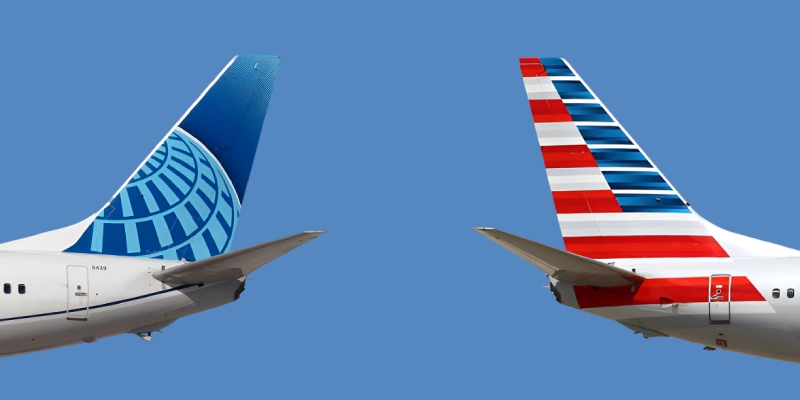
American Airlines and United Airlines are preparing to implement additional capacity cuts should jet fuel prices remain elevated. The U.S. airline industry has relied on constrained supply, higher airfares, and resilient passenger demand to offset surging operating costs stemming from the war involving Iran. However, the recent spike in energy expenses is forcing carriers to re-evaluate marginally profitable flying toward year-end and potentially heading into 2027.
Direct Financial Impact: American Airlines Balance Sheet
Speaking at an investor conference hosted by Morgan Stanley, American Airlines Chief Executive Officer Robert Isom and Chief Financial Officer Devon May detailed how the current operating environment impacts their financial guidance.
- Projected Revenue Growth: Isom projected that third-quarter revenue will increase between 16% and 19% year over year, emphasizing that the bulk of these gains will hold firm thanks to broad-based strength across domestic and long-haul international networks, as well as premium and main cabin yields.
- Fuel Cost Headwinds: May noted that fourth-quarter fuel prices have risen by roughly $1.00 per gallon compared to projections issued in July.
- Operating Sensitivity: At American, every one-cent change in the price per gallon shifts quarterly operating expenses by approximately $10 million, translating to an incremental cost burden of nearly $1 billion for the fourth quarter alone.
In response to this cost pressure, May confirmed that the Fort Worth-based carrier will continue trimming scheduled capacity toward the end of the fourth quarter.
→ American Airlines Unveils First Reconfigured Boeing 777-300ER Featuring New Flagship Suite
United Airlines Prioritizes Margin Over Market Share
At the same event, United Airlines Chief Financial Officer Michael Leskinen explained that the carrier has already trimmed select flights scheduled for December as escalating energy prices erode the profitability of marginal routes.
“We are not flying to maximize market share. We are flying to maximize profitability and free cash flow generation,” Leskinen said regarding the airline’s network strategy.
The Chicago-based carrier is weighing further schedule reductions for the first quarter, with potential extensions into 2027 if jet fuel cracks and crude prices remain structurally high.
Resilient Passenger Demand and Airfare Pass-Through
Despite operational trimming, United reported that fourth-quarter bookings remain “tremendously strong,” showing no evidence of demand destruction:
- Premium cabin traffic remains robust.
- Corporate travel recovery continues to track positively.
- Main cabin leisure demand remains stable.
Leskinen noted that the airline expects to recapture higher fuel expenditures through base fare adjustments, though this pricing pass-through typically materializes with a lag.
Broader Industry Pressures
The strategic posture of both legacy carriers highlights an industry-wide playbook: defend pricing power where passenger traffic sustains it and eliminate marginal flying wherever cost inflation impairs route profitability. Furthermore, Leskinen cautioned that a prolonged period of high fuel prices could accelerate consolidation and restructuring across the aviation sector by placing outsized liquidity and margin pressure on carriers with weaker balance sheets.
Related Topics

American Airlines to Build Network’s Largest Admirals Club at Charlotte

British Airways Launches Multi-Million-Pound Heathrow Airport Lounge Transformation
Venezuela Opens Temporary Domestic Arrivals Terminal at Maiquetia Airport

Caracas and Margarita Airports Have Potential to Attract Private Investment but Require Legal Certainty, Says ACI-LAC


Plataforma Informativa de Aviación Comercial con 13 años de trayectoria.