Airbus Projects Demand for 2,720 New Passenger Aircraft in Latin America Over Next 20 Years
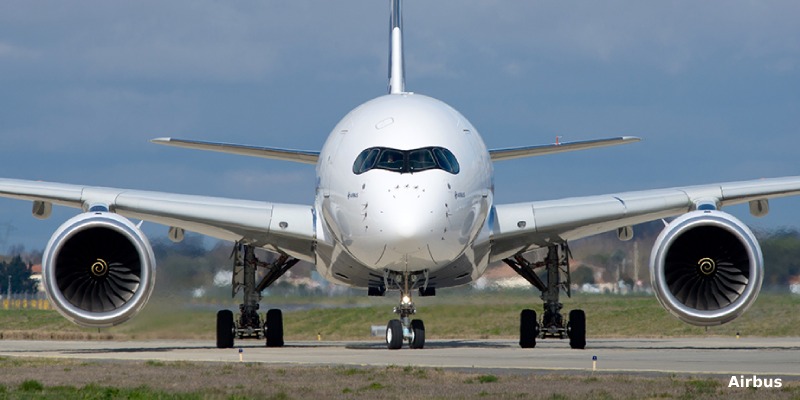




According to Airbus’ Global Market Forecast (GMF) covering 2026 to 2045, the commercial passenger aircraft fleet is set to experience substantial growth over the next two decades. Of the 2,720 new aircraft deliveries projected for the region, narrowbody aircraft will account for the bulk of demand:
- Single-aisle aircraft: Will account for 2,520 deliveries, vastly dominating demand from regional operators.
- Widebody aircraft: Will represent 200 deliveries, targeted at long-haul and high-density operations.
Regarding the deployment of these new deliveries:
- 1,220 aircraft will be added directly to support fleet expansion.
- 1,500 aircraft will be delivered to replace previous-generation airframes.
This influx of deliveries will expand Latin America’s active commercial fleet from 1,550 aircraft today to 2,770 units by 2045.
→ Aviation Capital Group Signs Firm Order for 75 Airbus A320neo Family Aircraft
Key Market Drivers and Passenger Traffic Outlook
The region’s air transport momentum will be underpinned by three macroeconomic pillars: economic development, high urbanization rates, and an expanding middle class. In addition, population decentralization is spurring more urban hubs, enabling the launch of new point-to-point routes operated by next-generation aircraft and broadening the continental air network’s connectivity.
Demand Patterns and Per Capita Travel
- Propensity to travel: The number of trips per capita in Chile, Mexico, and Brazil is projected to double or more over the next two decades, closely followed by the Colombian and Argentine markets.
- Annual traffic growth: Total Origin and Destination (O&D) passenger traffic in Latin America will register a compound annual growth rate of 3.7% over the next 20 years.
- Traffic segmentation: Domestic traffic will lead this expansion with a projected 4.0% annual increase, while intra-Latin America and Caribbean routes are expected to grow at 3.3% annually.
Operational Efficiency: Accelerating the Shift to Next-Gen Fleets
Sustained passenger demand growth has driven carriers to accelerate their transition toward more fuel-efficient aeronautical technologies:
- Current penetration: Next-generation aircraft currently make up 44% of the in-service fleet across Latin America.
- 2035 target: This share is projected to reach 94%, overhauling virtually the entire regional fleet.
- Operational benefits: This fleet renewal will allow airlines to optimize operating costs and cut carbon dioxide (CO2) emissions.
Airbus’ Market Footprint in the Region
Airbus maintains a market-leading position across in-service passenger aircraft throughout Latin America and the Caribbean:
- Cumulative sales: More than 1,400 aircraft sold in the region.
- In-service fleet: Exceeds 900 aircraft in commercial operation.
- Order backlog: Sustains an order book of approximately 450 unfilled orders.
Against this backdrop, Latin American aviation is heading toward a deep structural transformation across its route networks, with fuel efficiency, secondary city-pair development, and fleet modernization serving as the defining drivers for the region’s airlines through 2045.
Related Topics
FAA Poised to Certify Boeing 737 MAX 10 Next Week Following Key Safety Review Clearance

Boeing Posts Best Month of 2026 With 57 Aircraft Delivered in September
Southwest Airlines Evaluates Widebody Aircraft, Eyes Boeing 787

Avolon Orders 250 Aircraft from Airbus and Boeing

Un apasionado por la aviación, Fundador y CEO de Aviación al Día.