
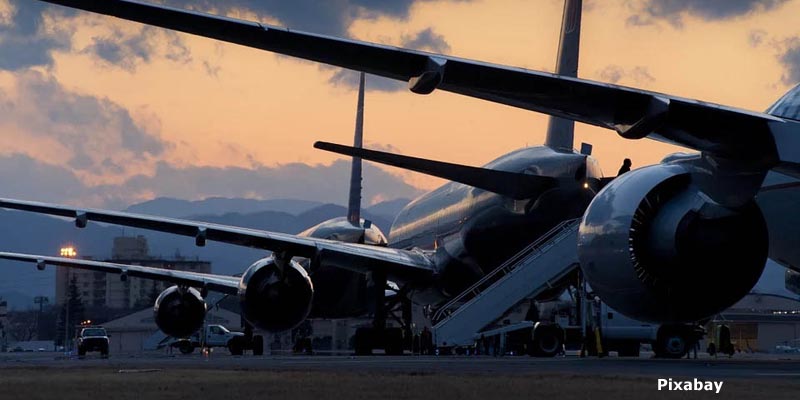
The Federal Aviation Administration (FAA) has announced an immediate pause on the installation of new Juniper routers after confirming their direct link to last week’s nationwide ground stop. The agency has been forced to reactivate legacy hardware to stabilize the network as the administration requests a historic $50.1 billion budget injection to overhaul critical infrastructure that has suffered from decades of neglect.
Origin of the Air Traffic Control System Outage
Agency technicians determined that last Friday’s system outage—which affected 17 of the 22 regional Air Route Traffic Control Centers (ARTCCs) responsible for managing high-altitude air traffic—originated from a newly installed router in El Dorado, Arkansas.
Defense and aerospace contractor L3Harris, tasked with maintaining the telecommunications network and leading the transition from obsolete copper wiring to fiber-optic lines, was responsible for installing the unit. The malfunctioning routers are currently undergoing rigorous diagnostic testing at a laboratory at L3Harris headquarters. To keep operations running, the FAA has fallen back on 25-year-old Cisco routers while the investigation continues.
Data Overload and Network Collapse
The infrastructure collapse was triggered by a “data flood” that overwhelmed the network. According to agency reports:
- Critical network instability was recorded due to a surge of 1,000 connection attempts every 4 to 5 seconds.
- This influx of data saturated the network’s legacy routers, causing a cascading series of intermittent failures across radar feeds and air-to-ground communications.
- Halting U.S. air traffic was a necessary operational measure, Transportation Secretary Sean Duffy explained, to ensure aviation safety amid the disruption of these vital systems.
→ FAA Deploys First Digital Control Towers in Florida and Alaska to Modernize Air Traffic Management
Political Scrutiny and Installation Pause
The incident has drawn intense scrutiny over the root causes of the operational failure. Democrats on the Senate Commerce Committee sent a letter to Sean Duffy demanding an immediate nationwide halt to the device replacements until the exact root cause of the malfunction is identified.
- To date, only an estimated 400 of the more than 3,600 routers projected for the entire Air Traffic Control (ATC) system have been installed.
- Lawmakers emphasized that identifying the failed unit does not explain why the failure occurred, demanding clear answers and detailed briefings from President Donald Trump’s administration on how it plans to prevent future disruptions.
- For his part, President Donald Trump blamed the airport chaos on outdated technology and the Democrats, though the FAA’s struggles to modernize the National Airspace System date back decades prior to his first administration.
Urgency of Modernization and Historic Funding Request
The technological modernization of the air transportation system has remained an ongoing challenge that has failed to yield sufficient results in recent years. In response to this crisis, the Trump administration sent a letter to key lawmakers updating a $50.1 billion budget request aimed at radically transforming the nation’s aviation infrastructure.
Requested Budget Breakdown
The proposed funding package seeks to address critical deficiencies across the national aviation ecosystem:
- $10.1 billion earmarked specifically for overhauling the entire national Air Traffic Control system.
- Comparable funding levels to reinforce airport infrastructure and replace or renovate terminals at major, high-impact hubs.
- Construction of five new Air Route Traffic Control Centers.
- Upgrades or replacements for up to 140 FAA-owned air traffic control towers.
Congress had already approved $12.5 billion last year to replace obsolete technology, including floppy disks, copper wiring, and 1980s-era radar systems. This infrastructure is vital to managing the more than 45,000 daily flights that rely on these systems to reach their destinations safely.
As investigations continue to pinpoint the technical fault within the L3Harris equipment, the operational future of U.S. airspace hinges on congressional approval of these funds. As noted in the official letter, this capital injection will enable the FAA to deliver an entirely new, safer, smarter, and more efficient Air Traffic Control system, mitigating the risk of technological vulnerabilities bringing U.S. commercial aviation to a standstill once again.
Related Topics

Philippine Airlines Finalizes Order for up to 20 Boeing 787-10 Jets
Korean Air to Connect Seoul and Newark Starting May 2027

Turkish Airlines Expands Footprint in China with New Nonstop Flights to Chengdu
Cathay Group Orders 14 Additional Airbus Jets


Plataforma Informativa de Aviación Comercial con 13 años de trayectoria.