India fines IndiGo with record penalty after largest operational breakdown in recent history
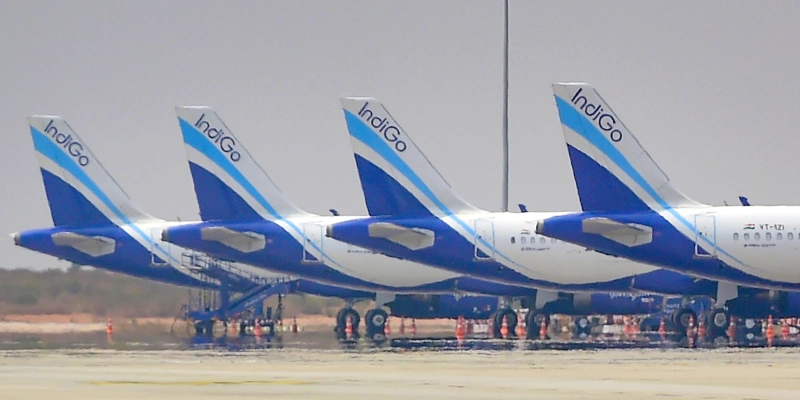




India’s commercial aviation sector faced one of its most critical episodes in recent years last December. The Directorate General of Civil Aviation (DGCA) imposed a record fine of $2.45 million on IndiGo, the country’s largest airline, along with personal sanctions against its operational leadership, following an investigation into mass flight cancellations that left tens of thousands of passengers stranded across the country.
The regulator’s decision not only exposes internal deficiencies within the airline but also sparks a broader debate about operational resilience, limited competition, and regulatory oversight in the world’s fastest-growing aviation market.
4,500 cancelled flights and a system pushed to the limit
During the first weeks of December, IndiGo cancelled approximately 4,500 flights, an unprecedented number in recent Indian aviation history. The impact was immediate: congested airports, passengers with no clear alternatives, and mounting political pressure on the regulator.
IndiGo acknowledged that the primary cause was poor pilot roster planning, exacerbated by the implementation of stricter rest and duty time regulations that had come into effect the previous year.
The DGCA investigation concluded that the airline failed to identify critical planning gaps in time and did not maintain adequate operational buffers—a key element in high-density networks like IndiGo’s.
→ IndiGo Ushers in Airbus A321XLR Era in India and Redefines Its International Expansion
Cost of squeezing the low-cost model to the limit
In its report, the DGCA was particularly critical of the airline’s operational philosophy. The regulator stated that IndiGo showed a “predominant focus on maximizing crew, aircraft, and network utilization,” which ultimately compromised roster integrity and system resilience.
With a 65% share of India’s domestic market, any disruption at IndiGo has a systemic effect. The crisis highlighted the limitations of a model optimized for efficiency and growth but with very narrow margins to absorb regulatory changes or operational stress peaks.
Personal sanctions and forced changes to the operational structure
The regulator’s response went beyond the financial penalty—considered the highest ever imposed by the DGCA, though equivalent to just 0.31% of IndiGo’s annual profit in the 2024/25 fiscal year, according to a government source.
Among the most significant measures:
- Formal warnings issued to several senior executives, including Chief Operating Officer Isidre Porqueras and Senior Vice President of the Operations Control Center, Jason Herter.
- Direct order to remove Herter from his operational duties.
- A caution issued to CEO Pieter Elbers for deficiencies in the overall supervision of operations and crisis management.
- Requirement for a $5.51 million bank guarantee in favor of the regulator, intended to ensure compliance with directives and long-term systemic correction.
IndiGo stated that its board and management team are “committed to taking full cognizance of the orders” and to implementing corrective measures in a thoughtful and timely manner.
A regulator under scrutiny and emergency rules eased
The episode also had unexpected consequences for the aviation authority itself. The DGCA revealed that the Ministry of Aviation ordered an internal investigation into the regulator’s functioning—an unusual admission suggesting institutional tensions in crisis management.
Simultaneously, the government temporarily relaxed some restrictions on pilots’ night duties to stabilize IndiGo’s operations. The move was heavily criticized by pilot unions and aviation safety advocates, who warned of the risk of normalizing operational exceptions in a high-pressure environment.
Related Topics

Ryanair Trims Passenger Targets and Warns of Fuel Cost Impact in Europe
Espacio Iberia: Airline’s Immersive Experience Returns to Madrid Featuring Flight Simulators, Gastronomy, and AI Technology

Air France Unveils Its New VIP Lounge at Frankfurt Airport

SAS Completes Fleet-Wide Starlink Installation on Airbus A320neo in Record Time
Plataforma Informativa de Aviación Comercial con 13 años de trayectoria.