Heathrow Airport Completes Rollout of CT Scanners and Ends Liquids and Laptop Checks
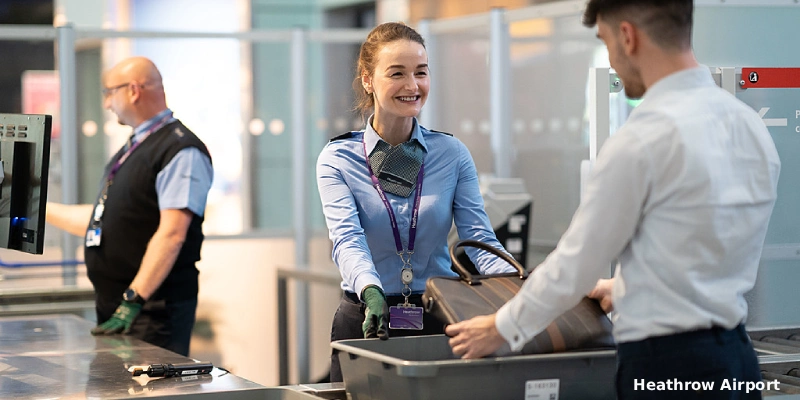




London’s Heathrow Airport has announced the complete deployment of computed tomography (CT) scanners across all security checkpoints in its four terminals. With this move, Europe’s premier hub claims to become the world’s largest airport to operate this technology in 100% of its security lanes.
The change has a direct and visible impact on passengers: it will no longer be necessary to remove liquids, laptops, or tablets from carry-on luggage, provided operational conditions allow. This adjustment alters a security routine that has defined the airport experience for over two decades.
CT Technology: From the Medical Setting to the Heart of Commercial Aviation
The new scanners use high-resolution three-dimensional imaging, similar to that used in medical environments, allowing security operators to analyze the contents of luggage without passengers having to handle their bags. This capability eliminates the requirement to separate liquids and electronic devices, reducing processing times and operational friction.
Heathrow thus joins a global trend. Leading airports such as New York, Hong Kong, and Dubai have already begun introducing this technology, albeit in many cases partially or limited to specific terminals or lanes.
→ Heathrow Posts Record Figures in 2025, Strengthens Position as Europe’s Most Strategic Hub
Gradual End of the 100ml Rule
One of the most significant effects of CT scanners is the potential removal of the 100-milliliter liquid restriction, a rule that has defined aviation security since the mid-2000s.
Depending on applicable national regulations, these systems allow passengers to carry containers of up to 2 liters in hand luggage, marking the beginning of the end for a rule that gave rise to an entire industry of miniature toiletries.
In the UK, the 100ml limit was introduced in 2006, following the foiling of a terrorist plot at Heathrow that involved the use of liquid explosives aboard commercial aircraft. That decision redefined global security standards for more than 20 years.
A £1 Billion Investment with Strategic Implications
Heathrow has estimated the total project investment at £1 billion (approximately $1.35 billion), a figure reflecting both the technical complexity of the deployment and its strategic importance.
Beyond the passenger experience, the full adoption of CT scanners has profound operational implications: increased processing capacity, reduced bottlenecks during peak hours, and a technological foundation aligned with future regulatory demands.
This move also comes at a key moment for the London airport. Heathrow is in the process of applying for permission to build a third runway, a project that will require demonstrating not only additional capacity but also efficiency, resilience, and comprehensive modernization of its critical infrastructure.
Related Topics

Satena to Launch Direct Flights Between Montería and Panama City in October

LATAM Airlines Dismisses Rumors Regarding the Creation of a Venezuelan Subsidiary

Avianca Bolsters Argentina Connectivity: Daily Service to Cordoba and Revamped In-Flight Experience
British Airways Expands Network for Summer 2027: Touches Down in Tanzania and Boosts Latin American Capacity by 25%

Plataforma Informativa de Aviación Comercial con 13 años de trayectoria.