Winter Storm Paralyzes U.S. East Coast: Over 5,300 Flights Cancelled
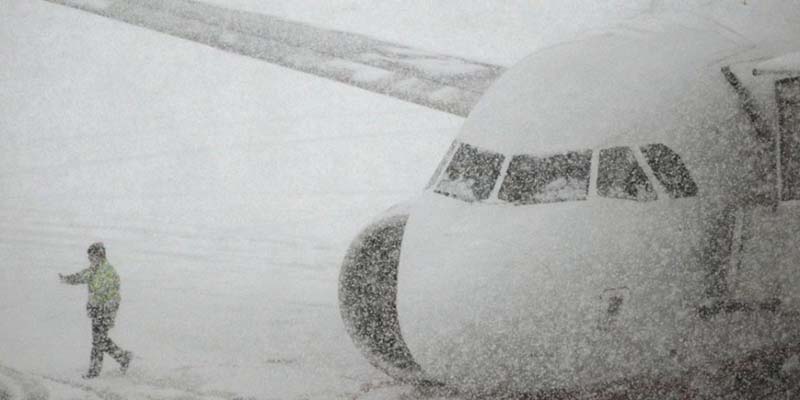




A high-intensity winter storm has forced the suspension of most aerial operations across the United States East Coast. This has directly impacted major hubs in the Northeast corridor, including New York and Boston. The operational impact ranks among the most severe of the current season.
Massive Cancellations and Near-Total Hub Closures
According to data from FlightAware, more than 5,300 flights within, into, or out of the United States were cancelled as of 2:00 a.m. (New York time) on Monday. The Northeast airport system was the hardest hit:
- LaGuardia (New York) cancelled 98% of its scheduled flights.
- John F. Kennedy (JFK) suspended 88% of its operations.
- Boston Logan recorded the cancellation of 93% of its services.
- Philadelphia interrupted 83% of its operations.
These percentages reflect a near-total reduction in operational capacity at the region’s primary connection nodes, carrying direct implications for both domestic and international networks.
→ Florida Approves Bill to Rename Palm Beach Airport in Honor of Donald Trump
Extreme Weather Conditions: Up to 30 Inches of Snow
The National Weather Service anticipated snow accumulations of up to 30 inches in specific areas of the East Coast. The heaviest precipitation was concentrated between Sunday night and Monday morning, creating conditions that made travel virtually impossible.
The expected snow volume affected not only runways and aprons but also ground access. This limited both airport operability and the ability of flight crews and passengers to reach the terminals.
Airline Response and Warnings of Ongoing Disruptions
Republic Airways, which operates regional flights for Delta, American, and United Airlines, recorded the highest number of cancellations as of Monday morning, with over 850 affected flights. It was followed by JetBlue Airways, with nearly 800 affected flights.
For its part, Delta Air Lines reported that it expected to suspend operations at LaGuardia, JFK, and Boston Logan until Tuesday. The airline also warned of broader disruptions across the entire East Coast.
The anticipation of extended cancellations suggests an impact that transcends the immediate weather event. Potential lingering effects include issues with aircraft rotation, crew positioning, and schedule recovery in the following days.
Meanwhile, airport authorities urged passengers to confirm flight statuses with their airlines before traveling to the airport—a message consistent with the magnitude of the recorded cancellations. The level of disruption was described as at least as severe as the winter storms in late January, placing this episode among the most disruptive of the current winter for U.S. aviation.
Related Topics

Singapore Airlines Overhauls In-Flight Experience with Next-Generation KrisWorld and Starlink Satellite Connectivity

Japan Airlines Selects Embraer E190-E2 to Renew J-AIR Regional Fleet

AirAsia in Talks with Malaysian Government Over Potential Financial Support Amid Economic Headwinds and Soaring Fuel Costs

LOT Polish Airlines Launches Direct Flights Between Warsaw and Bangkok

Plataforma Informativa de Aviación Comercial con 13 años de trayectoria.