How Delta Air Lines’ Monroe Refinery Becomes a Critical Shield Against Jet Fuel Volatility
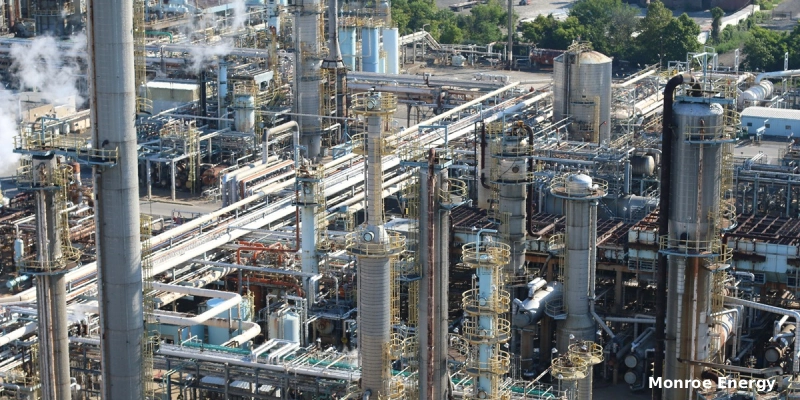




Delta Air Lines’ decision to acquire a refinery more than a decade ago is proving to be a critical competitive advantage in today’s context of energy volatility. While the sector faces an accelerated surge in jet fuel prices that outpaces that of crude oil, ownership of Monroe Energy allows the airline to mitigate the financial impact currently stifling its competitors.
“Crack Spread”: The Mathematics Behind Financial Pressure
The aviation market is undergoing a period of “strangulation” due to the increase in the crack spread—the difference between the price of crude oil and the refined products derived from it. During the week of March 20, data revealed a significant gap:
- North American Jet Fuel: Averaged $179 per barrel.
- Brent Crude: Hovered near $110 per barrel, according to the International Air Transport Association (IATA).
- U.S. Spot Prices: Reached $4.56 per gallon (approx. $192 per barrel), according to Airlines for America (A4A).
For most airlines purchasing on the open market, this price disparity translates directly into higher invoices. According to Ben Minicucci, CEO of Alaska Air Group, a mere $1 increase in fuel prices adds approximately $100 million in monthly costs to his company.
Delta Advantage: “Paying Itself”
Unlike its rivals, Delta does not rely exclusively on external suppliers. Although the airline pays market prices for the fuel transferred from its Monroe refinery, the refining profit remains within the organization.
Nicolas Owens, an analyst at Morningstar, explains that when refining margins skyrocket, Delta “pays itself” that margin, which muffles the impact of price hikes.
Industry Impact: Significant Contrasts
The difference in cost structure is evident when comparing Delta with other industry giants during previous price peaks:
| Airline | Average Fuel Cost (2022) | % of Operating Expenses |
|---|---|---|
| Delta Air Lines | $3.36 / gallon | 24% |
| United Airlines | $3.63 / gallon | 31% |
Currently, United Airlines has warned that if current prices persist, its annual fuel bill could increase by $11 billion—a figure that doubles its best historical annual profit. Meanwhile, American Airlines reported a $400 million increase in its cost forecast for the first quarter of 2026.
Challenges and Limits of the Model
Despite the benefits, owning a refinery does not eliminate all risks. Monroe Energy faced an operating loss of $216 million in 2020 due to the collapse in demand caused by the pandemic. Furthermore, there are growing regulatory costs:
- Renewable Fuel Standard (RFS): Delta’s compliance expenses for this renewable fuel standard rose to $312 million in 2025, up from $203 million in 2024.
Delta CEO Ed Bastian has described the refinery as a “significant hedge” against refining margins. While it does not cover the total cost of crude, Monroe’s earnings are expected to begin contributing positively to financial results starting in the second quarter of 2026.
With information from Reuters
Related Topics
Palm Beach Airport Officially Renamed in Honor of Donald Trump, Modifies FAA Code

Air France Inaugurates Its New and Exclusive Lounge at London Heathrow Airport
Three Decades of Global Connectivity: Air France Celebrates 30 Years of Its Paris-Charles de Gaulle Hub

Delta Elevates its Premium Offering in Los Angeles with Opening of its Second Delta One Lounge

Plataforma Informativa de Aviación Comercial con 13 años de trayectoria.