FAA Delays Boeing 737 MAX 10 Certification Following Software Issue
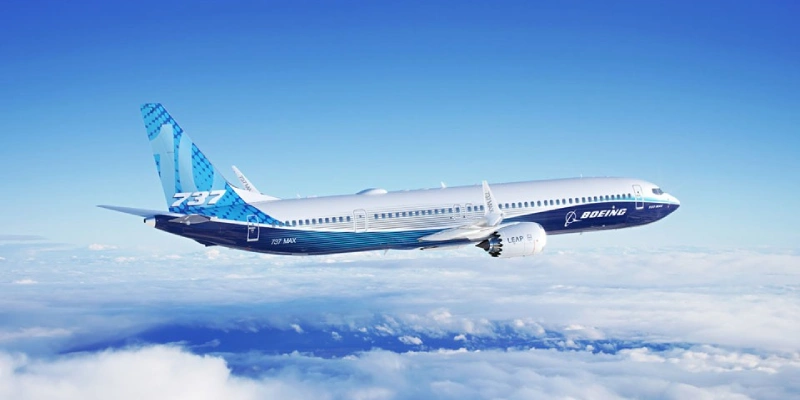




The US Federal Aviation Administration (FAA) has announced it will postpone the certification of the Boeing 737 MAX 10—the largest variant in the US planemaker’s narrowbody family—until a newly reported software glitch is fully resolved.
This latest setback immediately rippled across financial markets: Boeing shares fell 6.9% by the market close, driven by uncertainty surrounding further delays to a critical aircraft designed to regain market share from Airbus in the fiercely competitive single-aisle market.
According to statements made by FAA Administrator Bryan Bedford during an event at Ronald Reagan Washington National Airport, the regulator will withhold type certification until a permanent solution is guaranteed:
“We’ll be holding the 10 until we’re satisfied we don’t have an issue here,” Bedford stated, declining to estimate an exact timeframe for the delay.
Technical Origin of the Issue: Go-Around Manoeuvre
The airframer reported that the system anomaly could prevent the flight crew from accessing automated flight guidance during a specific landing scenario.
For its part, the FAA detailed the operational aspects of the glitch:
- Increased Crew Workload: The affected software load can increase pilot workload during a missed approach or go-around—a procedure where a landing attempt is aborted, engine thrust is applied, and the aircraft climbs to re-sequence for the approach.
- System Supplier: Administrator Bedford noted that the software was supplied by engine manufacturer and tier-1 vendor GE Aerospace.
- Differences from Historic Incidents: Despite the flaw, Bedford emphasized that the flight crew retains positive control of the aircraft at all times, unlike the 737 MAX automated flight control software (MCAS) linked to two fatal accidents in 2018 and 2019.
→ Akasa Air in Talks With Boeing for Over 200 737 MAX Jets
Review Process and Risk Assessment
Boeing indicated that it has already alerted operators and is developing a software fix to permanently resolve the issue. A company spokesperson stated: “We continue to follow the FAA’s lead as we work through the certification process.”
The regulatory agency plans to convene a Corrective Action Review Board (CARB) to assess whether the software poses an unacceptable operational safety risk:
- Investigation Timeline: Sources familiar with the matter stated the board will convene next week at the earliest.
- Schedule Impact: This technical evaluation could add months of additional work to the airframe, which had been widely expected to achieve certification by October.
- Resolution Outlook: Bedford suggested a corrective fix could be developed relatively quickly given the high scrutiny surrounding the program, though he did not specify whether it would take days, weeks, or months.
Airline Operator Reactions
The situation has prompted varied responses among carrier customers operating or awaiting delivery of the type:
- WestJet: The Canadian carrier, which flies aircraft with this software variant across its 737 MAX fleet, stated it has experienced no in-service anomalies and does not view it as a safety concern. The Calgary-based airline noted it relies on established Standard Operating Procedures (SOPs) and flight training to mitigate such events. In line with this, three 737 MAX line pilots with the airline confirmed, on condition of anonymity, that they were unaware of any software discrepancies during go-around maneuvers.
- United Airlines: The carrier reported that none of its operational aircraft utilize the affected software load and confirmed it will decline deliveries of airframes fitted with this build while the review remains active.
- Alaska Airlines: The airline confirmed its current in-service fleet does not run the software in question, adding that it is coordinating closely with Boeing and the FAA as the evaluation proceeds.
The resolution of the glitch now hinges on the FAA technical board review and the release of the software update by GE Aerospace and Boeing—critical milestones before civil aviation authorities can resume the formal commercial certification timeline for the 737 MAX 10.
Related Topics

Embraer Nears Key Regional Jet Order from Japan Airlines

BermudAir Becomes Second Global Operator of Embraer E-Freighter

ANA Expands Regional Fleet with Additional Order for Eight Embraer E190-E2s

Embraer Delivers 2,000th E-Jet, Solidifying the Program as One of Commercial Aviation’s Most Successful
Plataforma Informativa de Aviación Comercial con 13 años de trayectoria.