Sydney Opens Second Airport Amid Sluggish Initial Flight Volumes
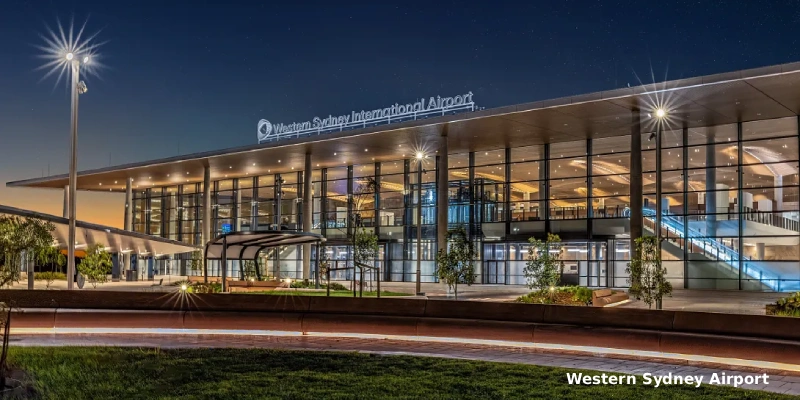




After more than half a century of political gridlock, environmental protests, and funding shortfalls, Sydney has officially inaugurated its second international gateway. However, the commercial viability of Western Sydney International Airport—a 5.6 billion Australian dollar ($4 billion) greenfield development—is already facing intense industry scrutiny.
Located 50 kilometers (31 miles) west of the metropolitan center, the new facility handled its inaugural commercial passenger service on Sunday, operated by low-cost carrier (LCC) Jetstar to the Gold Coast. Despite this milestone, the federally owned gateway has secured commitments from only a modest roster of carriers, generating a schedule of barely half a dozen or fewer daily regular flights over the next 12 months, according to aviation analytics firm Cirium.
Adverse Macroeconomic and Operating Headwinds
Australia’s most significant aviation infrastructure project in decades debuts against a turbulent international backdrop, widely regarded as the most challenging operating environment since the pandemic. Global carriers continue to sound the alarm over sustained increases in jet fuel expenses and airfares driven by the protracted war involving Iran.
Compounding these pressures is a widespread fleet shortage: ongoing delivery delays of new-generation aircraft from major airframers have left airlines with zero spare capacity to deploy into secondary or unproven markets with unestablished passenger demand. Consequently, dominant incumbents such as Qantas have prioritized trimming domestic capacity over launching speculative routes.
Surface Transport Bottlenecks and Kingsford Smith Competition
Ground access represents one of the most critical initial hurdles for the new facility:
- Missing rail link: The dedicated airport rail line designed to connect the passenger terminal is not slated to enter service until 2027 at the earliest.
- Transit costs and travel times: The current express shuttle bus service to the central business district (CBD) costs A$55, with journey times hovering around one hour.
- Incumbent advantage: Sydney Kingsford Smith Airport, the nation’s primary international hub, retains a major competitive edge, sitting just a 20-minute taxi or train ride from the CBD.
David Levinson, a professor of transport at the University of Sydney, described early traffic forecasts as “a bit optimistic,” warning that the infrastructure is attempting to serve a catchment area that does not yet exist and suggesting the opening has outpaced genuine market demand.
→ Birmingham Airport Plans £2 Billion Investment to Reach 30 Million Passengers in New Master Plan
Demographic Drivers and Airline Commitments
Named after pioneering Australian aviator Nancy Bird Walton, the airport is built on former agricultural land at Badgerys Creek—a site formally selected by the government in 2014, resolving site debates that first surfaced in 1946. Major earthworks and construction began in 2018, with dedicated air cargo operations launching this past July.
The airport’s master plan hinges its long-term feasibility on Western Sydney’s demographic fundamentals:
- Population expansion: By 2030, half of Sydney’s projected 6.1 million residents will reside in the region.
- Visiting Friends and Relatives (VFR) and ethnic traffic: Forty percent of Greater Western Sydney’s population was born overseas, underpinning consistent outbound and inbound demand to key regional corridors, including India, China, and Vietnam.
- Traffic targets: The facility targets 8.4 million annual passengers by the end of the decade, scaling to approximately 20 million by 2045, and reaching a design capacity of 82 million passengers per year by 2063, aiming to ultimately eclipse Kingsford Smith as Sydney’s primary hub.
For now, mainline carriers are taking a wait-and-see approach. Flag carrier Qantas has scheduled an average of just over one daily domestic flight starting in March next year, funneling most of its group capacity through its budget subsidiary, Jetstar. Meanwhile, Virgin Australia, the country’s second-largest carrier, has filed no scheduled flights from the terminal, stating that it is actively evaluating the commercial opportunity to determine if it aligns with its network strategy and aircraft utilization.
Other carriers committed to serving the terminal include Air New Zealand, VietJet, Fiji Airways, and Singapore Airlines.
24/7 Operations as a Strategic Asset
Unlike slot-constrained Kingsford Smith, Western Sydney International operates free of a nighttime curfew. This 24-hour operational clearance offers a decisive strategic advantage, enabling long-haul foreign carriers to schedule optimal departure and arrival banks that line up cleanly with hub connection windows across Asia, North America, and Europe.
Addressing market comparisons to past underutilized aviation hubs—such as Montreal’s Mirabel Airport, which discontinued passenger operations in 2004 to transition entirely to cargo, or Melbourne’s Avalon Airport—airport executives remain steadfast in their long-term outlook.
Western Sydney Airport Chief Executive Simon Hickey underscored that commercial discussions with additional carriers remain ongoing, stressing that local passenger uptake and community patronage will be crucial to driving initial load factors, attracting additional frequencies, and building route viability.
Related Topics
LATAM Airlines Strengthens Regional Leadership with Five Honors at the 2026 World Travel Awards

Copa Airlines Restores Operations Following Seismic Activity in Panama and Expands Commercial Flexibility Policies

Arajet Resumes Direct Flights Between Punta Cana and Guayaquil

LATAM Airlines Announces Nonstop Flights Between Santiago de Chile and Caracas Starting in January

Plataforma Informativa de Aviación Comercial con 13 años de trayectoria.