FAA Certifies Boeing 737-10: Largest Member of MAX Family Is Cleared for Deliveries
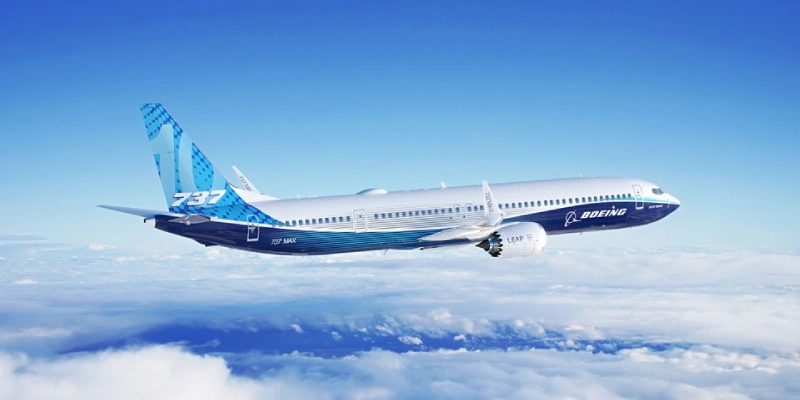




The U.S. Federal Aviation Administration (FAA) has granted type certification to the Boeing 737-10, the highest-capacity variant in the 737 MAX family. This regulatory approval marks the completion of the aircraft’s development program and paves the way for the U.S. airframer to begin commercial deliveries to airlines in the coming months.
Regulatory Milestone and ACSAA Compliance
The Boeing 737-10 becomes the first commercial airliner certified under the full scope of the Aircraft Certification, Safety, and Accountability Act (ACSAA) of 2020. This federal statute introduced more stringent mandates, requiring expanded technical documentation regarding safety assessments and comprehensive human factors evaluations.
To meet the standards mandated by the FAA and ACSAA regulations, the 737-10 test program completed:
- Over 2,000 flight hours logged across the flight test campaign.
- 1,000 hours of ground testing.
- Tens of thousands of pages of technical documentation, along with extensive formal review sessions with FAA inspectors and technical specialists.
Commenting on the process, Chris Payne, Vice President and General Manager of 737 Airplane Development Programs at Boeing Commercial Airplanes, noted: “Our flight test team executed a disciplined and methodical campaign to validate every system. That rigor gives us confidence as we move toward deliveries. I am incredibly proud of the entire team for their focus and professionalism.”
→ Southwest Airlines Evaluates Widebody Aircraft, Eyes Boeing 787
Operational Capabilities, Economics, and 737-10 Design Enhancements
Engineered to compete in the high-density narrowbody sector, the 737-10 leverages commonality across the 737 MAX family while integrating technological advances aimed at maximizing efficiency:
- Passenger Capacity: Accommodates up to 230 passengers in a maximum high-density layout, while typically seating between 185 and 210 passengers in a standard two-class configuration.
- Operating Economics: Delivers the lowest seat-mile costs of any single-aisle aircraft currently in commercial service.
- Range and Performance: Offers an operating range of up to 3,100 nautical miles (5,740 km), providing an additional 365 nautical miles of range over direct competitors without the need for auxiliary fuel tanks.
- Sustainability: Technological refinements deliver a 20% reduction in fuel burn and CO2 emissions.
- Systems Safety: Features an enhanced Angle of Attack (AoA) sensor and processing architecture, an upgrade set to become standard across the entire 737 MAX family.
Stephanie Pope, President and CEO of Boeing Commercial Airplanes, highlighted the significance of the achievement: “Completing the certification program clears the runway to deliver a Boeing airplane that will set a new benchmark in commercial aviation. The 737-10 offers greater capacity, extended range, and best-in-class seat economics—a platform that will generate added value and opportunities for airlines worldwide. We are also thrilled to complete the 737 MAX family and provide our customers with the most efficient and versatile narrowbody portfolio in the industry.”
Commercial Impact Across the 737 MAX Program
The 737-10 has garnered substantial commercial momentum in the global market:
- Selected by more than 30 international airline customers.
- Holds a firm order backlog of 1,555 aircraft, accounting for over 30% of all unfilled orders across the entire 737 MAX program.
Globally, the 737 MAX program has secured a cumulative total of 7,350 orders, with nearly 2,500 aircraft delivered through the end of September 2026. Aircraft Sales
Complete Boeing 737 MAX Family
With the 737-10 certified, Boeing rounds out its single-aisle portfolio, spanning capacities from 135 to 230 seats:
Boeing 737-7
- Typical seating for 135 to 160 passengers in a two-class cabin.
- Range of up to 3,800 nautical miles (7,040 km).
- Optimized for hot-and-high airfield operations. The type received FAA certification earlier this year.
Boeing 737-8 and 737-8-200
- Accommodates 160 to 180 passengers with an operational range of up to 3,500 nautical miles (6,480 km), tailored for short- to medium-haul routes.
Boeing 737-9
- Features three additional seat rows compared to the 737-8, seating between 175 and 195 passengers with a range of up to 3,300 nautical miles (6,110 km).
Having secured FAA regulatory clearance and certified its suite of technical and safety modifications, Boeing is set to transition the 737-10 into commercial deliveries over the coming months, allowing its more than 30 airline customers to introduce the family’s flagship capacity variant into scheduled operations.
Related Topics
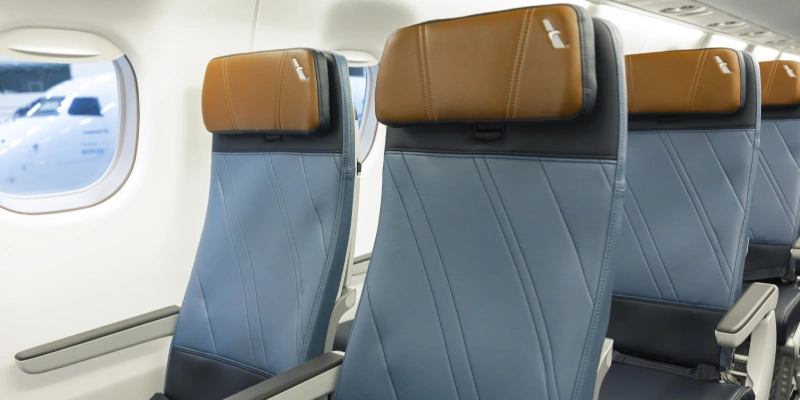
Embraer Delivers First E175 Equipped with Next-Gen RECARO Seats to American Airlines
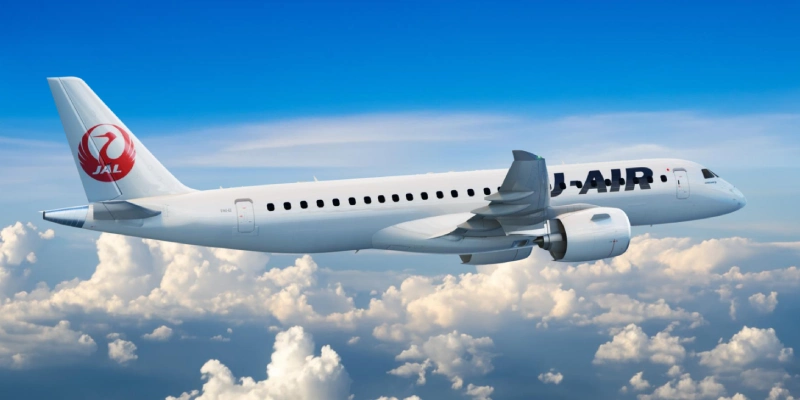
Japan Airlines Selects Embraer E190-E2 to Renew J-AIR Regional Fleet
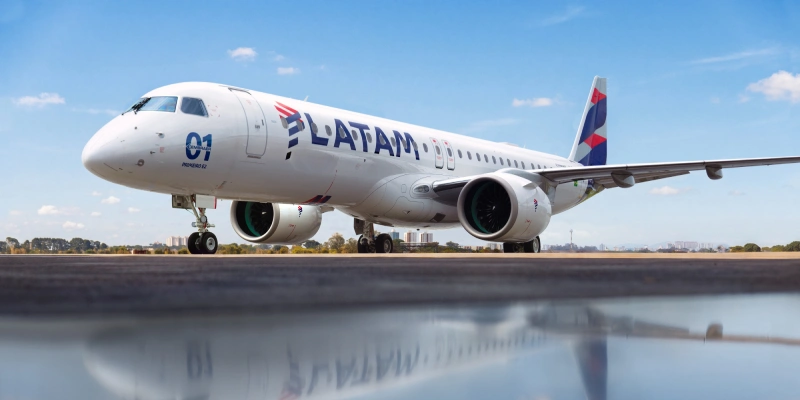
LATAM Airlines Brazil Takes Delivery of Its First Embraer E195-E2
Embraer Reports Record Third-Quarter Performance With 66 Aircraft Delivered

Un apasionado por la aviación, Fundador y CEO de Aviación al Día.