Multi-Million-Dollar Bet on Luxury: Airlines Reconfigure Cabins Amid Mounting Cost Pressures





Surging jet fuel prices and sluggish demand in economy class have triggered an industry-wide strategic pivot across global commercial aviation. Confronted with eroding profit margins, carriers are pouring massive capital investments into the ultra-luxury segment to capture high-net-worth travelers.
Pivot Toward the Premium Segment: Yield Over Volume
A private apron transfer in a black Porsche Cayenne across Paris-Charles de Gaulle Airport directly to a waiting Boeing 777 encapsulates the structural shift sweeping long-haul aviation. Airlines are aggressively targeting affluent passengers as an operational countermeasure to rising fuel prices—a burden that has squeezed operating margins and necessitated fare increases that price out budget-conscious travelers at the back of the aircraft.
This realignment mirrors a dual-track or “K-shaped” economic dynamic: while one segment of consumers sees its discretionary spending power diminished by inflation, high-net-worth individuals—recently buoyed by equity market gains driven by developments in artificial intelligence (AI)—continue to exhibit robust demand for high-end travel experiences.
Air France’s Strategy: A €1 Billion Investment in Exclusivity
Air France is leading this shift with a targeted €1 billion (approximately $1 billion) capital expenditure program over a five-year cycle. These funds are allocated entirely toward upgrading airport lounges, overhauling passenger cabins, and executing extensive overhauls of inflight Wi-Fi connectivity. This budget is in addition to the carrier’s recurring €1 billion annual fleet renewal program.
Anchored by its flagship first-class cabin, “La Première”—where round-trip tickets on the flagship Paris-New York route trade just below $14,000—the French flag carrier delivers one of the most expensive products in commercial aviation:
- Ground Handling and Lounge Experience: Dedicated curbside access via an exclusive private terminal, dedicated private security screening, and bespoke lounge facilities featuring spa treatments, caviar service, and fine champagne prior to direct vehicle transfers to the aircraft steps.
- Inflight Experience: Fully enclosed individual suites engineered to replicate private aviation cabins, bespoke designer loungewear, and multi-course menus curated by Michelin-starred chefs.
Air France Chief Executive Ben Smith underscored that the company has invested aggressively across both its ground and air operations to deliver an unrivaled market offering—an effort validated by the carrier taking top honors for the world’s best first class at the Skytrax World Airline Awards. Meanwhile, Fabien Pelous, Air France’s Executive Vice President of Customer Experience, noted that the overarching objective has been to elevate brand positioning by addressing every operational touchpoint over the past five years.
Commercial Performance and Margin Compression
The divergence across cabin classes is clearly evident in recent financial statements:
- Premium Cabins: Combined first- and business-class passenger revenues at Air France surged 28.1% in 2025 following a 26.9% increase in 2024.
- Main Cabin: Economy-class revenues remained largely flat.
- Industry Outlook: In June, the International Air Transport Association (IATA) reported a deceleration in passenger traffic growth across all fare classes, projecting a modest 2.1% expansion for the year, down from 5.3% in the prior period.
Simultaneously, jet fuel—which typically accounts for 30% to 40% of an airline’s operating expenses—has more than doubled in price since the beginning of the year, driven by armed conflict involving the United States, Israel, and Iran that escalated in late February. Despite elevated energy costs and ensuing inflationary pressures that have sparked broader cost-of-living disputes in domestic markets such as France, Air France leadership confirmed it will remain steadfast in its premium-focused commercial strategy.
Fleet Reconfiguration and Broader Industry Trends
Aviation analyst John Strickland notes that carriers are deliberately de-densifying widebody and narrowbody fuselages to free up floor space for higher-pitch, expanded premium seating layouts—a trend gaining global traction:
- Air India: Rolling out retrofitted premium cabin interiors across multiple long-haul international routes.
- British Airways: The International Airlines Group (IAG) carrier confirmed retrofits for its flagship Airbus A380 fleet, reducing total seat count in favor of higher-yield premium floor plans.
- U.S. Low-Cost Carriers: Budget-oriented operators historically focused on unbundled ultra-low fares—including Southwest Airlines, Frontier Airlines, JetBlue Airways, and Allegiant Air—are unrolling segmented, upmarket seat configurations.
- Delta Air Lines: Centering its broader network revenue management strategy directly around high-end leisure and corporate travelers.
Privacy concerns are also playing a decisive role. While the generous real estate allocated to each first-class suite results in a substantially higher per-passenger carbon footprint, Air France observes that the product is increasingly favored by celebrities and corporate executives seeking operational discretion over chartered business jets, which carry mandatory tail-number registrations and can be monitored in real time on public flight-tracking platforms.
Aviation Industry
LATAM Airlines Group CEO Roberto Alvo projected that carriers with a resilient, well-differentiated premium product will be best positioned to weather the current macroeconomic downturn—a climate that he anticipates will accelerate restructuring and consolidation across global aviation.
Reporting by Reuters
Related Topics
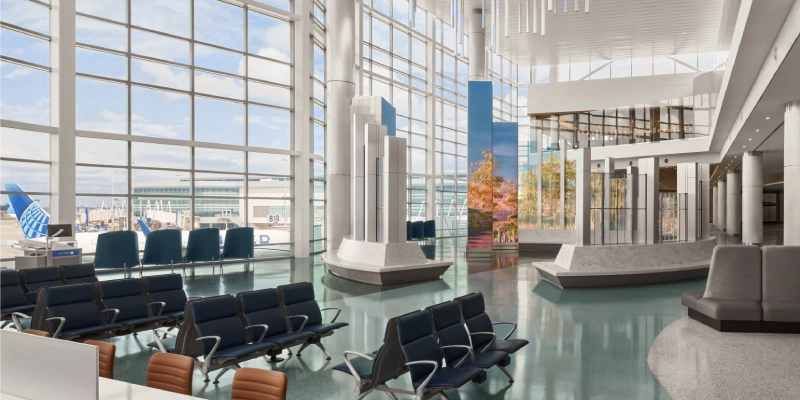
United Airlines Unveils New Terminal B North Concourse at Houston Bush Intercontinental Airport
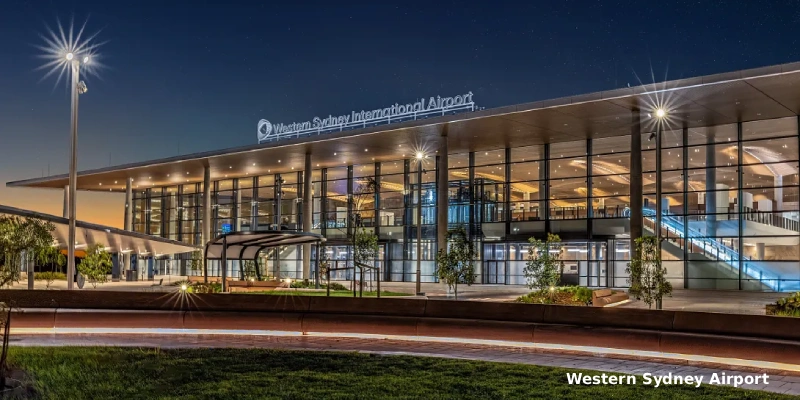
Qatar Airways to Launch Flights to New Western Sydney International Airport Starting in 2027
Sydney Opens Second Airport Amid Sluggish Initial Flight Volumes
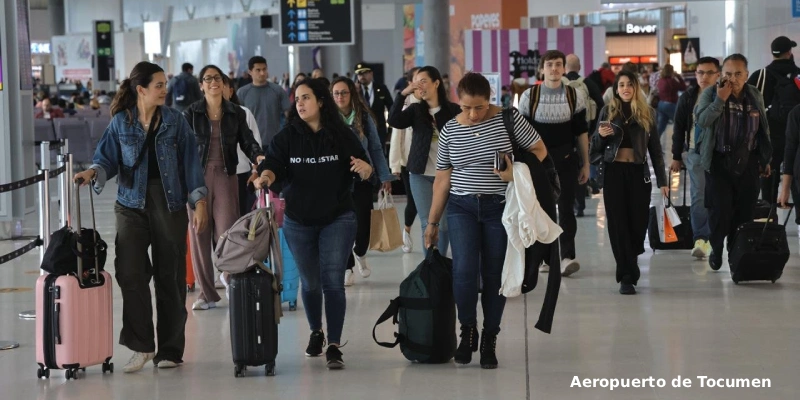
Panama: Tocumen Airport Surpasses 17.8 Million Passengers Between January and September 2026

Plataforma Informativa de Aviación Comercial con 13 años de trayectoria.