Carbon Credit Shortage Tests First Global Airline Emissions Scheme





Airlines could face severe challenges settling their offset obligations as the first global scheme designed to charge them for greenhouse gas emissions comes into force. While commercial aviation does not account for the largest share of overall global emissions, it remains one of the fastest-growing sources, and sustainable aviation fuel (SAF) has yet to scale to the volumes required to meaningfully mitigate this impact.
This global mechanism represents a fundamental shift from the past decade, a period during which carriers operating within European airspace had to pay under the European Union Emissions Trading System (EU ETS), while globally they only reported on a voluntary basis under the Carbon Offsetting and Reduction Scheme for International Aviation (CORSIA).
Currently, roughly 130 countries have joined CORSIA’s mandatory Phase 1, which runs from January 2024 through the end of this year. Air operators under the jurisdiction of participating States will be required to surrender eligible offset units by the end of January 2028 or face regulatory enforcement action.
Key Figures Highlighting the Market Imbalance:
- Projected demand: The first phase will generate credit demand covering up to 200 million metric tons of carbon, according to estimates by Standard Chartered.
- Available supply: Data from the International Civil Aviation Organization (ICAO) and industry analysts suggest that credits available for this phase will cover, at best, a quarter of projected demand.
- Supplying nations: Only 11 countries are currently in a technical position to supply eligible credits for the program.
- Stringent criteria: Following integrity scandals surrounding fraudulent projects, only about 5% of historical carbon credit inventories qualify for compliance schemes like CORSIA, according to commodities trader Trafigura.
An ICAO spokesperson stated that implementation by member States is progressing according to schedule and that the organization will continue to support governments to accelerate the supply of eligible units, declining to comment on speculative market scenarios.
Financial Impact on Airlines and Penalty Risks
Carbon credit prices, currently hovering around $12 to $13 per metric ton, are poised to surge rapidly as regulatory ambiguities clear and buying pressure intensifies. Analysts at STX Group warn that delaying procurement will force operators to absorb substantially steeper costs.
Assuming a projected price range of $20 to $50 per credit, management consultancy Roland Berger estimates that CORSIA compliance could cost airlines between $3.6 billion and $9.0 billion overall. That liability represents between 5% and 12% of the industry’s projected profits for 2026.
Given the shortfall in credit supply, regulatory penalties are already taking shape. The United Kingdom has proposed a civil penalty of £100 ($134) for every uncancelled metric ton of carbon, while regulators such as the Japan Civil Aviation Bureau (JCAB) have confirmed that non-compliant operators will face formal fines.
Positions of Major Airline Groups
Financial and sustainability disclosures from leading airline groups highlight a widespread lack of transparency regarding secured credit volumes:
- United Airlines: Noted that the availability of eligible units remains severely constrained.
- American Airlines: Cited supply uncertainty and price volatility.
- Singapore Airlines: Confirmed having commenced the procurement of eligible units, without disclosing transaction volumes.
- Air France-KLM: Reported having purchased no carbon credits to date.
Administrative Bottlenecks and Host-Country Reluctance
For a credit to be admitted under CORSIA, it must be approved by ICAO’s Technical Advisory Body (TAB) and authorized by the host government, which must formally guarantee that the mitigation outcomes are transferred internationally without double counting toward its own Nationally Determined Contributions (NDCs) under the United Nations.
This requirement has sparked hesitation across developing nations, which fear depleting the carbon assets they will require to meet domestic climate goals. Brazil, regarded as a pivotal player due to the carbon potential of its rainforests, has yet to start authorizing projects and continues to finalize its domestic regulatory framework. In Asia, Japan has noted that administrative capacity constraints in host countries are bogging down official authorization processes.
Technical barriers are also directly stalling projects on the ground. In Africa, Zimbabwe-based clean cookstove developer Cicada had prospective buyers lined up for roughly 1 million credits. However, technical objections raised by ICAO’s advisory body prevented CORSIA eligibility, compelling the firm to restructure its operations and divert supply into the voluntary carbon market at discounted pricing.
The rollout of this aviation framework coincides with high-level negotiations at COP31 in Antalya, Turkey, where transport decarbonization and climate adaptation financing for vulnerable nations dominate the agenda. With the final compliance deadline set for January 2028, the coming months will determine whether commercial aviation’s offsetting framework can foster a liquid market—or whether structural supply deficits will leave carriers exposed to multi-million-dollar non-compliance penalties.
Reporting by Reuters
Related Topics

Singapore Airlines to Invest Over US$1.56 Billion in Next-Generation Long-Haul Cabins and Global Passenger Experience Overhaul

IndiGo in Talks to Acquire Up to 150 Regional Jets from Embraer to Boost Domestic Network
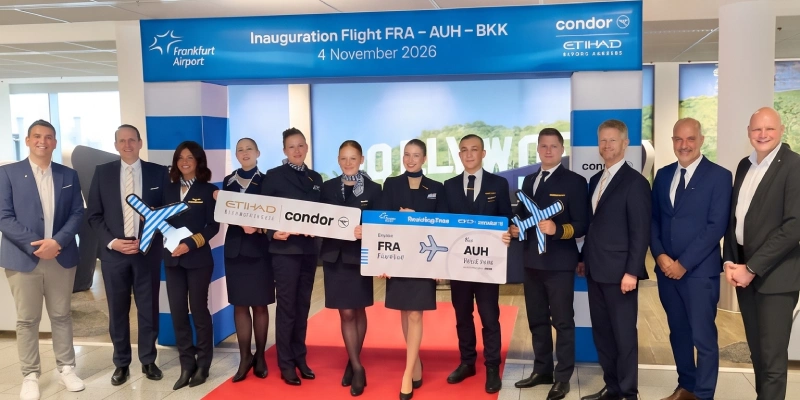
Condor Launches Frankfurt–Bangkok Flights via Abu Dhabi in Codeshare with Etihad Airways

Boeing Projects China’s Commercial Fleet Will More Than Double, Surpassing 9,800 Aircraft Over the Next 20 Years

Plataforma Informativa de Aviación Comercial con 13 años de trayectoria.