Castlelake Begins Talks to Acquire Spirit Airlines After Frontier’s Bid Deemed Unviable





Spirit Airlines’ restructuring, currently under its second bankruptcy process in less than a year, has just entered a new phase. Investment firm Castlelake has started talks to acquire the ultra-low-cost carrier, after a proposal put forward in November by Frontier Group Holdings was considered unviable, according to four sources with direct knowledge of the process who spoke to CNBC.
While talks with Castlelake do not guarantee a formal offer or an agreement, their emergence alone reopens a door many in the market had already considered closed: an exit from bankruptcy protection through a sale, rather than emerging as a significantly smaller airline or, in the worst case, liquidation.
“A Very Different Spirit”: The Defense Narrative
During a hearing held on Wednesday in the U.S. Bankruptcy Court for the Southern District of New York, the message from Spirit’s legal team was clear: the company now fighting to survive is not the same one that entered bankruptcy months ago.
“It is fair to say the airline has been substantially reimagined and almost entirely reinvented in recent months,” stated Marshall Huebner, a partner at Davis Polk & Wardwell, which is representing Spirit in the court proceedings.
“This is a very different Spirit. It is smaller, leaner, and better,” he added.
The defense strategy aims to demonstrate that, despite its financial fragility, Spirit has made progress in a deep transformation of its operational and cost structure, seeking to convince both the court and potential investors that there is still value to salvage.
→ Spirit Airlines to Cancel Flights Between Fort Lauderdale and Bucaramanga, Colombia
Emergency Funding and Union Pressure
Spirit’s operational continuity during this second bankruptcy process has been possible thanks to the support of its creditors, who have extended emergency financing lines. Among these, a USD 100 million rescue secured in December stands out, aimed at sustaining operations and the restructuring process.
However, the immediate future remains uncertain. The critical point—as acknowledged by the parties involved—is whether bondholders will honor the funding commitments already made or if they will opt to force liquidation.
This tension led the pilots’ union to intervene publicly. In a letter dated January 13, the Air Line Pilots Association (ALPA) was explicit:
“What remains unresolved is whether bondholders will honor their existing funding commitments and allow a restructuring to proceed, or whether they will force a liquidation that would destroy the South Florida-based airline,” the union warned.
The message not only underscores the financial risk but also the regional impact that Spirit’s disappearance would have, given its historical association with South Florida.
A Challenging Environment for Low-Cost Carriers
Spirit’s problems cannot be analyzed in isolation. The company faces an especially hostile environment for low-cost airlines, marked by several concurrent factors:
- Excess capacity in the U.S. domestic market.
- Weaker-than-expected leisure travel demand.
- Growing pricing pressure, fueled by traditional airlines flooding the market with low-priced seats.
As Spirit’s CFO, Fred Cromer, explained to creditors, the industry never experienced the anticipated rebound for 2025, leaving the airline overextended and forced to implement drastic cuts.
Fleet, Route, and Market Presence Reduction
The impact of this scenario was tangible. In October, as part of its restructuring plan, Spirit:
- Reduced its fleet by almost 100 aircraft.
- Exited more than a dozen markets in the United States.
- Suspended around 40 routes.
These decisions marked the collapse of the recovery attempt after its first bankruptcy process and redefined Spirit as a significantly smaller airline with a much more limited operational footprint.
Adding to this is a critical factor: cash levels. Sources agree that available cash is being depleted rapidly while the court process, initiated in August, continues.
Castlelake and the Financial Angle
Castlelake’s interest does not arise in a vacuum. In August, the fund launched Merit AirFinance, an aviation financing platform backed by USD 1.8 billion in deployable capital, focused on providing debt to airlines and lessors for both new and used assets.
This move reinforces the view that Castlelake sees value not only in Spirit as an operator but also in its assets, its reconfigured structure, and its potential fit within a broader financial strategy linked to aircraft leasing and financing.
For now, nothing is guaranteed. Talks with Castlelake may not result in a viable offer, and Spirit’s fate still hangs on key decisions by its creditors. What is clear is that the airline is at a definitive inflection point: sale, survival at a reduced scale, or disappearance.
Related Topics
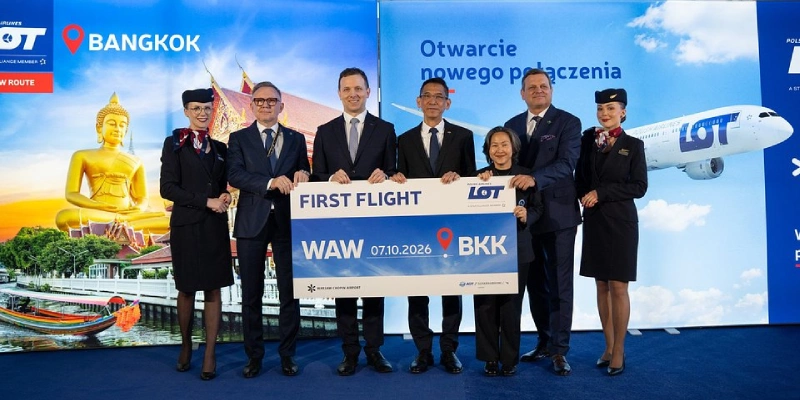
LOT Polish Airlines Launches Direct Flights Between Warsaw and Bangkok
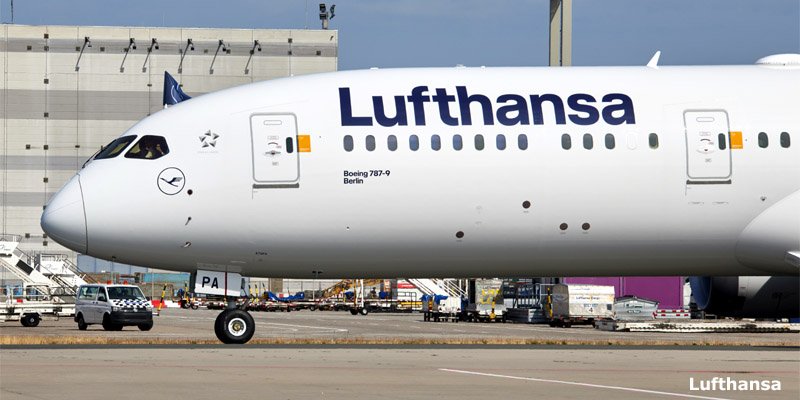
Lufthansa Group Boosts Connectivity to Japan, Reaching Up to 50 Weekly Flights in Summer 2027

Thai Airways Cuts Flights and Faces Baggage Handling Collapse Following Severe Bangkok Flooding

Akasa Air in Talks With Boeing for Over 200 737 MAX Jets

Plataforma Informativa de Aviación Comercial con 13 años de trayectoria.