O’Leary vs. Musk: Ryanair rules out Starlink, downplays acquisition threat, and capitalizes on controversy
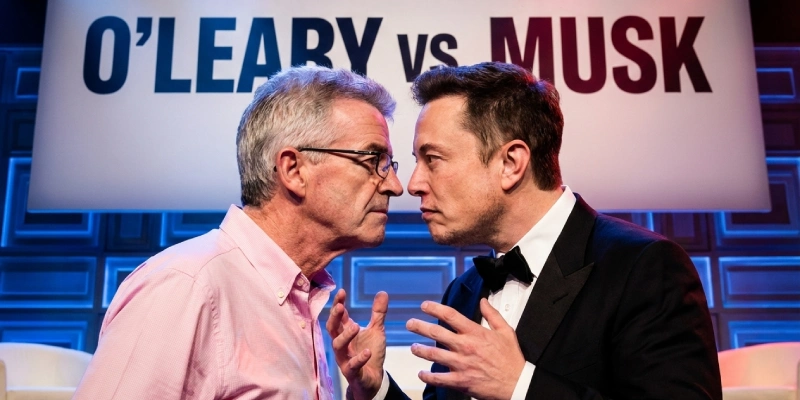




The public confrontation between Michael O’Leary, CEO of Ryanair, and Elon Musk has escalated from a technical disagreement into an episode with commercial, regulatory, and market implications. The trigger: the airline’s decision to rule out using Starlink for onboard connectivity across a fleet of over 600 aircraft, and the response from the SpaceX founder, who launched personal attacks and suggested a buyout. O’Leary, true to form, responded with figures, European regulations, and a clear message: investment yes, control no.
Starlink out of the cabin: Costs and real-world adoption
Ryanair confirmed it held talks for 12 months with Starlink while evaluating onboard WiFi solutions. The conclusion was blunt: the cost is too high. According to O’Leary, adopting the system could amount to up to $250 million annually, including increased fuel consumption.
The most controversial technical point was the aerodynamic impact. O’Leary branded Musk’s claim that Starlink antennas generate no drag as “stupid,” emphasizing the direct effect any increase in drag has on the fuel bill of an ultra-low-cost airline.
Beyond CAPEX and OPEX, Ryanair clashed with Starlink on a key aspect of the business model: the passenger payment rate.
- Starlink estimated that 90% of passengers would pay for WiFi.
- Ryanair, drawing on its experience, believes less than 10% would be willing to do so.
For the airline, this mismatch invalidates the economic equation, especially since Ryanair was seeking a supplier willing to finance the installation.
→ Ryanair Exceeds 206 Million Passengers in 2025
A Ryanair buyout? European regulatory barrier
After ruling out Starlink, Musk publicly suggested he might buy Ryanair and “put someone whose name is Ryan in charge.” He even launched a poll on X where three-quarters of participants supported the idea.
O’Leary’s response was direct and based on regulation: European Union rules on foreign ownership of airlines prevent any takeover.
“If he wants to invest in Ryanair, we would consider it a very good investment,” O’Leary said, adding that the returns would be better than those of X. “He can buy shares, but he cannot take control.”
Positive side effect: More bookings
Far from harming demand, the CEO stated the controversy is generating a “wonderful boost” in bookings.
- A 2% to 3% increase in the last five days, a “very significant” volume given Ryanair’s size.
- Strong bookings between January and March, the company’s last fiscal quarter.
In the market, the reading was cooler: shares rose 2% on the day, but have moved little during the spat, a sign investors are not taking the acquisition hypothesis seriously.
Prices, capacity, and geopolitical noise
Looking ahead to next year, O’Leary anticipated that average fares could rise between 2% and 4%, driven by tight capacity in Europe, though he cautiously added: “We have no idea yet.”
On the geopolitical front, the executive avoided drawing conclusions about the potential impact of a possible EU-US trade war, following threats of tariffs linked to political tensions. He did issue a relevant warning for the supply chain: he is not convinced Boeing will absorb the cost of potential tariffs on deliveries of US-made aircraft to Europe.
The episode confirms three constants of the Ryanair model: cost discipline, skepticism towards unproven technological promises, and the strategic use of media visibility. Starlink is out for now; the door to a high-profile investor remains ajar, but the cockpit stays under European control.
Related Topics

Satena to Launch Direct Flights Between Montería and Panama City in October

LATAM Airlines Dismisses Rumors Regarding the Creation of a Venezuelan Subsidiary

Avianca Bolsters Argentina Connectivity: Daily Service to Cordoba and Revamped In-Flight Experience
British Airways Expands Network for Summer 2027: Touches Down in Tanzania and Boosts Latin American Capacity by 25%

Un apasionado por la aviación, Fundador y CEO de Aviación al Día.