
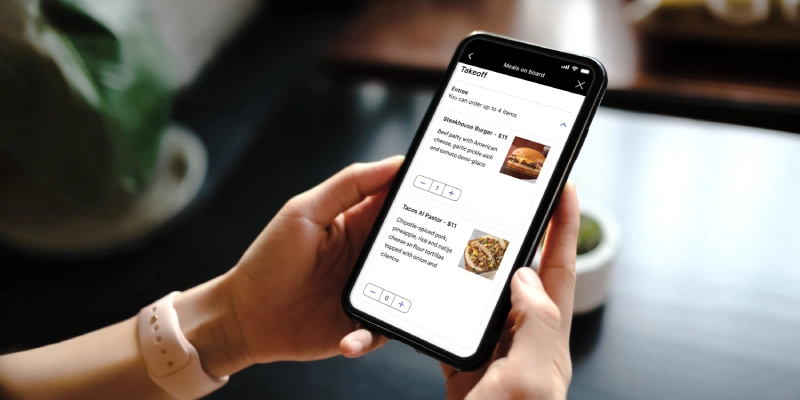
United Airlines has just taken a significant step in the evolution of onboard service in Economy class, combining customer experience, operational efficiency, and sustainability in a single strategic decision: the option—and starting in March, the requirement—to preorder fresh meals before the flight.
The measure, announced by the company, impacts not only how passengers eat but also how United manages its catering supply chain, reduces waste, and standardizes product quality on medium-haul flights within the Americas.
Preorder in Economy: What Exactly Changes
United will allow Economy Class passengers to reserve fresh meals in advance via its website or mobile app. The system will be available from five days up to 24 hours before departure.
Operational Scope
The service applies to flights over 1,190 miles within:
- United States
- Canada
- Mexico
- Caribbean
As of March 1, this is a key point: preorder will be the only way to obtain fresh meals in Economy. Those who have not pre-ordered will not be able to purchase hot or fresh meals onboard.
→ Brazil Approves United Airlines’ US$100 Million Investment in Azul
United will, however, maintain its traditional offering of:
- Snack boxes
- Packaged snacks
- Beverages
Culinary Offering: From Burgers to Tacos
The initial January menu includes recognizable options but with a more refined “Bistro on Board” approach:
- Steakhouse Burger
- Tacos Al Pastor
- Fresh Cheese & Fruit Tray
- Everything Bagel Dots
- Sandwiches and other fresh products
The airline already anticipates expanding the menu during the summer, with:
- Elevated Salads
- Gourmet Sandwiches
- Wraps
Furthermore, by the end of this year, the addition of premium beverages exclusive to preorder is expected, a move clearly aimed at increasing the average ticket value per passenger.
Efficiency and Sustainability: True Drivers of Change
Beyond the “more choices for the customer” narrative, the underlying reason is clearly operational.
United estimates that the preorder system will prevent over 100,000 pounds of unconsumed food from ending up in landfills each year. By knowing exactly how many meals to prepare per flight, catering providers can adjust production, logistics, and loading.
This approach:
- Reduces food waste
- Improves catering planning
- Decreases onboard complexity for crews
In an environment of tight margins and regulatory pressure on sustainability, this figure is not insignificant.
A Model That Already Worked in Premium Cabins
United is not experimenting blindly. The preorder system was first introduced in premium cabins in 2021, and the results were resounding: customer satisfaction on domestic flights increased by nearly 40%.
That precedent explains why the airline is now extending the model to Economy, a cabin historically more cost-sensitive, but also where any perceived improvement has a direct impact on the brand.
Aaron McMillan, Managing Director of Hospitality Programs at United, sums it up clearly: “We are investing in significant enhancements to our onboard food and beverage program, with a focus on quality, consistency, and customer choice. Preorder is a win for everyone: customers know they will get the meal they want, our catering partners prepare exactly what is needed, and the operation runs more smoothly while we reduce waste.”
Related Topics
Japan Airlines Selects Embraer E190-E2 to Renew J-AIR Regional Fleet
AirAsia in Talks with Malaysian Government Over Potential Financial Support Amid Economic Headwinds and Soaring Fuel Costs
LOT Polish Airlines Launches Direct Flights Between Warsaw and Bangkok
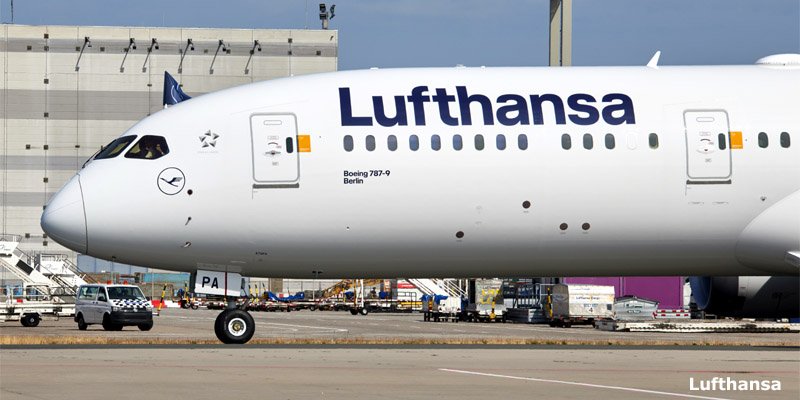
Lufthansa Group Boosts Connectivity to Japan, Reaching Up to 50 Weekly Flights in Summer 2027

Plataforma Informativa de Aviación Comercial con 13 años de trayectoria.