Aena Proposes Airport Fee Hikes in Spain, Triggering Strong Opposition from Airlines
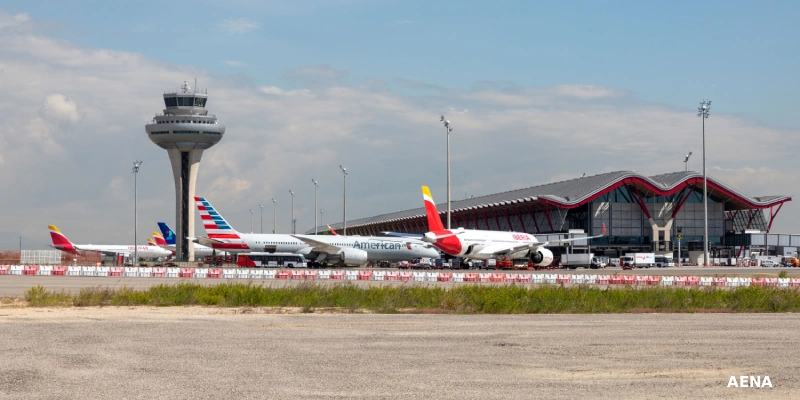




The debate over airport charges in Spain has returned to the forefront. Aena, the airport operator, has proposed increasing the fees charged to airlines to finance an ambitious €13 billion investment plan scheduled for the 2027–2031 period. The initiative was immediately rejected by airline companies, who view the adjustment as unjustified and are instead advocating for an annual reduction in fees.
A New Tariff Framework for 2027–2031
- Proposed Increase: 0.43 euros more per passenger per year.
- Implementation: Aena has outlined a passenger fee increase equivalent to an additional €0.43 annually between 2027 and 2031.
- Approval and Flexibility: This measure is subject to approval, and the operator has indicated that increases could be lower at smaller Spanish airports to maintain what they argue is a “competitive” level.
- Context: This proposal follows the Spanish competition regulator’s recent approval to raise the maximum passenger charge by 6.5% this year, reaching €0.68.
- Economic Impact: While the unit impact may seem limited, these fees are a core part of airline cost structures and can ultimately influence final ticket pricing.
→ Madrid-Barajas Airport Records Best January in History: 5.3 Million Passengers
€13 Billion in Investments: A Major Leap Starting in 2027
The core of this tariff proposal is financial in nature. Aena plans to triple its investment starting in 2027 and over the following five years as part of a total €13 billion program.
- Regulatory Hurdle: Of that total volume, at least €10 billion will require government authorization, introducing a critical political and regulatory component to the plan’s timeline.
- Strategic Rationale: The operator’s logic is to secure stable financing to sustain the modernization and expansion of the airport network, particularly as traffic growth is expected to moderate following the post-pandemic rebound.
Clash with Airlines: Disputed Traffic Forecasts
The industry’s response was swift. The national airline association, ALA, described the proposal as unjustified, noting that it equates to an annual increase of 3.8% during the 2027–2031 period.
- Counter-proposal: Instead of an increase, the association proposes an annual reduction of 4.9% during the same period.
- The Argument: Airlines argue that Aena is underestimating future air traffic growth.
1.3% vs. 3.6%: Two Growth Scenarios
The technical disagreement centers on demand forecasts.
- Aena’s Projection: The operator estimates that traffic will grow by 1.3% annually between 2027 and 2031, amid a cooling environment following the post-pandemic surge.
- Airlines’ Projection: Conversely, airlines project more dynamic growth of 3.6% per year.
- Cumulative Totals: In cumulative terms, the operator anticipates Spanish airports will handle up to 1.6 billion passengers between 2027 and 2031.
The discrepancy between these two scenarios is not merely statistical; it directly impacts the base used to calculate future revenue and, consequently, the level of fees required to fund the planned investments.
Related Topics
Qantas Confirms Nonstop Sydney–New York Flights to Launch in 2028

Breeze Airways Retires Its Final Embraer 190, Consolidates an All-Airbus A220 Fleet

US to Seek Additional $30 Billion to Modernize Air Traffic Control System and Airports
Telecoms Outage Paralyzes Thousands of US Flights

Plataforma Informativa de Aviación Comercial con 13 años de trayectoria.