Aerocivil Clarifies Missed Approach Maneuver Between Qatar Airways and Lufthansa Jets at El Dorado Airport





The Civil Aeronautics Authority of Colombia (Aerocivil) confirmed that, following a technical analysis of radar traces, operational safety was guaranteed during a missed approach maneuver at El Dorado International Airport. The incident, resulting from aerial congestion and the preventive closure of one of the runways, was managed under international standards by Air Traffic Control (ATC) personnel.
Operational Factors and Flow Redirection
The situation originated due to a high volume of flights and the preventive closure of Runway 32 Right (32R). This contingency forced controllers to redirect all landing operations to Runway 32 Left (32L), increasing traffic density within a single approach sector.
In this concentrated flow scenario, the following dynamic variables occurred:
- Qatar Airways Aircraft: Recorded a speed adjustment during its final approach segment to Runway 32L.
- Lufthansa Aircraft: Was on the base leg with a higher speed than the preceding Qatar Airways aircraft.
→ Colombia Updates Regulations for the Transport of Power Banks and Lithium Batteries
Separation Management and Crew Decision
Due to the speed differential, a proximity of one nautical mile horizontally and an altitude difference of 1,200 feet developed. Given this reduction in standard separation margins, the Control Tower confirmed that the Lufthansa crew maintained visual contact and had the position of the Qatar Airways aircraft under control.
Despite having the situation identified, the Lufthansa crew opted to execute a missed approach (technically known as a go-around) as an operational safety measure. This decision is a routine procedure designed to maintain protection margins against any variables in the air traffic flow.
Technical Aviation Safety Data
A detailed analysis of 100 radar images allowed for the precise determination of the maneuver’s parameters:
- Minimum Horizontal Distance: Was maintained at one nautical mile throughout.
- Initial Vertical Separation: 1,500 feet at the start of the maneuver.
- Final Vertical Separation: At the moment of the vertical crossing, the aircraft already had an altitude separation of 3,000 feet between them.
Technical Precision vs. External Data
The aeronautical authority emphasized that the analysis of technical data generated by official radar traces refutes information from external technological applications. According to the entity, such public monitoring tools can generate erroneous interpretations that mislead the public, as they lack the precision of state surveillance systems.
Aerocivil reiterated that operations remained under effective and permanent control, reaffirming that the safety of passengers and crews is the fundamental priority in the management of Colombian airspace.
Related Topics

U.S. Appeals Court Rules in Favor of Delta and Aeroméxico, Preserving Joint Venture Agreement
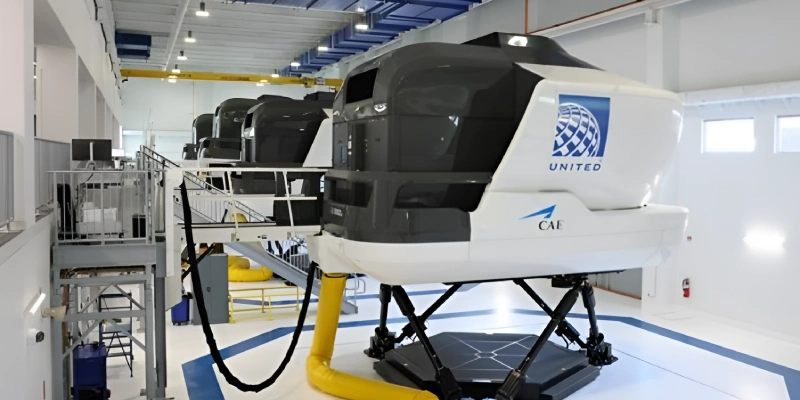
United Airlines Completes First Expansion Phase of Its Denver Flight Training Center: The World’s Largest

Alaska Airlines Strengthens Its Seattle Hub with New Transatlantic Flights to Paris and Athens

United Airlines Postpones Resumption of Houston–Caracas Route to January 2027

Un apasionado por la aviación, Fundador y CEO de Aviación al Día.