China’s “Big Three” Airlines Return to Profitability in Q1 2026
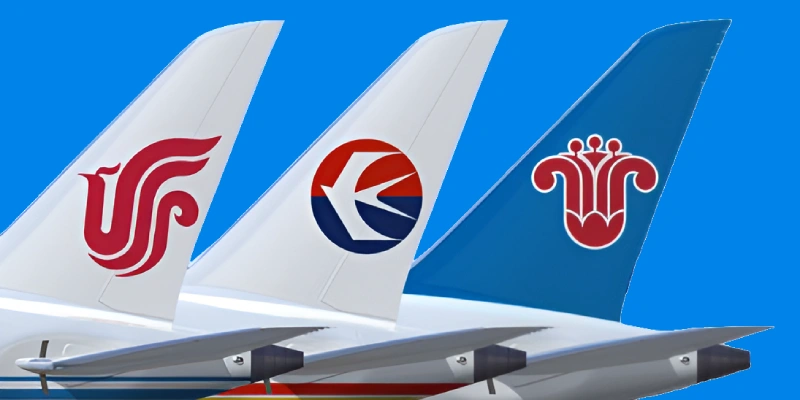




China’s three major state-owned carriers have successfully reversed their losses, reporting net profits during the first quarter of 2026. This financial rebound was driven by robust demand during the Lunar New Year festivities and a sustained recovery in global travel, although the future outlook is clouded by surging fuel costs stemming from the conflict in Iran.
Financial Results: A Pivot Toward Growth
Following a period marked by instability, the Chinese aviation sector has entered 2026 on a solid financial footing. The country’s three largest operators reported positive figures that contrast sharply with the losses seen the previous year:
- Air China: The flag carrier recorded a net profit of 1.71 billion yuan, overcoming a loss of 2.04 billion yuan during the same period in 2025.
- China Eastern Airlines: The Shanghai-based carrier reported a net profit of 1.63 billion yuan, compared to a 995 million yuan loss the prior year.
- China Southern Airlines: The Guangzhou-based operator reported a net income of 1.48 billion yuan, rebounding from a loss of 747 million yuan in Q1 2025.
Despite these positive results, airline shares on the Hong Kong Stock Exchange experienced slight declines of between 2.3% and 2.9%, reflecting investor caution amid macroeconomic challenges.
→ Air China Announces New Direct Route Between Beijing and Venice for Summer
Strategic Expansion: Massive Commitment to the Airbus A320neo
In a show of confidence regarding long-term recovery, the airlines have announced unprecedented fleet expansion plans:
- China Southern Airlines and its subsidiary, Xiamen Airlines, have signed agreements with Airbus for the acquisition of 102 and 35 A320neo family aircraft, respectively. The total value of this order reaches $21.4 billion at list prices, with deliveries scheduled between 2028 and 2032.
- China Eastern Airlines also recently formalized the purchase of 101 A320neo aircraft in a deal valued at approximately $15.8 billion.
Geopolitical Factor: International Routes and War Impact
The war in Iran has disrupted global travel, forcing Chinese airlines to adapt their operational strategies. Currently, companies are focusing on the international market as a growth engine, leveraging the ability to operate certain routes through Russian airspace to avoid conflict zones in the Middle East.
In March 2026, international passenger traffic showed significant growth:
- Air China: +28%
- China Southern: +23%
- China Eastern: +22%
Challenges: Fuel Crisis and Route Viability
Current profitability is facing a doubling of aviation fuel prices, an increase that far outpaces the rise in crude oil. This has forced airlines to implement a sixfold increase in fuel surcharges on domestic routes, rising from 10–20 yuan to 60–120 yuan depending on the distance.
Willie Walsh, Director General of the International Air Transport Association (IATA), warned that the fuel crisis could hit Asia most severely during the peak summer season. Independent experts, such as Li Hanming, point out that many routes have already ceased to be commercially viable, leading to mass cancellations on tracks to Southeast Asia and Oceania (with cancellation rates as high as 83% on routes such as Guangzhou-Darwin).
Related Topics

US Lawmakers Demand FAA Halt Use of New AI Tool in Washington Airspace
Delta Postpones Launch of Direct Atlanta–Riyadh Flights to March 2027

Avianca Flight from Medellin to New York Diverts to Miami Due to Severe Turbulence; At Least Eight Hospitalized
Southwest Airlines Evaluates Widebody Aircraft, Eyes Boeing 787

Plataforma Informativa de Aviación Comercial con 13 años de trayectoria.