Indian Airlines Warn of Groundings Amid Surging Fuel Costs
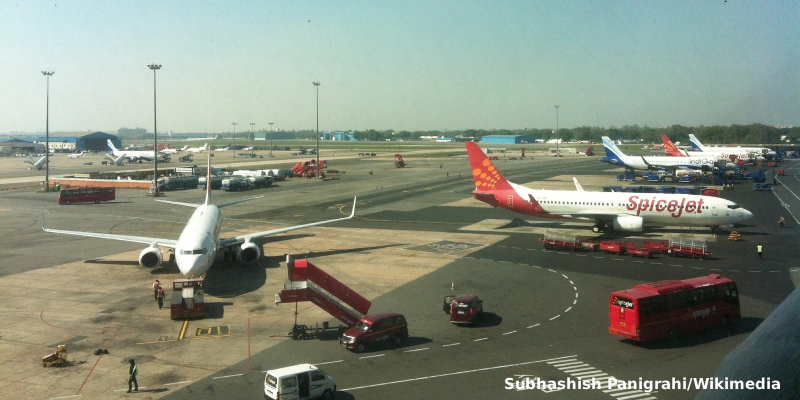




The Federation of Indian Airlines (FIA), the organization representing the country’s major carriers, has warned of a potential suspension of services if the government fails to implement measures to reduce aviation turbine fuel (ATF) prices. This situation places the Indian aviation industry under extreme stress, bringing it to the brink of ceasing operations or permanent closure.
Operational and Financial Crisis in the Aviation Sector
Indian airlines have stated that the current outlook is critical. FIA members facing this situation include high-profile operators such as IndiGo, Air India, and SpiceJet. In a letter sent to the Ministry of Civil Aviation dated April 26—reviewed by Bloomberg—the federation emphasized that any irrational increase in fuel costs will result in insurmountable losses.
These losses could inevitably lead to:
- The grounding of aircraft.
- Massive cancellations of scheduled flights.
- A real risk of bankruptcy for various industry stakeholders.
→ Air India Strengthens North American Presence Through Interline Agreement with WestJet
Impact of Aviation Fuel Costs
Aviation fuel accounts for up to 40% of an airline’s operating expenses. This high dependency makes the sector extremely sensitive to price volatility, as even moderate increases can erode profit margins that are already razor-thin.
Market Uncertainty Factors
There is growing speculation regarding a possible fuel price hike once voting in state elections concludes on April 29. While Prime Minister Narendra Modi’s administration has denied plans to raise gasoline prices, it has avoided providing clear answers regarding aviation fuel. Notably, in early April, the government was forced to reverse a massive increase in domestic flight fuel prices just hours after they had reached record levels.
Additional Macroeconomic Challenges
In addition to direct fuel costs driven by armed conflicts, airlines must contend with the devaluation of the rupee. The weakness of the local currency inflates dollar-denominated expenses, such as:
- Aircraft lease agreements (leasing).
- International airport service charges.
Relief Measures and Petitions to the Government
Given this scenario, the FIA has formally requested a return to the fuel cost caps implemented during the pandemic era, as well as a reduction or deferral of tax payments.
For its part, the Indian government has begun to deploy some temporary relief measures, including:
- A 25% cap on the monthly increase of aviation fuel prices.
- A similar reduction in landing and parking fees at Indian airports for a three-month period.
- The evaluation of sovereign-guaranteed loans to maintain corporate liquidity.
The immediate future of air connectivity in India will depend on the effectiveness of these government interventions and the stabilization of global energy costs.
Related Topics
Air Canada will connect Montreal and Seville with direct flights starting in 2027

Portuguese Government Selects Lufthansa for Partial Sale of TAP Air

Madrid-Barajas Airport Tops 6.3 Million Passengers in September, Consolidating Operational Growth
Russia Extends Superjet 100 Service Life to 20 Years

Plataforma Informativa de Aviación Comercial con 13 años de trayectoria.