
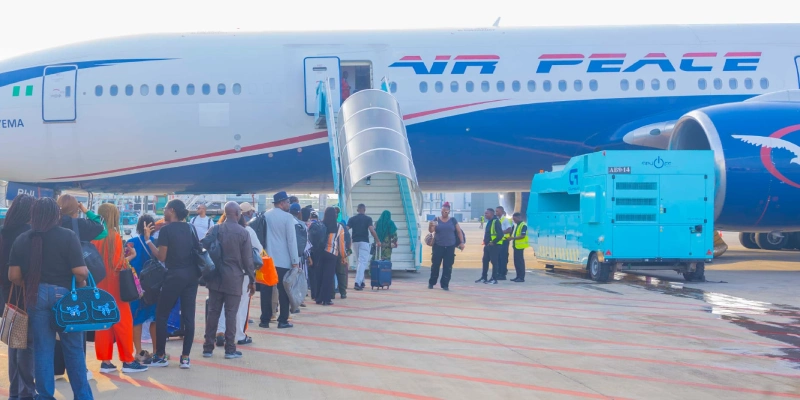
Airline Operators of Nigeria (AON), which represents nearly a dozen primarily domestic carriers, has warned that it will suspend all flight operations starting April 20 if aviation fuel prices are not reduced. The trade group has denounced a 270% increase in the cost of fuel, placing local airlines in an unsustainable financial position.
An “Astronomical and Artificial” Fuel Spike
The AON filed a formal complaint with the Major Energies Marketers Association of Nigeria (MEMAN) on April 14. According to the organization, the surge in aviation fuel prices has reached such a magnitude that current company revenues are insufficient to cover even the cost of fuel alone.
The AON characterized this increase as “astronomical and artificial,” pointing out that the price hikes in Nigeria have far outpaced international crude oil price trends.
Geopolitical Factors and the Domestic Market
While global energy prices have climbed following the onset of the war in Iran—a conflict that hinders maritime transit through the Strait of Hormuz—the situation in Nigeria presents critical local complexities:
- Domestic Refining: The Dangote Petroleum Refinery, Nigeria’s sole domestic producer of aviation fuel, did not make any deliveries to the domestic market during the month of March.
- Surging Exports: Despite the internal shortage, data from the firm Kpler reveals that Nigerian exports of refined products (gasoline, diesel, kerosene, and jet fuel) doubled in March compared to the previous month.
- Daily Consumption: Nigeria’s aviation sector demanded approximately 2.1 million liters of fuel per day over the last month.
Vulnerability of the African Aviation Sector
The impact in Nigeria is particularly severe due to the region’s cost structure. According to the African Airlines Association (AFRAA), aviation fuel accounts for between 30% and more than 40% of operating costs for African airlines. This figure is significantly higher than the global average, which typically oscillates between 20% and 25%.
This dependency makes airlines extremely vulnerable to price shocks, forcing them to take drastic measures such as:
- Increasing ticket fares.
- Cutting growth plans.
- Downcasting financial forecasts.
Consequences of a Potential Shutdown
The AON has emphasized that passing the full cost of fuel onto passenger fares would lead to a drastic drop in traveler numbers. On the other hand, a total shutdown of flight operations would trigger a domino effect across the national economy, impacting the banking sector, causing massive job losses, and exacerbating insecurity in Africa’s most populous nation.
Related Topics

Satena to Launch Direct Flights Between Montería and Panama City in October

LATAM Airlines Dismisses Rumors Regarding the Creation of a Venezuelan Subsidiary

Avianca Bolsters Argentina Connectivity: Daily Service to Cordoba and Revamped In-Flight Experience

British Airways Expands Network for Summer 2027: Touches Down in Tanzania and Boosts Latin American Capacity by 25%


Plataforma Informativa de Aviación Comercial con 13 años de trayectoria.