United Reveals Details of Failed Merger Proposal with American Airlines: Global Giant That Never Took Flight
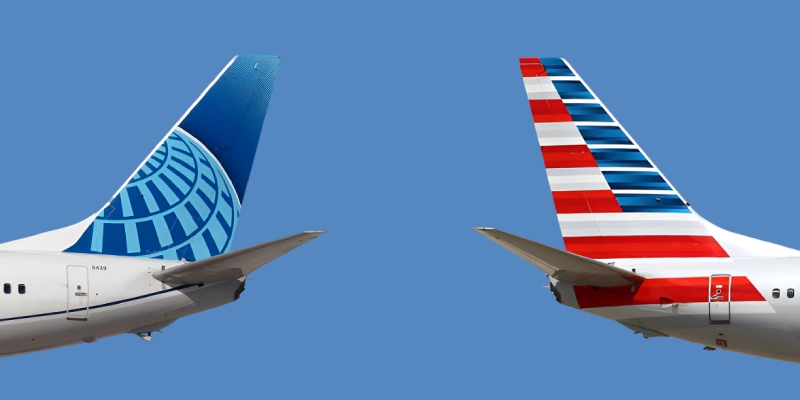




United Airlines has disclosed the specifics of its ambitious merger plan with American Airlines, an operation intended to redefine U.S. aviation leadership within the global market. Although American Airlines refused to engage in discussions and publicly closed the door on negotiations, United has shared its vision for what would have been a “growth-based merger” rather than one focused on cost-cutting.
A Vision for Growth vs. the Traditional Merger Model
Historically, mergers in the aviation sector have resulted from the union of two struggling airlines aiming to reduce costs, flight frequencies, and personnel. However, United Airlines’ proposal sought a radically opposite approach: leveraging the scale of both companies to add value and expand the route network, particularly in the international market and toward smaller communities.
The plan was rooted in the strategy United has implemented in recent years, which focuses on generating brand loyalty by moving away from treating travel as a mere commodity and investing heavily in the customer experience. The intention was to bring this philosophy to a massive scale, creating a carrier capable of competing with the highest global standards.
→ American and Alaska Airlines Explore Strategic Revenue-Sharing Alliance to Expand Global Reach
Projected Benefits for Passengers and the Economy
The combination of these two aviation powerhouses intended to offer tangible advantages across various sectors:
- Value and Connectivity: The goal was to drastically increase the number of economy class seats, offering more pricing options without compromising quality. United highlighted that, by 2025, ticket prices were already 29% cheaper than pre-pandemic levels (adjusted for inflation).
- Technological Investment: The new entity would have expanded premium services such as free Starlink Wi-Fi, Bluetooth connectivity, and seatback screens on modern aircraft.
- Economic Impact: Estimates suggested the creation of tens of thousands of new high-paying union jobs, adding to the 250,000 employees already part of both companies.
- Manufacturing Boost: The need for new aircraft to sustain growth would have strengthened the U.S. supply chain and aerospace manufacturing.
Global Competitiveness: International Market Challenge
One of the strongest arguments for the proposal was the need for a U.S. carrier with true global scale. Currently, there is a significant imbalance in long-haul flights: foreign flag carriers operate nearly 65% of long-haul seats to the U.S., despite the fact that only 40% of passengers are foreign nationals.
A merger between United and American would have allowed U.S. aviation to regain ground, competing head-to-head with international operators and setting service standards for the next century of commercial flight.
American Airlines’ Rejection and the Regulatory Path
Despite United’s confidence that the deal could have secured regulatory approval—by focusing on investment and growth rather than the reduction of services—the process never commenced. American Airlines declined to participate in any exploration of the combination.
United acknowledged that a transaction of this magnitude would have generated skepticism in the media and among government officials. Nonetheless, the airline maintains that through necessary divestitures in specific domestic markets, regulators would have recognized the long-term benefits for communities and the national economy.
While dialogue with American Airlines has formally ended, United asserts that its mission to build the greatest airline in history continues. With a workforce of 115,000 aviation professionals and a robust innovation strategy, the company claims its future is brighter than ever, independent of the failed integration with its competitor.
Related Topics
AirAsia in Talks with Malaysian Government Over Potential Financial Support Amid Economic Headwinds and Soaring Fuel Costs

LOT Polish Airlines Launches Direct Flights Between Warsaw and Bangkok
Lufthansa Group Boosts Connectivity to Japan, Reaching Up to 50 Weekly Flights in Summer 2027

Thai Airways Cuts Flights and Faces Baggage Handling Collapse Following Severe Bangkok Flooding

Un apasionado por la aviación, Fundador y CEO de Aviación al Día.