Aer Lingus Celebrates 90 Years by Recreating Inaugural Flight with de Havilland DH.84 Dragon
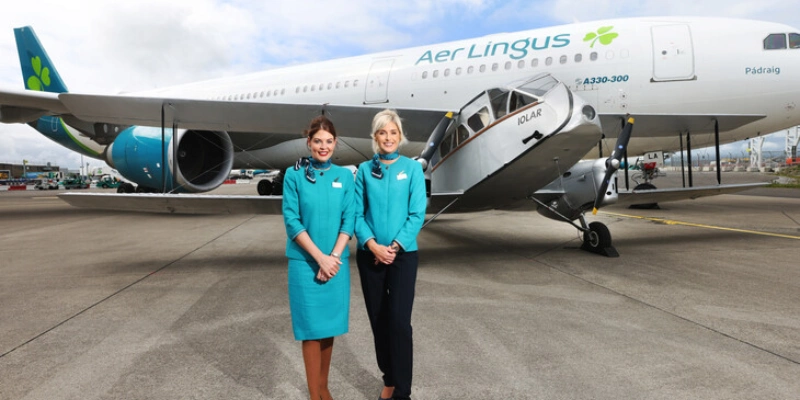




Aer Lingus has commemorated its nine decades of history with the restoration and return to flight of the Iolar, its most iconic aircraft. This historic airplane has taken to the skies once again to recreate the original route that marked the airline’s inception in 1936.
Rebirth of an Irish Aviation Legend
EI-ABI, christened Iolar (the Irish word for “eagle”), is a de Havilland DH.84 Dragon manufactured in 1936. It represents an invaluable piece of global aviation heritage, being one of the last remaining airframes of its type in the world.
The aircraft departed from Dublin bound for Bristol Airport, completing a nostalgic journey that precisely replicated the company’s inaugural flight on May 27, 1936.
→ Aer Lingus Launches Direct Flights Between Dublin and Pittsburgh
Story Behind the Legend
- The Origin: In its early days back in 1936, Aer Lingus was a fledgling startup operating a single aircraft, a single route, and carrying just five passengers.
- The Fate of the Original: The original Iolar flew with the carrier for two years before being sold and subsequently lost during World War II.
- The Current Aircraft: The aircraft flying today is a sister ship that joined the fleet in the 1960s. After initially being restored for the airline’s 50th anniversary in 1986, it was re-registered with the original tail number EI-ABI to preserve it as the ultimate symbol of the company’s heritage.
A High-Precision Technical Restoration Process
Prior to this milestone, the aircraft had been on display at the airline’s maintenance headquarters at Dublin Airport. To return it to airworthy status for the 90th anniversary, a four-month restoration project was entrusted to Midland Aviation at Abbeyshrule Aerodrome, with critical support provided by a team of airline volunteers.
The team combined historical archival research, advanced aerospace engineering, and traditional craftsmanship to ensure the structural authenticity of the biplane. Key maintenance tasks included:
- Powerplants: Complete disassembly and top overhauls of both engines.
- Airframe and Finish: Meticulous cosmetic restoration of the fuselage and wings.
- Aviation Carpentry: Craftsmanship provided by one of Ireland’s last specialized aviation carpenters, a critical factor in maintaining the historical accuracy of the wooden components.
This preservation project, celebrating the country’s industrial and transport heritage, was funded and backed by the Aer Lingus Charitable Foundation.
Nine Decades of Evolution Connecting Ireland to the World
Aer Lingus Chief Executive Lynne Embleton highlighted the emotional and operational impact of this achievement, noting that the restoration of the Iolar allows a direct reconnection with the pioneering spirit that shaped Irish aviation 90 years ago.
The airline’s evolution since that first overwater flight reflects a history of growth and resilience. Throughout its legacy, the carrier has transported some of the world’s most prominent figures, from Popes to Presidents.
The Future of the Airline
From operating a single route with five passengers across the Irish Sea in 1936, the airline has transformed into a robust international network. Today, it connects Ireland directly to more than 100 destinations across Europe, the UK, and North America. The return of the Iolar to the skies is not only a tribute to the past but the departure point for a new chapter of innovation at the airline.
Related Topics

Akasa Air in Talks With Boeing for Over 200 737 MAX Jets
Embraer Nears Key Regional Jet Order from Japan Airlines

AirAsia Co-Founder Defends Airline’s Liquidity Amid Fuel Surge and Rules Out State Bailout
Korean Air and Boeing Finalize Historic Order for 103 Aircraft Valued at $36.2 Billion

Un apasionado por la aviación, Fundador y CEO de Aviación al Día.