Air Canada Pilot Accused of Flying 17 Years as Captain with Forged ATPL
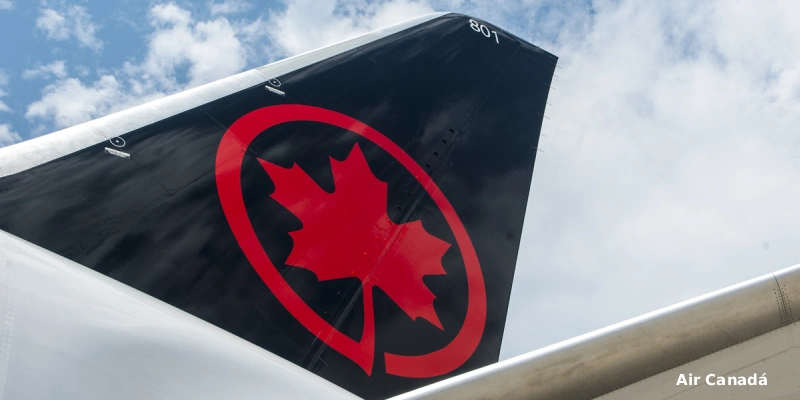




An Air Canada former captain has been accused of transporting thousands of passengers on commercial flights for 17 years without holding the required license for the position. The case, described by authorities as a long-running fraud, puts document verification processes within the aviation industry under intense scrutiny.
Career and Operations Under a Fraudulent Professional Identity
The accused, identified as Geoffrey Wall, 59, of Ontario, accumulated a 27-year career with the Canadian flag carrier, having started in 1998. However, the Peel Regional Police (PRP) detailed that the pilot began falsifying his credentials in 2009, when he was promoted to the rank of Pilot-in-Command (PIC) or Captain.
Under this unauthorized status, Wall operated various Boeing aircraft types on a total of 900 domestic and international flights. Throughout these 17 years of fraudulent activity, the aviator earned millions of dollars in wages.
Technical Requirements: The Difference Between a CPL and an ATPL
Command Credentials Gap
To legally act as a captain in Canadian airspace, regulations strictly require an Airline Transport Pilot License (ATPL)—the highest level of pilot certification, which is obtained, in part, after passing a rigorous series of written examinations.
Air Canada confirmed that Wall held a valid Commercial Pilot License (CPL) and was fully trained, but strictly lacked the ATPL required to exercise command privileges on commercial flights under domestic regulations.
Severity of the Incident According to Authorities
PRP Deputy Chief Nick Milinovich equated the severity of the deception to extreme professional negligence in other regulated sectors: “This is very similar to a doctor who’s licensed to practice family medicine but does brain surgery in their office.”
Fraud Detection, Internal Audit, and Criminal Charges
Investigation Process
The situation was uncovered last year during a routine evaluation when inconsistencies were detected in the pilot’s licensing documentation. This initial red flag triggered an investigation by Transport Canada, the federal transportation department.
Subsequently, Toronto-area police took over the case through a criminal investigation that included executing a search warrant and a forensic analysis of the license, concluding that the document was forged. As a result, Wall was formally charged on June 1 with seven criminal offenses, including fraud, uttering a forged document, and possession of a counterfeit mark.
Corporate Stance and Operational Safety
Upon discovering the forged documents, Air Canada immediately removed the pilot from duty and voluntarily reported the matter to Transport Canada. When questioned about how the fraud went unnoticed for so long, Milinovich argued that certain offenders become “very skilled” at utilizing “deception and craftiness.”
The airline staunchly maintained that passenger safety was never compromised, arguing that all of its pilots undergo mandatory proficiency training every six months. Furthermore, the company reported that it has completed a comprehensive audit of its pilot roster, ruling out any other instances of regulatory non-compliance.
Next Steps in the Legal Process
The former captain is currently released on conditions and is scheduled to make a court appearance on June 29.
Related Topics

Birmingham Airport Plans £2 Billion Investment to Reach 30 Million Passengers in New Master Plan

Ryanair Unveils First 29 New Routes for Summer 2027

KLM to Offer Free High-Speed Wi-Fi on Long-Haul Flights Starting in 2027

Air France to Expand US Network with New Direct Flights to Nashville and San Diego for Summer 2027

Plataforma Informativa de Aviación Comercial con 13 años de trayectoria.