Propulsion of Future: GE Aerospace Completes Megawatt-Class Hybrid Electric Ground Testing
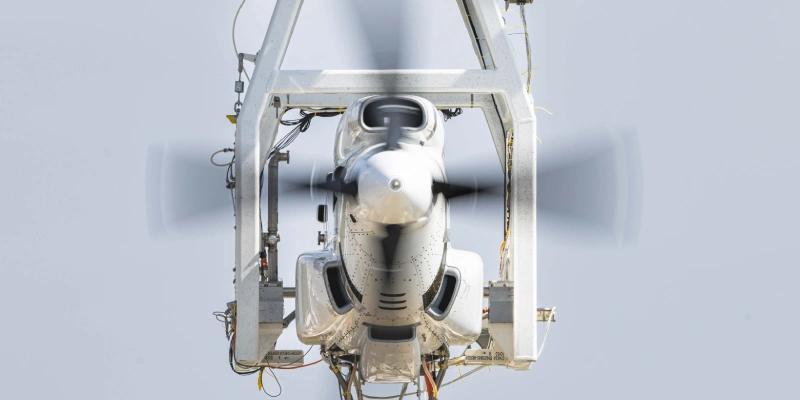




GE Aerospace has successfully completed ground testing of its megawatt-class hybrid electric engine system, a breakthrough developed under NASA’s Electrified Powertrain Flight Demonstration (EPFD) project that paves the way for upcoming flight trials. This achievement represents a pivotal step toward the decarbonization and efficiency of next-generation commercial aircraft.
An Unprecedented Technological Integration in the Industry
The recent test campaign, conducted at the Peebles Test Operation facility in Ohio, United States, became the company’s first to validate a complete, integrated system. During the trials, various phases of a commercial flight were comprehensively simulated, including taxi, takeoff, climb, and cruise.
To achieve the necessary technical rigor and accelerate the maturation of a commercial-grade system, GE Aerospace utilized flight-ready components, which meet significantly stricter safety and reliability standards than conventional test hardware.
The electrified powertrain successfully demonstrated its capability to drive the propeller while simultaneously generating power for the battery. Leading aerospace companies collaborated on this development:
- GE Aerospace: Developed the electric motors/generators, power converters and inverters, and controllers.
- Dowty Propellers: Contributed the propeller systems.
- Avio Aero: Designed and supplied the gearboxes.
- BAE Systems: Provided the battery system using energy storage components.
- Aurora Flight Sciences (a Boeing subsidiary): Supplied the complete engine nacelle.
→ FAA Expects to Certify Boeing 737 MAX 7 This Summer and MAX 10 by Year-End
The hybrid electric propulsion system combines this powertrain with a traditional gas turbine (in this case, a CT7 engine), enabling optimized energy management across the aircraft’s different operational stages. Furthermore, these architectures stand out for their high compatibility with various fuel types and advanced engine designs, such as the Open Fan concept.
RISE Program: On Track for a 20% Reduction in Fuel Burn
This technical milestone links directly to CFM International’s (the joint venture between GE Aerospace and Safran Aircraft Engines) Revolutionary Innovation for Sustainable Engines (RISE) program. Unveiled in 2021, the RISE program is one of the most comprehensive technology demonstrators in global aviation, having accumulated to date more than 350 tests and over 3,000 endurance cycles on open fan, compact core, and hybrid electric systems.
The primary objective of the RISE program technologies is to reduce fuel burn and carbon dioxide ($CO_2$) emissions by more than 20% compared to the most efficient commercial engines currently in service. Current efforts are focused on airframe-engine integration to conduct ground and flight tests during this decade.
A Decade of Evolution in Hybrid Propulsion
The culmination of this ground test is the result of more than ten years of development and maturation of individual components. GE Aerospace was awarded the EPFD contract by the National Aeronautics and Space Administration (NASA) in 2021 with the objective of demonstrating the viability of these technologies for single-aisle aircraft.
The company’s roadmap includes key milestones:
- 2016: Ground test of a propeller driven by an electric motor.
- 2022: The world’s first test of a megawatt-class, multi-kilovolt hybrid electric propulsion system under altitude conditions (up to 45,000 feet) at NASA’s Electric Aircraft Testbed (NEAT) facility, simulating a single-aisle commercial flight.
- 2025: Successful demonstration of a hybrid electric configuration for narrowbody aircraft featuring power transfer and power extraction on a modified high-bypass turbofan engine, requiring no energy storage, under NASA’s HyTEC project.
- 2025 (Strategic Alliance): Partnership and equity investment with BETA Technologies to co-develop a hybrid electric turbogenerator for Advanced Air Mobility (AAM) applications.
The validation of the integrated system in Ohio marks a turning point in the understanding and development of hybrid electric powertrains for commercial aviation. With the components integrated and tested under real operational simulations, the project is solidly positioned to enter its flight test phase, bringing the industry closer to a new generation of propulsion systems with greater durability, efficiency, and range.
Related Topics
Airbus Picks Up Pace: Delivers 72 Aircraft in September Despite Quality Snags
KLM Takes Delivery of Its First Airbus A350-900
FLYONE Armenia Firms Up Order for Two Airbus A321neos
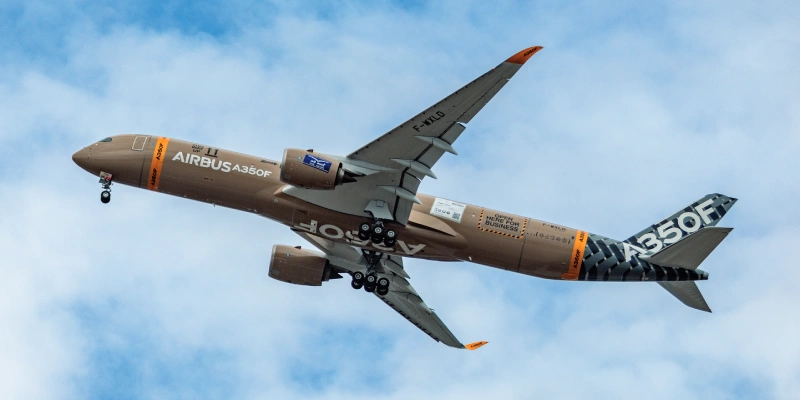
Airbus A350F Successfully Completes Maiden Flight, Kicking Off Certification Campaign

Un apasionado por la aviación, Fundador y CEO de Aviación al Día.