
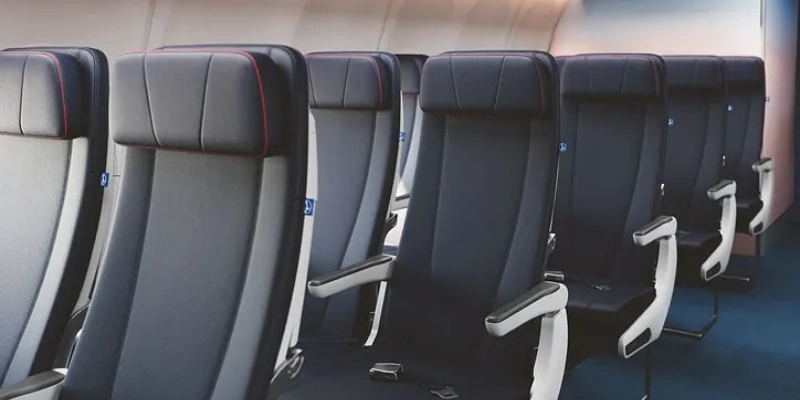
The Federal Aviation Administration (FAA) has issued a proposed Airworthiness Directive requiring inspections and potential repairs to passenger seat assemblies installed on hundreds of Boeing 737 MAX aircraft.
According to the regulatory agency, a service report revealed that certain passenger seat assemblies were improperly installed in the seat tracks. This condition could allow the structures to disengage from their floor tracks when subjected to increased flight loads, severe turbulence episodes, or during an emergency landing.
The FAA explicitly highlighted the potential impact of this failure on cabin safety:
- Direct Injury Risk: Dislodged seats could strike and injure passengers and crew members.
- Evacuation Obstruction: A seat structure detached from its track could block the main aisle, critically delaying an aircraft evacuation during an emergency.
Directive Scope and the Active Global Fleet
The FAA’s proposed directive applies directly to 453 US-registered aircraft. Although the agency’s legal jurisdiction is limited to operators under its registry, foreign civil aviation authorities typically adopt and mirror FAA directives for fleets operating within their respective countries.
→ FAA Delegates Airworthiness Certification for 737 MAX and 787 Models Back to Boeing
To put the market impact into perspective:
- Global Active Fleet: Nearly 2,300 Boeing 737 MAX aircraft are currently in active service worldwide, according to data from aviation intelligence and consulting firm IBA.
- US Fleet: Out of the global total, 823 aircraft operate under US registration, meaning over 55% of the domestic 737 MAX fleet falls within the scope of the FAA’s proposed inspection mandate.
Inspection Timelines and Maintenance Logistics
Each Boeing 737 MAX aircraft can feature up to 69 track-mounted passenger seat assemblies requiring verification. In its labor-hour impact analysis, the FAA outlined the following technical estimates:
- Inspection Time: Estimated at 1 work-hour per seat assembly.
- Rectification Time: Estimated at 1 additional work-hour to repair each assembly if an improper installation is identified.
- Parts Requirement: The corrective action does not require replacement components or additional hardware.
To minimize aircraft-on-ground (AOG) time, the agency noted that airlines can deploy multiple technicians to work simultaneously in the cabin, substantially reducing the total ground time per aircraft. The published notice of proposed rulemaking (NPRM) does not yet specify the final compliance deadline for operators to complete the mandate.
Ongoing Quality Challenges at Boeing
This latest regulatory requirement comes as the US airframer actively works to improve manufacturing quality control and stabilize delivery rates.
Oversight of assembly line quality processes for the 737 MAX was intensified in early 2024 following an in-flight event involving a nearly new Alaska Airlines aircraft, which suffered a mid-air blowout of a mid-exit door plug.
A Boeing spokesperson confirmed the manufacturer’s position via an emailed statement:
“We issued service guidance to operators on this issue in December 2025. We support the FAA making that guidance a mandatory directive.”
Once the public comment period for the proposed rule closes and the final rule is issued by the FAA, line maintenance departments across affected airlines will need to integrate these checks into their scheduled maintenance checks or overnight RON (remain-overnight) stops to ensure regulatory compliance without disrupting flight operations.
Related Topics
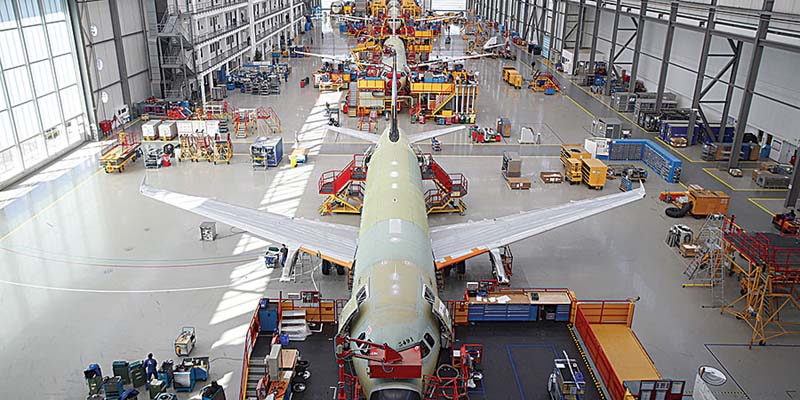
Airbus Detects Quality Issue on A321neo

Aerocivil, Airbus, and Avianca Sign Technical Alliance to Enhance Airspace Safety Redesign in Bogotá
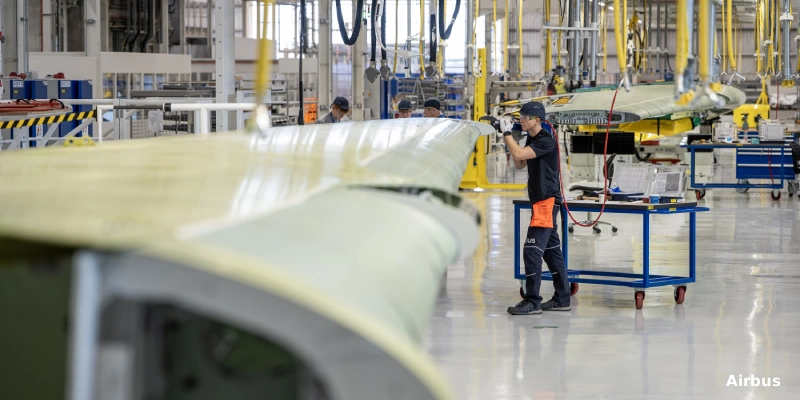
Airbus Invests £150 Million in the UK to Accelerate A321 Production Ramp-Up
Airbus Posts 9% Rise in Aircraft Deliveries Through August, Stays on Track for Full-Year Target

Plataforma Informativa de Aviación Comercial con 13 años de trayectoria.