FAA and DOT Unveil SMART: New Artificial Intelligence Tool to Predict Air Traffic and Reduce Delays
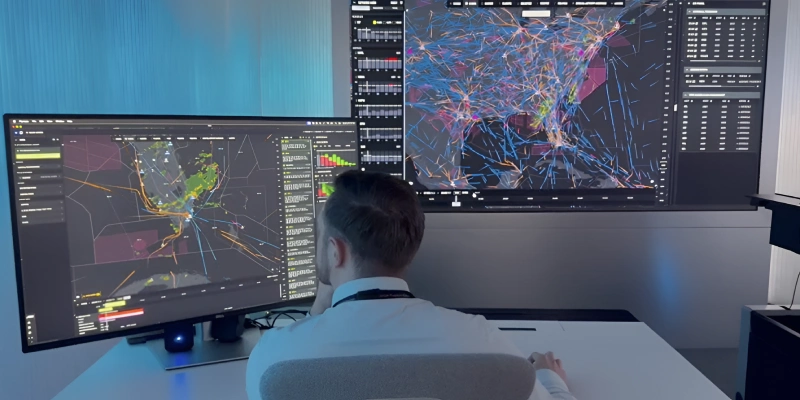




U.S. Transportation Secretary Sean P. Duffy, alongside FAA Administrator Bryan Bedford, unveiled the Strategic Management of Airspace, Routes and Trajectories (SMART) tool, an innovative artificial intelligence-powered system that centralizes operational data to anticipate airspace congestion, mitigate delays, and optimize flights nationwide.
This new state-of-the-art system is designed to centralize 200 distinct data streams into a single unified platform. The processed information includes:
- Weather patterns.
- Flight trajectories and routes.
- Air traffic flow.
- Controller staffing metrics.
Through an AI-backed engine, SMART synthesizes these streams to provide a comprehensive visualization of aircraft headings, the volume of traffic the system can absorb, and areas where weather or saturation could cause complications. This enables aviation specialists to project future conditions and formulate preventative recommendations before airspace issues arise.
From a Reactive Model to Predictive Management: How Does SMART Work?
At the start of each day, thousands of scheduled flights face structural delays because demand exceeds airport capacity. The accumulation of simultaneous operations in a single sector generates congestion, compounded by the impact of adverse weather phenomena that reduce available airspace and force the diversion or closure of large sectors. Traditionally, this scenario forced the FAA to operate reactively.
The SMART platform transforms this approach toward a purely predictive model. Instead of waiting for saturation to occur, the system processes data to help the aviation authority anticipate demand, weather, and capacity constraints hours, days, and even weeks in advance.
Key Identified Benefits:
- Fewer delays and cancellations: Reduction of taxi waiting times, airborne holding patterns prior to landing, and unexpected diversions.
- Airspace optimization: Enabling greater capacity through more efficient routes during bad weather and congestion.
- More predictable operations: By avoiding operational disruptions, controller overload and stress are reduced, allowing them to focus on their core mission: operational safety.
- Lower airfares: Decreased fuel waste, reduced staff overtime, and improved punctuality help cut airline operating costs, passing savings on to consumers.
Human Supervision and Gradual Deployment
The FAA specified that SMART is not designed to replace the critical work of air traffic controllers or to take control of aircraft. All suggestions and scheduling plans generated by the platform are reviewed by human FAA personnel, and local air traffic control facility directors retain the authority to accept or dismiss these recommendations.
The use of SMART began today under a limited modality in the airspace around Washington, D.C., with plans to gradually expand to the rest of the United States.
Official Statements and Commercial Aviation Industry Support
Transportation Secretary Sean P. Duffy emphasized: “Thanks to President Trump’s leadership, we are already achieving remarkable progress in building a brand-new air traffic control system. But to truly improve the flying experience of the American people, we needed to create a 21st-century scheduling tool like SMART. By radically transforming the way we manage our airspace and preventing problems before they happen, SMART will drastically reduce those frustrating delays, alleviate air traffic controller stress, and lower travel prices. The Trump administration is committed to making flying affordable and hassle-free once again”.
Meanwhile, FAA Administrator Bryan Bedford noted:
“Thanks to the leadership of President Trump and Secretary Duffy, we are moving at record speed to build the modern air traffic control system America needs. Combining SMART with our ongoing hardware upgrades gives us the tools to reduce flight delays, optimize traffic, and keep airspace capacity open nationwide, all while preserving our gold standard in safety”.
Major Airlines’ Perspective
The initiative was welcomed with optimism by major U.S. commercial aviation CEOs and representatives:
- Scott Kirby, CEO of United Airlines: Maintained that using SMART to intelligently manage airspace has the potential to significantly decrease weather-related delays and cancellations, stating that if it meets expectations, “it will do more to reduce delays and cancellations than anything else that has happened in decades”.
- Ed Bastian, CEO of Delta Air Lines: Indicated his company’s full support for the modernization of the National Airspace System through technologies that strengthen operational efficiency, increase situational awareness, and mitigate congestion.
- Robert Isom, CEO of American Airlines: Applauded the efforts to leverage technology in favor of safety and efficiency, pointing out the close collaboration with the FAA on air traffic control modernization programs.
- Bob Jordan, CEO of Southwest Airlines: Expressed enthusiasm regarding the early progress observed with the SMART system and its real capability to more effectively manage the national airspace.
- Chris Sununu, President and CEO of Airlines for America (A4A): Declared that the SMART initiative will finally equip the country with the best flight management tools, calling it one of the boldest initiatives undertaken by the FAA in decades to benefit passengers and the cargo sector.
Next Steps in Operational Modernization
With its debut in the Washington, D.C., metropolitan area, the FAA will continue the testing and operational evaluation phase of SMART alongside air operators and air traffic control facilities, laying the technical foundation for its gradual integration on a nationwide scale.
Related Topics

Heathrow Expansion Push Reaches Parliament: A £33 Billion Investment to Unlock Connectivity

Birmingham Airport Plans £2 Billion Investment to Reach 30 Million Passengers in New Master Plan

Ryanair Unveils First 29 New Routes for Summer 2027

KLM to Offer Free High-Speed Wi-Fi on Long-Haul Flights Starting in 2027

Un apasionado por la aviación, Fundador y CEO de Aviación al Día.