Boeing and American Airlines Successfully Complete First 737 MAX Landing Gear Exchange
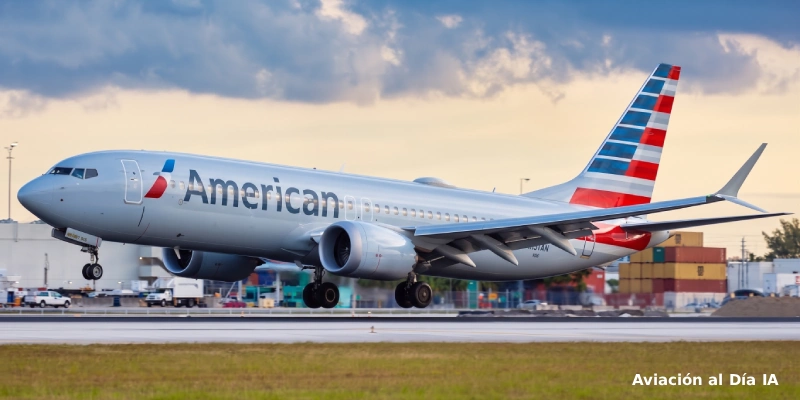




Boeing and American Airlines have marked an operational milestone by completing the first landing gear exchange on a 737 MAX aircraft. The milestone signifies the official expansion of the OEM’s Landing Gear Exchange Program to its latest-generation narrowbody family, substantially cutting aircraft-on-ground (AOG) downtime and streamlining lifecycle maintenance costs.
A Strategic Milestone for the 737 MAX Fleet
The operation validates the efficiency and commercial viability of Boeing’s exchange program on its next-generation single-aisle platform. Under this framework, the airframer provides fully overhauled, certified shipsets—comprising both main landing gear (MLG) and nose landing gear (NLG)—ready for direct, line-replaceable installation.
Conducted on an American Airlines aircraft, the inaugural replacement validated the end-to-end operational chain, from technical MRO overhaul and airworthiness regulatory compliance to final shipset logistics and delivery.
William Ampofo, Senior Vice President of Parts, Distribution & Supply Chain at Boeing Global Services (BGS), highlighted the significance of the development:
“This milestone reinforces what our customers have trusted for years: Boeing’s landing gear exchange capability delivers predictable, safe, and cost-effective operational outcomes. Extending this program to the 737 MAX provides operators with another proven tool to slash downtime, control heavy maintenance expenditures, and closely align base maintenance schedules with flight operations.”
→ American Airlines Unveils First Reconfigured Boeing 777-300ER Featuring New Flagship Suite
Technical Scope of the Overhaul and Exchange
During this initial operation with the US carrier, Boeing provided:
- Landing Gear Shipsets: Fully certified, overhauled main and nose landing gear shipsets.
- Installation Hardware Kits: Complete provisioning packages required for airframe integration.
- Excluded Line Items: The exchange scope excluded wheels, tires, and brake assemblies.
The technical execution proved that the landing gear overhaul and swap procedures long established on legacy platforms can be seamlessly deployed across the 737 MAX fleet.
Operational and Financial Efficiencies for Carriers
The exchange solution serves as a turnkey alternative to legacy base overhaul models, which traditionally required airlines to either finance and warehouse costly spare gear or keep aircraft parked for extended turn-around times (TAT) during deep shop visits:
- Reduced Turn-Around Times: Minimizes aircraft downtime and mitigates extended AOG exposure.
- Working Capital Optimization: Carriers trade off capital-intensive asset purchases and warehousing overhead for scheduled exchange slots, preserving liquidity and bolstering fleet dispatch reliability.
- End-to-End OEM Oversight: Boeing manages the underlying shop visits, service bulletin (SB) incorporations, airworthiness certification, and supplier tier management—shielding operators from asset-holding and obsolescence risks.
Global Footprint Expansion and Next Steps
To support program growth as 737 MAX fleet utilization matures toward its first major gear overhaul cycles, Boeing is expanding its global overhaul capacity alongside approved Maintenance, Repair, and Overhaul (MRO) partners.
The OEM’s near-term strategic priorities include:
- Inventory Scaling: Increasing the pool of certified, line-ready 737 MAX exchange shipsets.
- Forward-Deployed Asset Hubs: Positioning exchange allocations near key airline hubs to shorten logistics lead times and transit days.
- Operational Performance Metrics: Tracking and benchmarking fleet downtime reduction and direct maintenance cost savings across participating carriers.
Related Topics
XiamenAir Launches New Intercontinental Route Between Xiamen and London

ANA Expands Regional Fleet with Additional Order for Eight Embraer E190-E2s
FLY91 Places Landmark Order for 40 ATR 72-600 Aircraft
China’s “Big Three” Airlines Post Severe First-Half Losses Driven by Fuel Costs

Un apasionado por la aviación, Fundador y CEO de Aviación al Día.