Lufthansa Turns 100: A Century of History
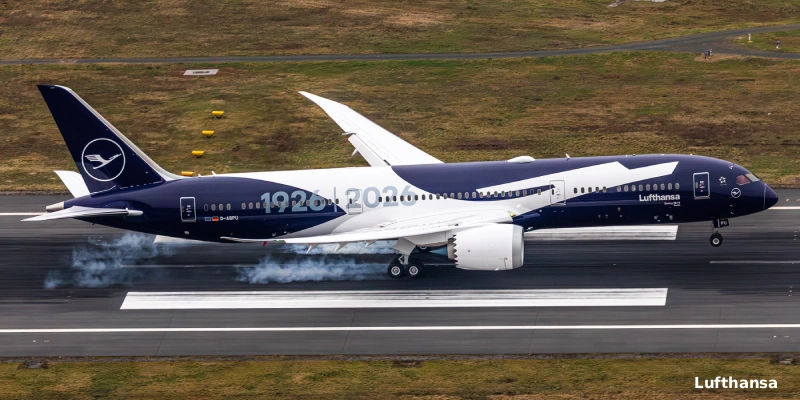




In 2026, Lufthansa reaches a key milestone in the history of global aviation. The first “Luft Hansa” was founded on January 6, 1926, and just three months later, on April 6, it operated its inaugural flight. One hundred years later, the airline commemorates this anniversary as more than just a round number: it is an opportunity to review its trajectory, acknowledge complex chapters, and chart the course for its second century of operations.
Origins of an Iconic Brand
The story begins with the merger of Junkers Luftverkehr and Deutsche Aero Lloyd, a union that laid the foundation for a project that would ultimately achieve international reach. From its first steps, Lufthansa developed in a context of constant change, with technical advances, operational challenges, and disruptions that shaped its evolution.
This path was not linear. Throughout the decades, the company went through periods of growth, crisis, and reinvention, consolidating an identity linked to a pioneering spirit and innovation within air transport.
A Past That Also Demands Reflection
One of the most complex chapters in this trajectory occurred during the Nazi regime, when the airline was actively part of the system of that era. In the context of its centennial, Lufthansa has decided to critically address that period, relying on historical research to analyze its involvement.
This exercise of remembrance is not limited to the years following World War II. From its founding to the disappearance of the first Lufthansa, that entire journey is part of the narrative that the company assumes and revisits for this anniversary.
New Beginning After the War
In 1953, the legal foundation of the current Lufthansa was established with the creation of the so-called “second Lufthansa.” Two years later, in 1955, flight operations resumed, marking the beginning of the newly founded Deutsche Lufthansa AG.
This relaunch once again required a strong pioneering vocation. From then on, the company began a period of reconstruction that would lead it to become one of the most recognized airline groups in the world.
→ Lufthansa moderniza su flota Airbus A320 para optimizar rutas y reducir emisiones de CO₂
“We are the Journey”: The Centennial Motto
The 100th anniversary is celebrated under the motto “We are the Journey.” The message focuses on the shared journey between employees, passengers, and brand followers, highlighting that Lufthansa’s history has not been written alone.
The commemoration also serves as a thank you to those who have accompanied the airline through a century of transformations. The loyalty and trust of its customers have been essential elements in sustaining this project over time.
Role of People in Lufthansa’s History
Within this recognition, a special prominence falls on its workforce. From the early years, employees have shared a culture marked by pioneering ambition, a passion for flying, and a commitment to excellence.
Today, approximately 40,000 people of 122 nationalities work for the Lufthansa brand, while the group as a whole brings together about 100,000 employees from more than 160 countries, reflecting a truly global dimension.
A Year Full of Experiences in 2026
During the centennial year, Lufthansa has planned a wide agenda of activities for customers, enthusiasts, and staff. Notable initiatives include a permanent exhibition in the Lufthansa Group Hangar One, special events, the publication of a historical book, audiovisual productions, internal celebrations, customer meetings, and various marketing and product campaigns.
Starting in January, the anniversary will be visible to passengers. The special “100 Years of Lufthansa” emblem will appear on boarding passes, in airports, and on board numerous flights. Outside terminals, a poster campaign in various urban centers will narrate the airline’s story through iconic images and messages.
Commemorative Fleet: Ambassadors in the Sky
One of the most striking points of the celebration will be the special centennial fleet. The main sub-fleets of the main brand will each feature an aircraft decorated with the 100-year commemorative livery.
This group consists of six aircraft: an Airbus A380, an Airbus A350-1000, an Airbus A350-900, an Airbus A320, a Boeing 747-8, and a Boeing 787-9. The latter, christened “Berlin,” leads the anniversary fleet. The aircraft was delivered from the Boeing plant in Washington state, USA, just before Christmas and landed at its new home airport in Frankfurt. Registered as D-ABPU, this state-of-the-art model will soon enter regular service.
Additionally, two retro liveries that combine tradition and progress will be incorporated, turning each aircraft into a unique flying ambassador of the brand. The iconic crane logo, designed by Otto Firle in 1918, will remain present as a global symbol of Lufthansa.
A Centennial Between Pride and Future
The 100th anniversary represents a moment of pride, but also of analysis and projection. Lufthansa uses this date to remember where it came from, assume its complete history, and reinforce its commitment to the future of aviation, thereby taking the first step toward its second century of life.
Related Topics

Panama to Boost Tocumen International Airport Capacity with $306.75 Million Investment
Air Traffic Controllers at High Fatigue Risk Involved in Serious Sydney Airport Near-Miss

United Begins Gate Delivery Testing for Food and Essential Items at Newark Airport

Venezuela: Maiquetía Airport Resumes Commercial Operations via Temporary Terminals

Un apasionado por la aviación, Fundador y CEO de Aviación al Día.