Copa Airlines Strengthens Operational Muscle: 43 First Officers Promoted to Captain
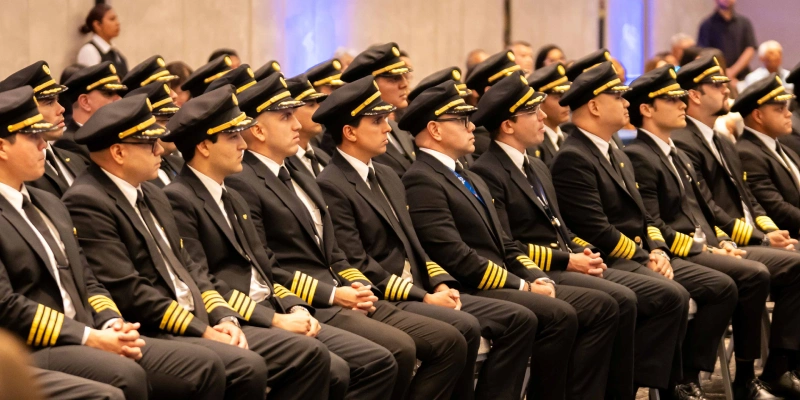




Copa Airlines is bolstering its operational structure by announcing the promotion of 43 First Officers to the rank of Captain. All promoted pilots are assigned to the Boeing 737 fleet, which serves as the backbone of the airline’s network.
Beyond individual achievement, this decision reflects a sustained policy of technical talent development aligned with the expansion of the Panamanian airline’s fleet, routes, and operational complexity.
In a regional context marked by a shortage of qualified pilots and intense competition for experienced talent, this announcement takes on a strategic dimension: Copa is betting on training and promoting from within, ensuring operational consistency and cultural continuity in the flight deck.
Promotion to Captain as a Pillar of the Operational Model
From the airline’s perspective, this promotion is not merely an administrative procedure, but a critical milestone in safety management and operational leadership. Bolivar Dominguez, Vice President of Flight Operations at Copa Airlines, explains that this process is part of a model that prioritizes:
- Operational safety.
- Consistency in decision-making.
- Preparedness for complex operational environments.
According to the company, every promoted captain has been trained under the highest industry standards to guarantee a reliable and efficient operation aligned with the growth of the network and fleet.
A Long, Demanding, and Audited Training Process
The path to the left seat of the cockpit at Copa Airlines is progressive and highly structured. Over several months, candidates undergo a program that combines:
Comprehensive Technical Training: Including advanced academic instruction, intensive flight simulator sessions, and supervised line operations.
Continuous Evaluations: The process includes permanent theoretical and practical assessments, all validated by the Civil Aeronautics Authority (AAC), adding an extra layer of external control and standardization.
Strict Operational Requirements
To enter the program, First Officers must demonstrate:
- A minimum number of accumulated flight hours.
- Experience at special airports.
- Approval of technical and operational evaluations.
Successful interviews with operational leaders and human resources teams to evaluate judgment, professional maturity, and leadership capacity in the cabin.
Diverse Backgrounds, One Operational Standard
One of the most notable aspects of this promotion is the diversity of professional backgrounds among the new captains. Among the 43 promoted pilots are:
- Three professionals who began their careers at the airline as Cabin Crew and in Passenger Service areas.
- One captain who graduated from ALAS (Copa Airlines Pilots Academy).
These career paths reinforce the company’s corporate message: internal growth is not the exception, but a fundamental part of the system’s design.
Sustained Progress in Female Participation
While still a minority, the female presence in the cockpit continues to gain ground. In this promotion, 5% of the promoted pilots are women, following a gradual but steady trend.
Currently, women represent 12% of the total pilots at Copa Airlines. According to company data, this figure positions them among the airlines with the highest female participation in technical roles internationally.
More Pilots for an Expanding Network
This announcement is part of a long-term growth strategy. Copa Airlines currently has more than 1,445 pilots and projects the addition of over 350 new aviators in the next three years. This increase supports:
- Fleet expansion.
- Route network growth.
- The strengthening of the Hub of the Americas, its main connection center.
The airline currently connects Panama with more than 85 destinations in the Americas, an operation that demands high levels of reliability and human resource planning.
Related Topics

Southwest Unveils Record-Breaking Summer 2027 Schedule With Major Expansion in Austin, Nashville, and San Diego
Alaska Airlines Challenges Delta in Seattle, Taking its Offensive to Long-Haul Routes
JetBlue Expands Colombian Network With Nonstop Fort Lauderdale–Barranquilla Flights

US Seeks to Accelerate Aircraft Type Certification

Un apasionado por la aviación, Fundador y CEO de Aviación al Día.