Airbus Advances Quantum Navigation: Ending Vulnerability to GPS Signal Jamming
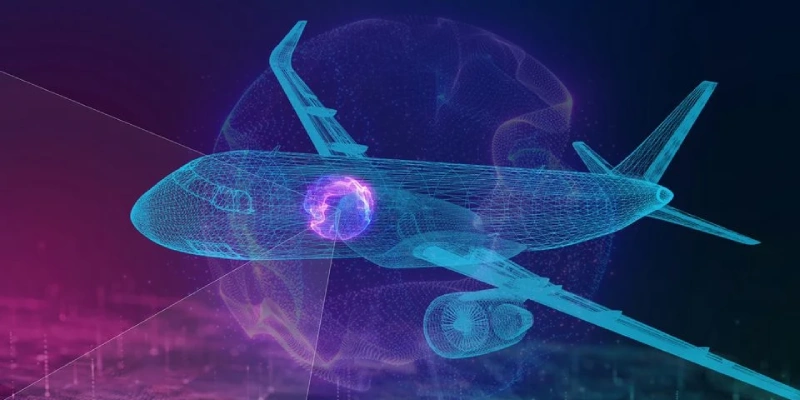




Airbus is currently testing the robustness of quantum navigation, a revolutionary technology that utilizes the Earth’s magnetic field to determine aircraft location with unprecedented precision. This innovation promises to provide a critical layer of security that is immune to the interferences affecting traditional systems.
Post-GPS Era: Magnetic Anomaly-Based Navigation
While the Global Positioning System (GPS) remains the predominant tool in modern society, quantum technology is emerging as a competitor capable of sharing the spotlight due to its superior reliability. Unlike GPS, which depends on satellites, quantum navigation relies on quantum mechanics—the study of nature at atomic and subatomic levels—to measure environmental aspects with extreme sensitivity.
This technique, known as Magnetic Anomaly-Based Navigation (MagNav), utilizes quantum sensors to identify variations in the Earth’s magnetic field. These variations are generated by the unique distribution of magnetized minerals in the Earth’s crust, creating permanent and immutable “fingerprints” that allow an aircraft’s position to be fixed with astounding accuracy.
Technical Challenge of MagNav
For this system to function effectively within aviation, Airbus must overcome significant computational hurdles:
- Mapping and Processing: Massive computational effort is required to identify location signatures in real time.
- Interference Filtering: Advanced algorithms must eliminate variables such as atmospheric noise and the aircraft’s own magnetic field to obtain a clean reading.
- Critical Redundancy: The obtained data is compared against databases of pre-existing magnetic maps, serving as a vital backup in the event of satellite signal loss.
Total Resilience Against Jamming and Spoofing
One of the greatest draws of quantum navigation for the aerospace sector is its total immunity to external attacks. In a context of increasing geopolitical instability, threats to traditional navigation systems have risen:
- GPS Jamming: Occurs when a malicious actor emits a disruptive signal on the same frequency as the satellite, blocking user reception.
- GPS Spoofing: Involves sending false signals with incorrect location data that the receiver processes as real.
Because quantum sensors measure a natural physical force—the Earth’s magnetic field—rather than a man-made signal, there is nothing that can be jammed or blocked. This would make quantum technology the fastest way to verify if a GPS signal is being manipulated.
Airbus’s Quantum Future: Beyond Positioning
Navigation is only the first step in Airbus’s vision to integrate quantum technologies into the industry. The company is already exploring additional applications to make its products more efficient and secure:
- Component Design: Virtual stress testing on aircraft wings.
- Sustainability: Optimizing the design of hydrogen fuel cells.
- Advanced Computing: These applications are being developed on specialized quantum computers operated by selected laboratories, with the goal of scaling their use to reduce production costs and improve operational efficiency.
Although MagNav may sound like science fiction, Airbus is already working to ensure this technology reaches the maturity necessary for future use in the aerospace sector. By providing “un-jammable” navigation, the industry takes a firm step toward absolute safety in environments where satellite coverage is non-existent or compromised.
Related Topics

Boeing Posts Best Month of 2026 With 57 Aircraft Delivered in September

Southwest Airlines Evaluates Widebody Aircraft, Eyes Boeing 787

Avolon Orders 250 Aircraft from Airbus and Boeing

FAA Clears Path for Boeing 737 MAX 10 Certification After Dismissing Flight Software Safety Risks

Un apasionado por la aviación, Fundador y CEO de Aviación al Día.