Alaska Airlines Formalizes Adoption of Boeing’s Virtual Airplane Training Platform
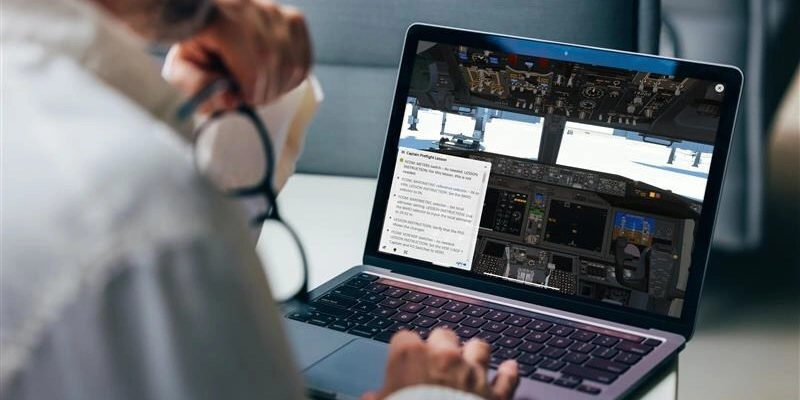




Alaska Airlines has formalized a licensing agreement to implement Boeing’s Virtual Airplane (VA), an innovative digital training solution. The announcement was made during the World Aviation Training Summit (WATS) held in Orlando, Florida, consolidating a partnership aimed at transforming pilot preparation through high-fidelity technology.
A Flexible, Device-Agnostic Training Tool
The Virtual Airplane is defined as a modular and device-agnostic training solution, allowing pilots to practice authentic procedures anytime and anywhere. Through the Procedures Trainer application, users can access high-quality simulations without relying exclusively on the availability of Full Flight Simulators (FFS).
Key features of the platform include:
- Modular Training: Enables realistic and repeatable practice of standard operating procedures (SOPs).
- Flight Management System (FMS): The flight management system offers a “free-play” mode for authentic data entry and functional exploration.
- Time Optimization: Aids in standardizing training, reduces simulator familiarization time, and accelerates pilots’ operational readiness.
→ Alaska Airlines Crosses the Atlantic: Direct Flights Launched Between Seattle and Rome
Strategic Collaboration in Development
Alaska Airlines is not merely a customer of this technology but has served as a fundamental partner in its creation. During the development phase, the carrier provided critical feedback that helped shape the current platform.
Chris Broom, Vice President of Commercial Training Solutions at Boeing, emphasized that the airline’s commitment to innovation and safety was instrumental to the project’s success. Meanwhile, Jeff Severns, Managing Director of Flight Operations Training at Alaska Airlines, noted that this tool complements traditional simulator sessions, enhancing the proficiency and efficiency of their technical personnel.
Availability and Future Expansion
Currently, the first available module is the Procedures Trainer, specifically designed for Boeing 737 MAX training on desktops and tablets.
Boeing has confirmed plans to expand these capabilities to other aircraft models within the company’s portfolio in the near future. This agreement reinforces the manufacturer’s strategy to offer scalable training solutions that adapt to the evolving needs of the global aviation industry.
Related Topics
End of an Era: Lufthansa Retires Airbus A340-600 Fleet After 23 Years of Service
Aviation Capital Group Signs Firm Order for 75 Airbus A320neo Family Aircraft
Airbus Plans to Accelerate A350 Production Ramp-Up and Evaluates Higher-Capacity Variants
Global Aviation Services Market to Double, Surpassing $420 Billion by 2045, Says Airbus

Un apasionado por la aviación, Fundador y CEO de Aviación al Día.