Latin America and the Caribbean Air Traffic Grows 6% in March Driven by Intra-regional Market





Total passenger traffic to, from, and within Latin America and the Caribbean reached 43.1 million passengers in March 2026, representing 6% year-on-year growth compared to the same month last year. This increase, equivalent to 2.45 million additional passengers, consolidates a stable growth trend similar to that recorded in February.
Key Industry Indicators: March 2026
Regional airline performance showed a solid balance between supply and demand, highlighting a notable improvement in aircraft utilization efficiency.
- Capacity and Supply: Total flight offerings expanded by 4.4% year-on-year, while seat capacity increased by 4.5%.
- ASK Capacity: Capacity measured in Available Seat Kilometers (ASK) recorded a 3.6% rise.
- RPK Demand: Demand, measured in Revenue Passenger Kilometers (RPK), outpaced supply growth with a 7.3% year-on-year increase.
- Load Factor: Driven by strong demand dynamics, the average load factor reached 83.9%, representing a 2.9 percentage point increase compared to March 2025.
Of the total passengers moved in the region, the domestic market accounted for 54.5%, while the international market comprised the remaining 45.5%.
Region Grows from Within: Intra-regional Boom
Air traffic performance during March demonstrated that the current growth engine for Latin America and the Caribbean lies within its own domestic and regional markets, outpacing the performance of long-haul routes.
Expanding Regional Connectivity
Intra-regional traffic posted outstanding year-on-year growth of 10.7%. A clear example of this evolution was the bilateral market between Argentina and Brazil, which surged by 29.8%, expanding its connectivity to reach 32 airport pairs (7 more than the previous year).
Extra-regional Deceleration and the Trend Shift with the U.S.
Conversely, extra-regional traffic showed a marked slowdown, growing by only 0.8%. This stagnation was primarily due to a shift in the market trend between Latin America and the United States, which fell 2.8% year-on-year after two consecutive months of growth.
This contraction was heavily influenced by the Mexico-U.S. market, which dropped 11.6%. This negative impact was directly evident in key tourist destinations:
- Passenger flow between the United States and Cancun decreased by 11.5%.
- Connectivity between the United States and San Jose del Cabo contracted by 9.2%.
Domestic Market Contractions
Additionally, some national markets saw setbacks due to concentrated declines in domestic traffic. Bolivia led the declines with an 11.5% drop, followed by Mexico with a 3.2% reduction and Chile with a 1.9% decrease.
Cost Alert: Jet Fuel Prices Pressure Margins
Despite positive passenger volume figures, the airline industry is again facing severe financial pressure due to rising operating costs.
For the week ending May 1, the average price of jet fuel in Latin America and the Caribbean reached USD 4.36 per gallon. This figure represents nearly double the average recorded throughout 2025. This spike is a response to global pressure on refined fuels stemming from the conflict in Iran and subsequent maritime transit restrictions in the Strait of Hormuz.
Sector Outlook
“March confirms that the region is growing from within: 8 out of 10 additional passengers this quarter flew within Latin America and the Caribbean, with markets like Argentina-Brazil growing 29.8%,” stated Peter Cerdá, CEO of ALTA.
The executive warned that, given the complex current geopolitical landscape and the rise in fuel costs, it is essential to protect the sector’s competitiveness. “Sustaining this dynamism, in a context where the conflict in Iran and the resulting restrictions in the Strait of Hormuz have pushed up fuel prices, requires avoiding measures that make flying even more expensive, in order to preserve the connectivity that drives regional development,” Cerdá concluded.
Related Topics
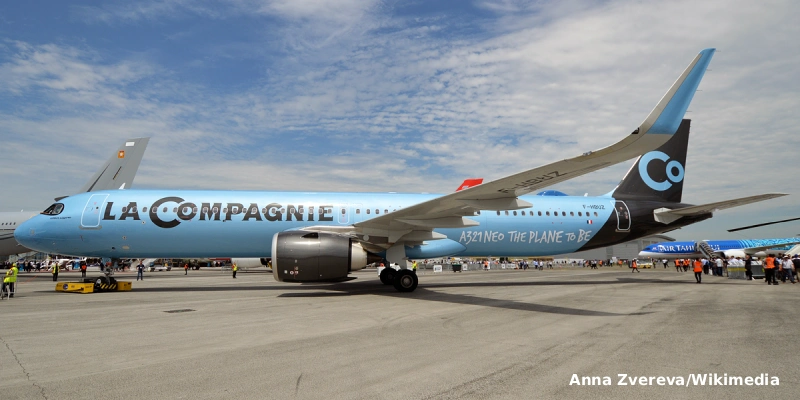
La Compagnie to Connect New York and Dusseldorf Starting in 2027

Investigation Launched Into Amazon Prime Air Crash in Miami: What We Know

Boeing Pays $3.1 Million FAA Fine over Multiple Safety Violations

American Airlines Unveils First Reconfigured Boeing 777-300ER Featuring New Flagship Suite

Un apasionado por la aviación, Fundador y CEO de Aviación al Día.