Iranian Airlines to Be Grounded Worldwide Starting Wednesday, US says
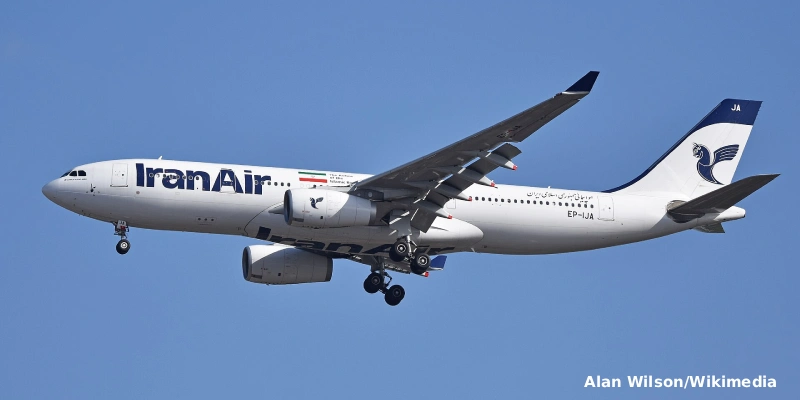




Sanctions typically take effect slowly, gradually aging fleets over two decades due to the inability to acquire aircraft or spare parts. However, U.S. Treasury Secretary Scott Bessent announced a far faster and more direct measure.
On Monday, Bessent stated in an interview with CNBC that, starting September 23, all Iranian airlines would be completely grounded worldwide.
Mechanism of Secondary Sanctions
The threat is not directed squarely at the airlines, but rather at the foreign companies that provide them with services. The approach relies on applying secondary sanctions to third-party entities that interact with Iranian aircraft.
According to the Treasury Secretary, if an Iranian airline lands and a vendor provides it with fuel, ground handling services, or ticket sales, that vendor will be cut off from the dollar-denominated financial system. Faced with the choice of losing access to the U.S. dollar banking system—essential to the aviation supply chain—third-country providers choose to suspend services, effectively leaving aircraft stranded on the ground. Consequently, Iranian carriers lose the ability to operate any route outside their borders that requires foreign support services.
Operation “Economic Outcast”
This announcement forms part of a broader offensive. On August 24, the Treasury Department unveiled Operation Economic Outcast, issuing determinations targeting critical sectors of the Iranian economy, including aviation.
Subsequently, on September 8, the Office of Foreign Assets Control (OFAC) sanctioned 36 targets linked to Iran’s aviation sector and designated 27 commercial airlines from the country under Executive Order 13902. Among the named airlines are Iran Aseman, Qeshm Air, Zagros, Taban, Saha, Kish, Ata, Iran Air Tour, Varesh, and Sepehran, alongside seventeen others. For its part, Mahan Air had already been sanctioned since October 2011 for supporting the Islamic Revolutionary Guard Corps–Quds Force, with an additional designation added by the State Department in December 2019.
In announcing these actions, Scott Bessent warned that anyone conducting business with Iranian airlines risks being cut off from the global financial system.
Overflight Clause
The measure also encompasses OFAC’s suspension of three Iran-related aviation general licenses, impacting airlines with no apparent ties to the country. This includes overflight permissions and authorization for non-U.S. carriers to operate commercial aircraft of U.S. origin or control into Iranian territory.
Because the vast majority of the world’s wide-body aircraft rely on U.S. manufacturing or components, revoking this authorization means foreign operators flying aircraft from manufacturers such as Boeing or Airbus lose their legal clearance to service Iranian airports—though the Treasury noted it will evaluate aviation safety-related requests on a case-by-case basis.
Procurement Chains and Structural Challenges
According to the U.S. Treasury, Mahan Air acquired at least three Boeing 777 aircraft during the summer of 2026, routed through the United Arab Emirates and Oman. Originating from retired fleets, the aircraft passed through a UAE-based entity named ECT Aviation Support to obtain temporary registration, continuing onward through the brokerage of a Turkish firm called Sky Phoenix. Furthermore, OFAC sanctioned cargo and general sales agents operating on behalf of Mahan Air in Turkey, Malaysia, and Kazakhstan, accusing them of coordinating shipments of unmanned aerial vehicle (UAV) components bound for Iran.
The rationale behind the U.S. decision rests on treating Iranian commercial aviation as a national security issue, arguing that the same airlines ferrying passengers are also transporting illicit cargo.
Even prior to these steps, Iranian civil aviation faced severe headwinds after decades of sanctions hindered the lawful acquisition of new aircraft, spare parts, and maintenance services, leaving its fleets among the oldest in commercial aviation. The 2015 nuclear accord briefly shifted that trajectory—Iran Air signed deals for 100 Airbus aircraft, 80 Boeing jets, and 20 ATR turboprops—yet following the U.S. withdrawal from the agreement in May 2018 and the revocation of export licenses, only sixteen aircraft were ever delivered.
Related Topics
Istanbul Airport Inaugurates Its Sixth Runway
American Airlines to Be Primary Operator of Phoenix Sky Harbor International Airport’s New West Terminal

Delta Consolidates Leadership in Los Angeles with Largest Flight Schedule in its History for Summer 2027

Panama: Tocumen Airport Handles Over 15.8 Million Passengers Through August, Consolidating 15% Growth

Plataforma Informativa de Aviación Comercial con 13 años de trayectoria.