IFALPA Demands Pilots Have Final Say on Flying in Conflict Zones
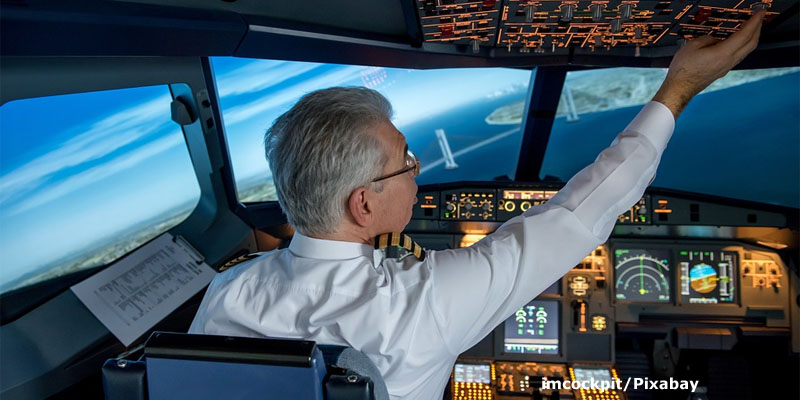




The International Federation of Air Line Pilots’ Associations (IFALPA) has issued a firm stance demanding that aircraft commanders hold the final, non-negotiable authority to refuse operations in war-torn airspace. This demand comes amid escalating tensions in the Middle East, where drone and missile strikes have significantly elevated risks for civil aviation.
Commander Autonomy vs. Commercial Pressures
The Montreal-based federation maintains that a pilot’s decision to avoid a conflict zone or divert a route for safety reasons must be respected unconditionally. According to the published document, this command authority must not be compromised by:
- Financial incentives or other economic benefits.
- Repercussions for professional career advancement or administrative penalties.
- Commercial pressures from airlines.
The group emphasizes that operations in hostile environments place a considerable mental and emotional stress load on technical crews, which must be recognized and managed by air operators.
Impact of the Iranian Conflict on Airspace
The conflict in Iran, now entering its sixth week, has drastically altered aerial navigation in the Middle East. Drone and missile attacks, as well as defense interceptions, have increased disruptions and safety risks.
→ Air India: Comprehensive Rebuilding of a Giant for Global Leadership
Despite this landscape, data from Flightradar24 reveals that major airlines continue to maintain significant operations:
- Emirates: Currently operating at 69% of its normal capacity.
- Qatar Airways: Maintaining 26% of its usual operational levels.
This translates into hundreds of daily flights traversing airspace where Iranian projectile launches have been recorded. While the United Arab Emirates has established “safe corridors,” aircraft still face frequent holding patterns, diversions, or temporary airspace closures during active attacks.
Fatigue Management and Psychological Support
To mitigate associated risks, IFALPA urges airlines to implement specific support measures for pilots operating in these regions. The federation proposes that factors such as increased workload, the complexity of diversions, and industry uncertainty should no longer be treated as ad hoc exceptions.
Instead, they suggest integrating these variables into:
- Scheduling Assumptions: Adjusting schedules to account for anticipated delays.
- Fatigue Checks: Establishing additional safety margins.
- Crew Augmentation: Utilizing augmented crews to ensure adequate rest.
- Post-flight Support: Providing recovery time and confidential counseling.
International Condemnation by ICAO
Parallel to these demands, the Council of the International Civil Aviation Organization (ICAO) has formally condemned Iran for “unlawful” airspace violations against its Gulf neighbors.
The organization deplored the use of unmanned aircraft systems (UAS) for military purposes against civilian infrastructure, noting that such acts gravely endanger international aviation safety. This resolution was based on a report presented by several affected Arab states. For its part, Iran has submitted its own document regarding its territory, which will be analyzed by the Council in future sessions.
This scenario reinforces the urgency of the pilots’ call: in an environment where civilian infrastructure becomes a target, operational safety must prevail over any commercial metric.
Related Topics

Lufthansa Launches Nonstop Flights Between Frankfurt and Kuala Lumpur, Malaysia
Etihad Airways Touches Down in Thailand for First Time with Its Iconic Airbus A380

Singapore Airlines Overhauls In-Flight Experience with Next-Generation KrisWorld and Starlink Satellite Connectivity
Japan Airlines Selects Embraer E190-E2 to Renew J-AIR Regional Fleet

Plataforma Informativa de Aviación Comercial con 13 años de trayectoria.